

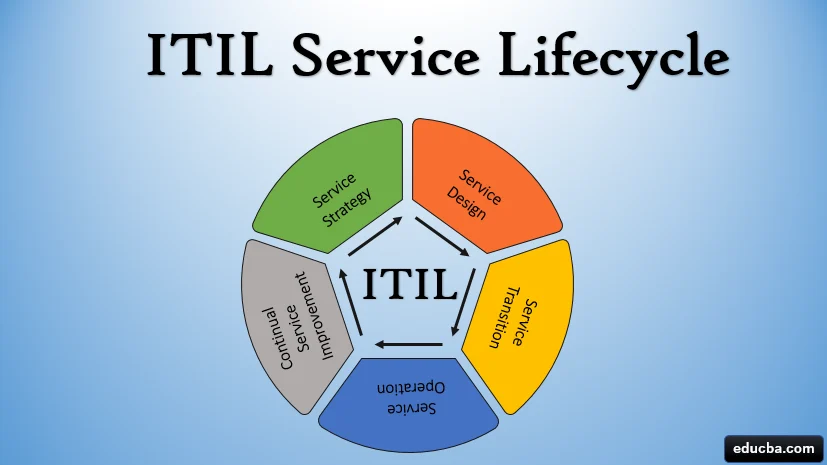
Most organizations that adopt ITIL don’t fail because they chose the wrong framework. They fail because they treat the ITIL service lifecycle as a theoretical exercise rather than an operational blueprint. The five lifecycle stages – Service Strategy, Service Design, Service Transition, Service Operation, and Continual Service Improvement – are intended to work as a connected system, not as isolated phases you check off during an audit.
Yet in practice, many IT teams implement one or two stages in detail while barely acknowledging the rest. The result is predictable: services that look good on paper but break down under real workloads, change requests that stall in approval queues, and improvement initiatives that never produce measurable outcomes.
This guide takes a different approach. Instead of restating definitions you can find in any ITIL glossary, it focuses on the practical mechanics of the ITIL service lifecycle – what each stage actually requires, where implementations commonly go wrong, and how to build a lifecycle that functions as more than documentation.
What Is the ITIL Service Lifecycle?
The ITIL service lifecycle is a structured approach to managing IT services from initial concept through day-to-day delivery and eventual retirement. Introduced formally in ITIL v3 (later revised as ITIL 2011), the lifecycle organizes 26 processes across five interdependent stages. Each stage addresses a different dimension of service management, but all stages feed information and feedback into one another.
The lifecycle model replaced the earlier ITIL v2 structure, which grouped practices into two broad disciplines (Service Support and Service Delivery) without an explicit lifecycle framework. The v3 approach added strategic and improvement dimensions that were largely absent from v2, giving organizations a more complete model for long-term service governance.
It is worth noting that ITIL 4, released in 2019, replaced the service lifecycle with the Service Value System (SVS) and introduced 34 practices instead of 26 processes. However, the five lifecycle stages remain widely used as a reference model in organizations that have not fully transitioned to ITIL 4, and many of the underlying concepts carry directly into the newer framework.
The Five Stages of the ITIL Service Lifecycle
Stage 1: Service Strategy
Service Strategy sits at the core of the ITIL service lifecycle. Every decision made in subsequent stages – design specifications, transition plans, operational procedures – should trace back to a strategic objective defined here. The stage answers three foundational questions: What services should we offer? Who are our customers? How do we create value that justifies the cost?
The processes within Service Strategy include Strategy Management for IT Services, Service Portfolio Management, Financial Management for IT Services, Demand Management, and Business Relationship Management. In practice, the most critical of these is Service Portfolio Management, because it forces the organization to maintain a single, authoritative record of every service – planned, active, and retired. Without a maintained portfolio, teams end up supporting services that no longer align with business priorities, draining resources from the services that matter.
A common failure in this stage is treating it as a one-time planning exercise. Service Strategy should produce a living portfolio and financial model that gets reviewed at least quarterly. Organizations that skip this review cycle often discover misalignment only when a major incident exposes a service that was never properly funded or staffed.
Stage 2: Service Design
Service Design translates strategic intent into actionable blueprints. It covers the architecture, processes, policies, and documentation required to build or modify a service. The stage includes eight core processes: Design Coordination, Service Catalogue Management, Service Level Management, Availability Management, Capacity Management, IT Service Continuity Management, Information Security Management, and Supplier Management.
The most underestimated artifact in this stage is the Service Design Package (SDP). An SDP is a comprehensive document that travels with the service from design into transition and operation, carrying all the specifications, acceptance criteria, and operational requirements. When the SDP is incomplete – or, as happens frequently, nonexistent – the transition team inherits a service they don’t fully understand, and the operations team receives something they weren’t prepared to support.
Design is also where Service Level Agreements (SLAs) take shape. Effective SLAs are not aspirational targets; they are negotiated commitments backed by capacity planning and availability analysis. Organizations that define SLAs without completing the underlying capacity and availability assessments set themselves up for chronic SLA breaches. For a deeper examination of how ITIL 4 reshapes service design practices into leaner, value-stream-oriented artifacts, it is worth reviewing how modern frameworks handle SLRs, SACs, and SDPs.
Stage 3: Service Transition
Service Transition governs the movement of new or modified services from design into the live environment. It is the stage where theoretical plans meet operational reality, and it is often where the ITIL service lifecycle encounters its most visible failures. A poorly managed transition results in outages, data loss, or services that behave differently in production than they did in testing.
The seven processes in this stage are Transition Planning and Support, Change Management, Service Asset and Configuration Management (SACM), Release and Deployment Management, Service Validation and Testing, Change Evaluation, and Knowledge Management. Of these, Change Management and SACM tend to consume the most organizational effort.
Change Management is the gatekeeper. Every modification to a live service – whether a minor patch or a full infrastructure migration – should pass through a defined change process that includes risk assessment, approval, and post-implementation review. The Change Advisory Board (CAB) reviews changes that carry significant risk, but the process should also include streamlined paths for standard and low-risk changes. Organizations that route every change through the same heavyweight approval process create bottlenecks that encourage teams to bypass the system entirely.
Service Asset and Configuration Management maintains the Configuration Management Database (CMDB), which records the relationships between all configuration items (CIs) in the IT environment. A CMDB that is accurate and current provides the foundation for impact analysis during change planning. A CMDB that is outdated or incomplete – a far more common scenario – creates false confidence, leading teams to approve changes without understanding their downstream effects.
Stage 4: Service Operation
Service Operation is where value delivery happens. This stage manages the day-to-day execution of IT services, handling incidents, fulfilling service requests, managing problems, and controlling access. It includes five processes – Event Management, Incident Management, Request Fulfillment, Problem Management, and Access Management – plus four functions: the Service Desk, Technical Management, IT Operations Management, and Application Management.
The distinction between Incident Management and Problem Management is one of the most practically important concepts in the entire ITIL service lifecycle. Incident Management restores normal service as quickly as possible; Problem Management investigates root causes to prevent recurrence. Organizations that treat every issue as an incident – fix it and move on – never break the cycle of recurring failures. Those that invest in Problem Management reduce incident volumes over time, freeing operational capacity for proactive work.
The Service Desk functions as the single point of contact between IT and the business. Its effectiveness depends heavily on the tools and processes supporting it. A well-configured ITSM platform with automated routing, knowledge base integration, and self-service capabilities dramatically reduces mean time to resolution (MTTR) and improves end-user satisfaction.
Stage 5: Continual Service Improvement
Continual Service Improvement (CSI) wraps around the entire ITIL service lifecycle, not just the end of it. Its purpose is to identify and act on opportunities for improvement at every stage – from strategy through operation. CSI uses a seven-step improvement process built on the Deming Cycle (Plan–Do–Check–Act): identify the improvement strategy, define what to measure, gather data, process the data, analyze the results, present findings, and implement improvements.
The practical challenge with CSI is that most organizations acknowledge its importance but deprioritize it under operational pressure. When the backlog of incidents is growing and change requests are stacking up, dedicating resources to improvement analysis feels like a luxury. This is precisely why CSI must be embedded into operational routines rather than treated as a separate initiative. Regular service reviews, automated reporting on key performance indicators, and post-implementation reviews after major changes all feed the CSI process without requiring a dedicated improvement team.
ITIL Service Lifecycle: Processes by Stage
The following table maps the 26 ITIL v3 processes to their respective lifecycle stages, along with the primary objective each process addresses.
| Lifecycle Stage | Key Processes | Primary Objective |
| Service Strategy | Strategy Mgmt, Portfolio Mgmt, Financial Mgmt, Demand Mgmt, Business Relationship Mgmt | Align IT investments with business value and customer needs |
| Service Design | Service Catalogue, SLM, Availability, Capacity, ITSCM, InfoSec, Supplier Mgmt, Design Coordination | Translate strategy into service blueprints with measurable targets |
| Service Transition | Change Mgmt, SACM, Release & Deployment, Validation & Testing, Knowledge Mgmt, Change Evaluation, Transition Planning | Move services into production with controlled risk |
| Service Operation | Incident Mgmt, Problem Mgmt, Event Mgmt, Request Fulfillment, Access Mgmt | Deliver and support services at agreed levels day-to-day |
| Continual Service Improvement | Seven-Step Improvement Process | Identify and implement measurable improvements across all stages |
Where ITIL Service Lifecycle Implementations Go Wrong
Adopting the ITIL service lifecycle is not the same as benefiting from it. Many organizations complete the initial implementation – documenting processes, assigning roles, purchasing an ITSM tool – and then stall. The lifecycle becomes a static artifact rather than a functioning system. Several patterns recur across failed or underperforming implementations.
The first pattern is over-engineering early stages. Teams spend months perfecting a service portfolio or drafting exhaustive SLAs before deploying a single process improvement. By the time Design is complete, the business requirements have shifted, and the design work is already partially obsolete. A more effective approach is to start with a minimum viable process for each stage and iterate based on real operational data.
The second pattern is neglecting the feedback loops between stages. The ITIL service lifecycle is designed as a closed loop, where operational data informs strategy, incident trends drive design changes, and transition lessons feed back into planning. When these feedback loops are broken – typically because different teams own different stages and don’t share information systematically – the lifecycle degrades into a set of disconnected procedures.
The third pattern is treating tool implementation as process implementation. Purchasing an ITSM platform does not mean the organization has implemented the ITIL service lifecycle. The tool supports the processes, but the processes themselves require defined workflows, trained staff, and governance structures that exist independently of any software.
ITIL v3 Service Lifecycle vs. ITIL 4 Service Value System
Organizations evaluating their ITIL approach face a practical question: stay with the v3 lifecycle model or transition to ITIL 4’s Service Value System? The answer depends on the organization’s current maturity, operational complexity, and appetite for change. The table below highlights the key structural differences.
| Dimension | ITIL v3 Service Lifecycle | ITIL 4 Service Value System |
| Structure | Five sequential lifecycle stages | Service Value Chain with six activities |
| Process Model | 26 defined processes | 34 management practices (general, service, technical) |
| Flow | Linear with feedback loops | Flexible, non-linear value streams |
| Guiding Principles | Implicit in process design | Seven explicit guiding principles |
| Integration | ITSM-focused | Incorporates Agile, DevOps, Lean |
| Governance | CAB-centric change control | Distributed governance with four dimensions |
| Best Suited For | Organizations with established, process-driven ITSM | Organizations seeking agility and cross-functional alignment |
For mid-market organizations with mature but rigid ITSM processes, the v3 lifecycle often provides a more familiar and immediately applicable structure. Larger enterprises pursuing digital transformation or DevOps integration tend to benefit more from the flexibility of ITIL 4. In either case, the core principle remains unchanged: services need a lifecycle model that connects strategy to design, transition, operation, and improvement in a coherent system.
Implementing the ITIL Service Lifecycle in Practice
Successful implementation of the ITIL service lifecycle does not require adopting all 26 processes simultaneously. In fact, attempting a full-scope rollout is one of the most reliable ways to ensure the project stalls. A phased approach that prioritizes high-impact processes yields better results.
- Phase 1 – Foundation: Implement Incident Management, Request Fulfillment, and a basic Service Catalogue. These three processes address the most immediate operational needs and give end users a visible improvement in service delivery.
- Phase 2 – Stability: Add Change Management, Problem Management, and Service Level Management. This phase introduces governance and root-cause analysis, reducing the volume of recurring incidents and establishing measurable service targets.
- Phase 3 – Optimization: Introduce SACM/CMDB, Availability Management, and Continual Service Improvement. With operational stability in place, the organization can invest in configuration accuracy, proactive capacity planning, and systematic improvement.
- Phase 4 – Strategic Maturity: Formalize Service Portfolio Management, Financial Management, and Demand Management. At this stage, IT operates as a strategic partner to the business, with full visibility into service costs, demand patterns, and investment priorities.
Each phase should include a defined review period – typically 60 to 90 days – during which the organization measures adoption, identifies friction points, and adjusts before proceeding to the next phase.
The Role of ITSM Tooling in the Service Lifecycle
No ITIL service lifecycle implementation succeeds without adequate tooling. The ITSM platform is the operational backbone that automates workflows, maintains the CMDB, tracks SLAs, routes incidents, and generates the reporting that CSI depends on. Selecting a platform that aligns with the organization’s size, complexity, and hosting requirements is a critical decision. Solutions like Alloy Navigator consolidate ticketing, asset management, change management, and reporting into a single integrated platform – reducing the tool sprawl that often undermines lifecycle adoption.
When evaluating ITSM tools, prioritize platforms that offer configurable workflows rather than rigid templates. The ITIL service lifecycle requires adaptation to your organization’s specific processes; a tool that forces you to conform to its own workflow model will create friction at every stage. Look for native CMDB capabilities, automated discovery and auditing, flexible SLA engines, and reporting dashboards that can be configured without developer intervention.
Hosting flexibility also matters. Organizations in regulated industries – government, healthcare, finance – often require on-premises deployments to meet compliance mandates. Others prefer cloud hosting to minimize infrastructure overhead. The ideal platform supports both models without compromising functionality.
Extending the Lifecycle Beyond IT: Enterprise Service Management
The principles embedded in the ITIL service lifecycle are not exclusive to IT. Enterprise Service Management (ESM) applies ITSM practices to departments like HR, facilities, legal, and finance – any function that delivers internal services and handles a high volume of requests. The same lifecycle logic applies: define the service strategy, design the service with measurable targets, transition it into operation with controlled change, run it efficiently, and improve it continuously.
ESM adoption typically begins with departments that already operate in a request-driven model. HR teams processing onboarding requests, facilities teams managing space and maintenance tickets, and finance departments handling purchase approvals all benefit from structured service management. The key enabler is data segmentation – ensuring that each department’s sensitive data remains isolated within the shared platform. HR data, for instance, must be invisible to IT technicians working in the same system.
Before extending the lifecycle to non-IT departments, assess organizational readiness. Key indicators that ESM will succeed include: the department processes more than 50 service requests per week, request handling currently relies on email or spreadsheets, the department has at least one person willing to own the process, and existing IT service management processes are stable enough to serve as a template. If these conditions are not met, the implementation effort will likely exceed the operational benefit.
Making the ITIL Service Lifecycle Work
The ITIL service lifecycle is not a certification checkbox or a documentation exercise. It is an operational model that, when implemented with discipline and pragmatism, transforms how an organization plans, delivers, and improves its services. The five stages – Strategy, Design, Transition, Operation, and Continual Service Improvement – provide a coherent structure for managing IT services end-to-end.
The organizations that succeed with the ITIL service lifecycle share a common trait: they treat it as a system, not a project. They maintain feedback loops between stages, invest in tooling that supports rather than constrains their processes, and build improvement into daily operations rather than annual reviews. They also resist the temptation to implement everything at once, choosing instead to build maturity incrementally, measuring results at each phase before expanding scope.
Whether your organization is evaluating the ITIL service lifecycle for the first time or reassessing an existing implementation, the path forward starts with honest assessment: Which stages are functioning? Where are the gaps? And what specific, measurable improvement would success look like? Answer those questions, and the lifecycle will do what it was designed to do – deliver services that consistently meet business needs.
