

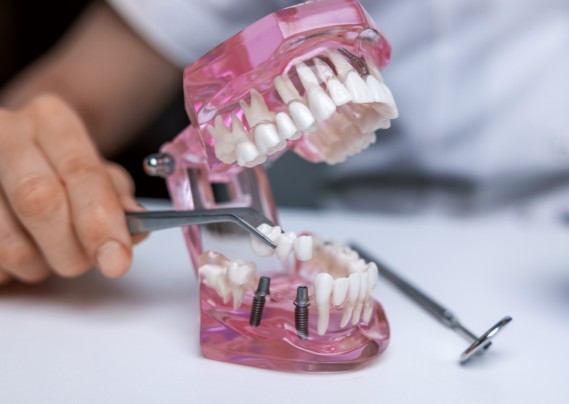
You might be feeling worn down by your teeth, not just physically but emotionally too. Maybe you avoid smiling in photos, chew only on one side, or feel a jolt of panic every time a filling breaks or a tooth cracks. It can feel like your mouth is falling apart piece by piece, and that is a heavy thing to carry every day—but working with an experienced Oral Surgeon in Warren, NJ can be the first step toward feeling whole and confident again.
At the same time, you may have heard about full mouth dental implant restorations and wondered if they could finally give you a fresh start. Then the questions rush in. How do implant dentists even plan something this big? Is it safe? Is it “too much”? Will it look natural? Will I be able to afford it?
You are not alone in that mix of hope and fear. A customized full mouth restoration is a big decision, yet when it is properly planned by an oral surgeon and implant dentist, it becomes a structured, step-by-step process instead of a leap into the unknown. In simple terms, your team studies your health, bone, bite, and goals, then designs a new, stable set of teeth that is meant to look, feel, and function like the real thing.
So where does that leave you? You deserve to understand how this planning actually works, what tradeoffs are involved, and what you can do right now to move from anxiety to clarity.
Why does a full mouth restoration feel so overwhelming in the first place
Think about how long this has been building. Old crowns. Root canals. Missing teeth. Dentures that never quite fit. Maybe gum disease. Over time, you start to feel like you are patching a house with a crumbling foundation. Each new problem brings another emergency visit, another bill, and more doubt about whether you are just throwing money away.
The emotional side is real. You might cancel social plans because eating in public feels embarrassing. You might cover your mouth when you laugh. You might feel older than you are. These are not vanity concerns. They affect how you show up at work, in relationships, and even how you talk to your dentist.
Then you hear about full arch implant treatment, where several implants support a full set of fixed teeth. It sounds almost too good to be true. Because of this tension, you might wonder whether this is just a fancy version of dentures or a radical surgery that will knock you out of commission for months.
Here is the truth. Planning a customized full mouth restoration is less about “fancy” technology and more about methodical, careful thinking. The right team looks at your entire situation and asks, “What is the safest way to give this person stable, long-term teeth that match their life and health?”
How do implant dentists actually plan a customized full mouth restoration
To make this feel less mysterious, it helps to walk through the main stages your oral surgeon and implant dentist usually follow. Different centers have their own protocols, yet the logic is similar.
First comes a deep evaluation. That usually includes a detailed exam, photos, and 3D imaging such as a CBCT scan to study your bone, sinuses, nerves, and jaw joints. Your team will look for infection, bone loss, cracked roots, and the health of any remaining teeth. Centers that focus on full arch treatment, like those offering bundled full arch fixed implant restorations, often have streamlined ways to collect all this data in one visit.
Next, they listen. A good plan does not start with “how many implants.” It starts with “how do you want to live with your teeth.” Do you want fixed teeth that never come out? Are you open to removable options? Do you have a strong gag reflex? Are you comfortable with several surgeries, or do you need fewer visits? Your answers guide the design more than you might think.
Then comes the treatment planning itself. This is where your oral surgeon and implant dentist decide things like how many implants to place, where to place them in the bone, whether you need bone grafting or sinus work, and which teeth should be removed or saved. They also plan your bite. How your top and bottom teeth will meet is crucial for comfort and long-term stability.
In many cases, digital planning software is used to “test drive” your new teeth virtually. For some patients, a trial smile or temporary set of teeth is created so you can see and feel the proposed shape, length, and color. Academic centers that offer full mouth reconstruction, like the programs described by Rutgers School of Dental Medicine or the UCSF Dental Center’s mouth reconstruction services, often lean heavily on this kind of careful, step-by-step planning.
The emotional and financial challenges sit in the background of all this. You might worry that you are “being extra” for considering full mouth implants. You might also be scared of starting something you cannot finish because of cost. These are not side issues. They are central. A thoughtful team will talk openly with you about timelines, phases of care, and different ways to match the plan to your budget and health, instead of pushing a one-size-fits-all solution.
How do full mouth implants compare with other options
So how do you know if a customized full mouth dental implant service is even worth exploring compared with more traditional choices? It can help to see the differences.
| OPTION | WHAT IT IS | PROS | CONS |
| Traditional dentures | Removable teeth that sit on the gums | Lower upfront cost. No surgery. Faster to make. | Can be loose. Reduced chewing power. Bone continues to shrink. Can affect taste and speech. |
| Partial restorations and crowns | Fixing or replacing teeth one area at a time | Spreads cost over time. Keeps some natural teeth. Familiar process. | Can feel like ongoing patchwork. May not solve deeper bite or bone issues. Long-term cost can add up. |
| Full mouth implant restorations | Several implants supporting fixed or removable full arches | Very stable. Better chewing. Helps preserve bone. Can look and feel like natural teeth. | Higher initial cost. Requires surgery and healing time. Needs careful cleaning and follow-up. |
There is no single “right” choice for everyone. The right question is not “Which option is best.” It is “Which option matches my health, my goals, and my reality right now.” A skilled oral surgeon and implant dentist will use this kind of comparison with you, not just talk about the most advanced procedure.
What can you do right now to move toward a clear decision
When your mouth is complicated, it is easy to feel frozen. You do not have to decide everything today. You only need to take the next wise step.
- Gather your story and your records
Before any consultation, write down your main concerns in plain language. For example, “I am afraid my teeth will all break,” or “I want to eat normally again,” or “I do not want a denture that comes out.” Bring a list of your medications and any recent X-rays or dental notes if you have them.
This helps your oral surgeon and implant dentist understand the full picture faster, and it keeps the visit focused on what matters most to you rather than just what shows up on a scan.
- Ask planning-focused questions, not just price questions
Cost matters, and you should absolutely ask about it, yet you will get more value if you also ask questions like:
- “What are my main options, and what are the pros and cons of each for my specific mouth?”
- “How do you plan where to place implants and how many I actually need?”
- “Can you show me what my bite and smile could look like with this plan?”
- “Is there a way to phase treatment so I am not doing everything at once?”
The answers will tell you as much about the team’s judgment and empathy as their technical skill.
- Give yourself permission to seek a second opinion
Full mouth reconstruction is a major medical choice. It is completely reasonable to get another viewpoint, especially if something in the first plan does not sit right with you. A second opinion can confirm that you are on the right track or reveal other pathways you had not considered.
When you compare opinions, pay attention to how well each provider explains the “why” behind their recommendations. A good plan should make sense to you. You should feel invited into the process, not talked over.
Moving toward a mouth that finally feels like yours again
You have lived with dental stress long enough. Understanding how implant dentists plan customized full mouth restorations is not about learning every technical detail. It is about realizing that this is a guided, thoughtful process aimed at giving you stable teeth, a confident smile, and a mouth that supports your daily life instead of limiting it.
You are allowed to ask questions. You are allowed to move slowly. Most of all, you are allowed to hope that things can be different. With the right oral surgeon and implant dentist planning by your side, that hope can be turned into a clear plan that respects both your health and your circumstances.
