

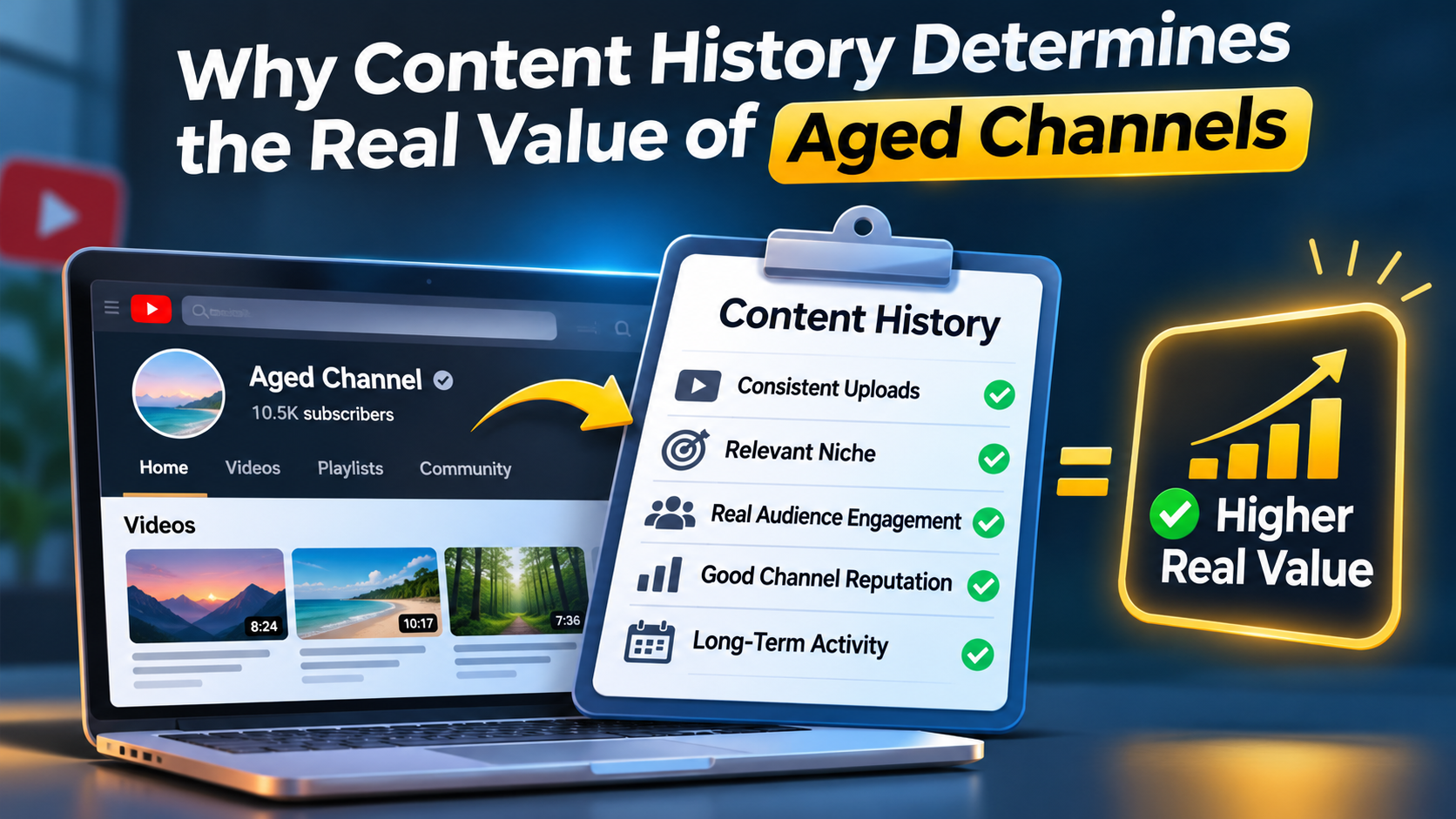
Every established YouTube channel carries a digital footprint that extends far beyond its subscriber count or watch-time statistics. That footprint—made up of past uploads, audience interactions, copyright records, and thematic consistency—shapes whether a channel is truly worth acquiring. Buyers who focus only on surface-level numbers often overlook the deeper story a channel’s content history tells, and that oversight can turn what looked like a promising investment into a liability. When evaluating options to buy aged YouTube channels, understanding this history isn’t optional homework; it’s the foundation of a sound decision.
This article explores how archive quality, theme alignment, audience expectations, compliance records, and reputational factors all intersect to influence a successful acquisition. Rather than treating a channel as a blank slate ready for reinvention, savvy buyers treat it as an inherited identity—one with strengths to leverage and risks to manage.
What Does Archive Quality Reveal About a Channel’s Worth?
The archive is the backbone of any channel. It’s not just a collection of old videos; it’s evidence of consistency, production standards, and audience engagement patterns over time. A well-maintained archive with steady upload schedules, decent production values, and genuine viewer interaction signals that the channel was built with intention rather than assembled hastily for resale.
Buyers should examine whether older videos still receive organic views and comments, which suggests the content has lasting relevance rather than relying solely on short-term trends. Channels with large libraries of outdated, low-effort, or inconsistent content may carry more baggage than benefit, since removing or replacing that material can disrupt watch-time continuity and confuse returning viewers.
How Can You Tell If an Archive Has Been Artificially Inflated?
Unnatural engagement patterns are the clearest warning sign. Sudden spikes in views or subscribers that don’t correspond to any identifiable content event—a viral moment, a collaboration, or a trending topic—often point to purchased engagement or manipulated metrics. A healthy archive shows organic growth curves, with views and interactions that rise and fall in believable patterns relative to upload frequency and content quality. When growth looks too smooth or too sudden, it’s worth investigating further before moving forward with any transaction.
Why Does Thematic Alignment Matter More Than It Seems?
One of the most overlooked aspects of acquiring an established channel is whether its existing theme aligns with the buyer’s future content plans. A channel built around cooking tutorials, for instance, comes with an audience that expects recipes, kitchen techniques, and food-related content. Pivoting that same channel toward tech reviews or financial advice creates a jarring disconnect that can alienate the very subscribers that made the channel valuable in the first place.
What Happens When a Channel’s Niche Shifts Too Abruptly?
Audiences are remarkably sensitive to sudden changes in direction. A niche shift that happens too quickly, without any transitional content or explanation, often triggers unsubscribe waves and declining engagement rates. YouTube’s recommendation algorithm also takes time to recalibrate around new content signals, meaning a channel’s visibility can dip noticeably during this adjustment period. Buyers planning a content pivot should factor in this transitional phase and budget time for the audience and algorithm to adapt gradually, rather than expecting an immediate return to prior performance levels.
How Do Audience Expectations Shape Post-Acquisition Strategy?
Subscribers don’t just follow a channel name; they follow a voice, a personality, and a set of expectations built over months or years of content. When ownership changes hands, those expectations don’t disappear. Comments, community posts, and past video descriptions often reveal what the existing audience values most—whether that’s tutorial depth, entertainment value, consistency, or a particular presenter’s style.
Should You Keep the Original Presenter or Branding Style?
This depends entirely on your goals. If the channel’s personality was central to its appeal—a recognizable host, a consistent visual style, a particular sense of humor—removing that element abruptly can feel like a betrayal to loyal viewers. Maintain elements of the original branding and tone if your priority is retaining as much of the existing audience as possible. If your plan involves a complete rebrand with new management and a different creative direction, prepare for a transitional period where some audience erosion is likely, and plan content strategies that ease viewers into the change rather than shocking them with it.
What Role Does a Channel’s Copyright and Guideline Record Play?
Few factors carry as much weight in this process as a channel’s compliance history. YouTube maintains records of copyright strikes, community guideline violations, and content ID claims, and these records travel with the channel regardless of ownership changes. A channel with a troubled compliance history can face restricted monetization, reduced recommendation visibility, or even permanent suspension risk if violations accumulate further after the transfer.
How Does Past Policy Compliance Affect Monetization Eligibility?
YouTube’s monetization policies require ongoing adherence to community guidelines, and a history of violations—even resolved ones—can trigger closer scrutiny from the platform’s review systems. Channels with clean compliance records tend to move through monetization reviews more smoothly after ownership transfers, while those with flagged histories may face extended review periods or additional verification steps. Choose channels with transparent, verifiable compliance records if stable, predictable monetization is a priority for your acquisition.
How Does Reputation Influence Rebranding Decisions?
A channel’s reputation—built through years of audience interaction, public statements, collaborations, and content choices—doesn’t vanish when ownership changes. Positive reputations create goodwill that new owners can build upon, while negative associations, even if outdated, can resurface and affect credibility during a rebrand.
Is It Better to Rebrand Immediately or Transition Gradually?
Gradual transitions generally perform better for channels with an established audience, since they allow viewers to acclimate to new content styles, hosts, or themes without feeling blindsided. Immediate rebrands work more effectively for channels acquired primarily for their technical assets, where the existing audience is secondary to the buyer’s goals. Select the approach that matches your priorities: gradual transition for audience retention, immediate rebrand for operational speed.
Making an Informed Decision
Content history isn’t a footnote in the acquisition process; it’s the central narrative that determines how a channel will perform under new ownership. Archive quality tells you whether the foundation is solid. Thematic alignment tells you whether your future plans will resonate with existing viewers. Audience expectations reveal what you risk losing if you change too much, too fast. Copyright and guideline records expose hidden liabilities that could undermine the entire investment. And reputation shapes how smoothly any rebranding effort will unfold.
What should I check first when reviewing a channel’s content history?
Start with the archive’s consistency and engagement authenticity. Look at upload frequency, video quality over time, and whether older content still generates organic interaction. This establishes whether the channel was genuinely cultivated or artificially built up for a quick sale.
Does a channel’s past niche limit what I can do with it afterward?
It doesn’t eliminate your options, but it does influence how smoothly any changes will be received. Staying close to the original niche preserves audience trust, while a significant pivot requires a longer adjustment period and a willingness to accept some audience turnover.
How important is it to review copyright strike history before proceeding?
It’s one of the most critical steps in the entire process. Unresolved or accumulated strikes can jeopardize monetization and even the channel’s long-term survival on the platform, so full transparency on this history should be a non-negotiable part of due diligence.
Can a channel’s negative reputation be repaired after a change in ownership?
Yes, but it requires patience and a deliberate strategy. Gradual, transparent communication about new direction and improved content standards tends to rebuild trust more effectively than abrupt, unexplained changes.
Should audience expectations outweigh my own content goals when planning next steps?
Not necessarily, but they should inform your timeline and approach. Balancing your vision with respect for the existing audience’s expectations tends to produce smoother transitions and better long-term retention than ignoring those expectations entirely.
