

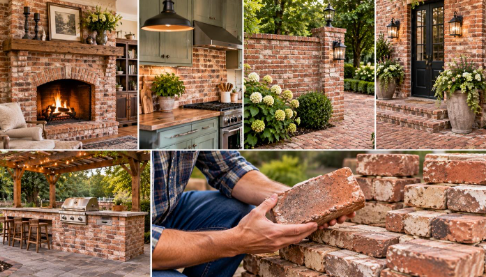
There’s something about an old brick wall that new materials just can’t copy. The soft colour shifts, the slightly uneven edges, the faint marks left by hands that shaped them a century ago. Walk past a building made of old brick and you feel the story before you even know it.
More homeowners, designers, and builders are bringing that character into their own projects. If you’re considering it, here’s what makes these bricks so appealing, where they work best, and how to shop with confidence.
What Makes a Brick Antique?
Generally, the term refers to bricks salvaged from older structures such as factories, warehouses, streets, and homes, often well over a hundred years old. Many were hand-moulded or made in early mechanical processes and fired in old-style kilns. That’s why you’ll see natural variation in colour, size, and texture that modern bricks rarely have.
Each one carries a little history. Some still show maker’s stamps, firing marks, or the soft rounded edges that come from decades of weather and wear.
Why People Fall in Love with Them
Patina is the big draw. Time and weather create warm reds, deep browns, and subtle mixed tones that feel layered and lived-in. Because the variation is natural, a wall built from old brick looks rich rather than uniform.
There’s a practical side too. Bricks that have stood for generations have already proven they can handle the elements. Choosing them also keeps good material out of landfills, which is a win for the planet.
Where They Shine
Old brick works almost anywhere you want warmth and texture. Think fireplace surrounds, kitchen backsplashes, accent walls, entryways, garden walls, courtyards, and outdoor kitchens. They’re also a natural choice for restoration projects were matching the original masonry matters.
Even a small feature, like a single wall in a living room, can change the whole feel of a space.
Shopping Smart
When you start browsing antique brick for sale online, it pays to slow down and ask questions. Look for a supplier who can tell you where the material came from, how it was cleaned, and what size and colour range to expect. Request photos of actual stock rather than a single polished sample, and ask whether they can provide a mix that matches your project.
Check the condition, too. You want bricks that are solid and free of deep cracks or heavy flaking, especially for exterior use.
Plan for Variation and Extra Quantity
Because every brick is different, you’ll want to order more than the bare minimum. Many masons recommend adding roughly ten percent for cuts, breakage, and sorting. Mix bricks from several pallets as you work so colours blend naturally instead of forming patches.
Sizes can vary slightly as well, so a skilled mason who has worked with old material is worth their weight in gold.
Installation Tips
Use mortar suited to older masonry, and ask your mason what’s appropriate for your climate and application. Clean bricks gently, avoiding harsh methods that strip away the surface character you paid for. For interior features, a clear sealant can help keep dust down without hiding the natural look.
Cost and Value
Old brick usually costs more than standard new brick, and it’s fair to wonder if it’s worth it. For many people the answer is yes, because the look is simply impossible to reproduce. A feature wall or fireplace built from salvaged material often becomes the thing guests remember most.
If budget is tight, consider using it where it counts. A single accent wall, a hearth, or an entry path delivers plenty of character without covering your whole property.
Mixing Old and New
You don’t have to go all in. Pairing old brick with clean modern lines, like simple wood shelving, black metal fixtures, or plain white walls, creates a striking contrast. The warmth of the brick softens modern spaces, while the modern elements keep the old material from feeling heavy or dated.
Lighting makes a big difference as well. Warm, angled light along a brick wall highlights its texture and color, especially in the evening.
Take a few photos of your sample bricks next to your flooring, paint, and fixtures before you decide. Seeing everything together in your own light saves you from costly second-guessing later.
Final Thoughts
A project built with old brick tells a story that new materials can’t. Take your time, choose a reputable source, and plan for a bit of variation. The reward is a space with real warmth, character, and staying power.
Key Takeaways
- Antique bricks come from century-old structures and offer natural color and texture.
- Their patina and variation give projects a rich, lived-in look.
- They suit fireplaces, walls, courtyards, entryways, and restoration work.
- Ask suppliers about origin, condition, and size range, and request photos of real stock.
- Order about ten percent extra and blend pallets as you build.
- Use suitable mortar and gentle cleaning to protect the surface.
