

The world of industrial machinery is vast and varied, with countless specialized components designed for specific applications. Among these, the slip ring induction motor holds a place of significance, known for its robust performance in heavy-duty applications. This guide seeks to demystify slip ring induction motors, providing insights into their operation, advantages, and applications.
Slip ring induction motors, essential to the seamless operation of various industrial processes, offer a blend of reliability, robustness, and adaptability unseen in many other types of motors. They are particularly renowned for their high starting torque and flexibility in speed control, making them indispensable in sectors that demand such precise mechanical control.
While the principles of efficiency and optimization apply across various fields, from the engineering complexities of slip ring induction motors to the practicalities of home energy management, one thing remains constant: the importance of utilizing technology to improve performance and reduce costs. For homeowners, especially in climates like Houston’s, where heat can significantly impact comfort and energy expenditure, adopting advanced solutions such as radiant barriers is a step towards achieving efficiency. Enhance your home with Houston radiant barrier solutions to reflect heat away from your living space, thereby lowering cooling costs and improving overall energy usage. This type of home improvement reflects the broader principle of optimizing technology for better performance, much like the innovations seen in industrial machinery.
What is a Slip Ring Induction Motor?
At the heart of many industrial processes, the slip ring induction motor stands out for its distinctive characteristics and versatility. Fundamentally, this electrical motor belongs to the family of induction motors, which are essentially devices that convert electrical energy into mechanical energy through electromagnetic induction. However, what sets slip ring induction motors apart is their specialized rotor construction and the inclusion of an ingenious component: the slip ring.
Definition and Basic Understanding
A slip ring induction motor, also known as a wound rotor induction motor, utilizes a rotor that is comprised of a winding, similar to the stator, instead of the standard squirrel cage found in traditional induction motors. This configuration is directly connected to the external circuit through a set of slip rings—a feature that is pivotal to its operation and benefits. The presence of these slip rings permits the motor to have controllable resistance inserted into the rotor circuit, thereby enabling more nuanced control over the motor’s performance characteristics, particularly during start-up and speed variation processes.
In essence, while all induction motors operate on the principle of electromagnetic induction—whereby a voltage is induced in the rotor by the rotating magnetic field of the stator—the slip ring induction motor introduces an additional layer of functionality and control. It bridges the gap between the need for power and finesse, allowing for a more dynamic response to the varying demands of industrial machinery.
Introduction to the Concept of the Slip Ring and Its Role
The slip ring plays a central role in the operation of its namesake motor. Envision sets of conductive rings, insulated from each other and mounted on the rotor shaft. These rings are connected to the rotor windings, and through brushes that maintain contact with the rings, an external circuit can introduce variable resistance into the rotor. This ability to manipulate the rotor resistance is revolutionary in several ways.
Firstly, by adjusting the resistance, it’s possible to control the starting current of the motor, thereby reducing the potential for mechanical and electrical stress on both the motor and the power supply infrastructure during startup. Secondly, this adjustment capability allows for the modulation of the motor’s torque and speed characteristics, making slip ring induction motors ideal for applications that require high starting torque or varying speed under load, such as cranes, elevators, and conveyor systems.
The integration of the slip ring into the motor’s design is a testament to human ingenuity in the pursuit of versatility and efficiency in power management. It underscores an evolutionary step in the design of electric motors, marrying the raw power of electrical machinery with the finesse required for precision and control in industrial applications. Through this blend of characteristics, slip ring induction motors effectively cater to the nuanced demands of modern industry, making them invaluable tools in the arsenal of industrial machinery.
Slip Ring Induction Motor Components and Structure
The key to harnessing the power and precision of the slip ring induction motor stems from a firm understanding of its structural components and how they interface to create a balanced operational system. Each segment—the slip rings, rotor, and stator—plays a crucial role in the conversion of electrical energy to mechanical energy and offers unique characteristics that set slip ring motors apart from other electric motor types.
A Detailed Look at the Slip Ring Induction Motor Diagram
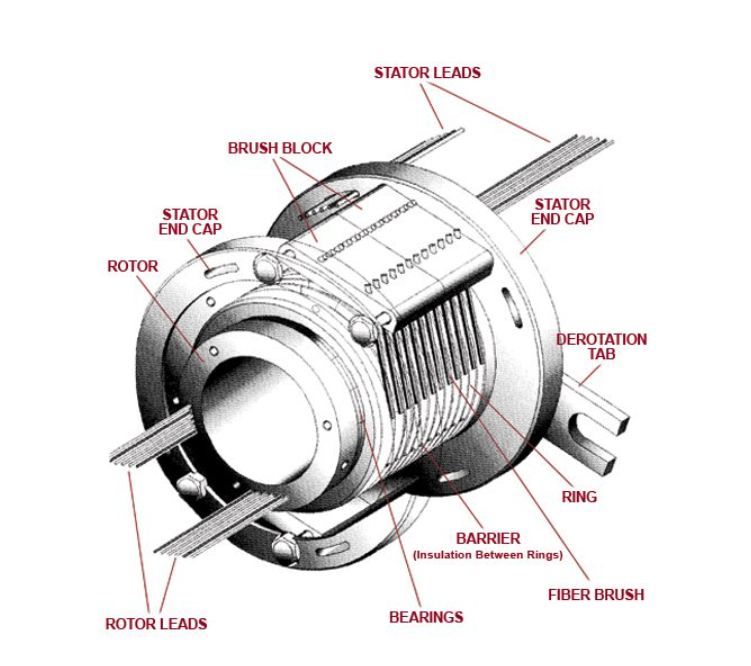
A detailed examination of the slip ring induction motor diagram reveals a neatly arranged configuration of components, each with a specific purpose. At the center, the rotor—the rotating part of the motor—is connected to a shaft that translates the motor’s power to its application. Around the rotor, the stator—the stationary part of the motor—houses winding designed to generate a rotating magnetic field when energized.
Contrary to a standard induction motor where the rotor has no electrical connections, the rotor in a slip ring induction motor is equipped with a winding that ends in three slip rings. These rings are contacted by stationary brushes that carry the rotor’s winding into an external circuit and finally back to the power supply. Together, these components create a closed circuit that allows for electrical energy to flow.
Explanation of Major Components: Slip Rings, Rotor, and Stator
A closer look into these key components reveals their functional significance. Firstly, the slip rings are metallic rings mounted on the rotor’s shaft, which the brushes maintain constant contact with, facilitating the transfer of electricity between the fixed external resistance and the rotating rotor. This unique setup grants the motor its name and its distinctive adjustable performance.
The rotor, more specifically the ‘wound rotor,’ of the slip ring induction motor, is wound to a comparable number of poles as the stator. This winding is connected to the slip rings, which transmit power to the load via the brushes and an external resistance circuit. This establishes the ability to control the rotor’s resistance, thereby offering control over the rotor’s speed and torque characteristics.
Lastly, the stator carries three-phase windings evenly distributed over its inner periphery. When fed with a three-phase supply, a rotating magnetic field is established. This “induces” a voltage in the rotor windings, leading to current flow and generating power in the rotor circuit, which then creates a magnetic field in the rotor interacting with the stator’s field to produce torque.
Key Attributes that Distinguish It from Other Types of Motors
The unique design and synergy of the slip ring motor’s components allow for key attributes that set it apart from other types of electric motors. The most pivotal characteristic is the adjustability of rotor resistance, which permits fine control over the starting currents, starting torque, and running performance. Therefore, despite requiring more maintenance due to the mechanical wear of brushes and slip rings, slip ring induction motors offer superior flexibility and control, making them highly versatile for applications demanding nuanced speed and torque control.
In conclusion, understanding the structural components of the slip ring induction motor and their crucial interplay lays the groundwork for realizing the motor’s full potential. It’s these components and their distinctive functionalities that make the slip ring induction motor an invaluable tool in industries requiring advanced motor control capabilities.
Slip Ring Induction Motor Working Principle
Peering beneath the mechanical complexity of the slip ring induction motor reveals a sophisticated orchestration of physics and engineering principles at work. At its foundation, the motor operates on the principles of electromagnetic induction and the slip mechanism, both essential to producing controlled torque and speed modulation.
Explanation of the Slip Ring Induction Motor Working Principle
The operation of the slip ring induction motor begins with the three-phase alternating current supply provided to the stator. The current flowing through the stator windings generates a rotating magnetic field which induces a current in the rotor windings, due to the transformer action. This induced current creates its magnetic field, which interacts with the initial stator magnetic field, leading to the production of torque that enables the rotor to rotate.
Unlike other induction motors, where rotor and stator windings are electrically disconnected, the slip ring induction motor connects rotor windings to an external circuit via the slip rings. This allows resistance to be inserted into the rotor’s circuit and altered as required to modify the motor’s performance characteristics.
On starting, the external resistances are adjusted to be high which increases the starting torque and controls the starting current. As the motor comes up to speed, these resistances are gradually reduced and eventually shorted out, enabling the motor to behave similarly to a standard induction motor under normal operating conditions.
How Electricity is Transferred and the Importance of the Slip Mechanism
The role of slip rings in transferring the electricity from the stator to the rotor is pivotal. The slip rings rotate with the rotor and remain in constant contact with stationary brushes, which transfer the adjustable resistance from the external circuit to the rotor windings. This transfer allows the resistance to be adjusted, thereby modulating the current in the rotor and influencing the torque of the motor.
The slip mechanism is a crucial aspect of the motor’s operation. By definition, “slip” is the difference between the synchronous speed of the rotating stator magnetic field and the actual speed of the rotor, expressed as a ratio of the synchronous speed. The magnitude of the slip determines the induced current in the rotor, and therefore the torque produced.
No slip means no relative motion, and consequently, no induced current and no driving torque. When the motor is started, a significant slip occurs as the rotor speed tries to catch up with the synchronous speed; hence, high levels of torque are produced. As the motor approaches its operational pace, the slip decreases, and so does the induced current and torque, until an equilibrium is reached to match load requirements.
In conclusion, the working principle of a slip ring induction motor is a testimony to the meticulous integration of key principles of electromagnetism and mechanics. It leverages the slip mechanism and the malleability offered by the slip rings to strike an optimal balance between power, control, and efficiency—one that positions slip ring induction motors as indispensable assets in the realm of heavy-duty industrial applications.
Slip Ring Induction Motor Formula and Performance Calculation
The performance of slip ring induction motors can be scrutinized and quantified by employing a set of mathematical formulas. These expressions allow engineers to calculate critical performance parameters such as torque, slip, and efficiency. Understanding these principles is fundamental to optimizing motor performance for specific industrial applications.
Introduction to Key Formulas Involved in Calculating Performance
- Slip Calculation: Slip (s) is a measure of how much the rotor lags behind the synchronous speed of the stator’s rotating magnetic field. The formula to calculate slip is:
[ s = \frac{N_s – N_r}{N_s} ]
Where:- (s) is the slip,
- (N_s) is the synchronous speed (in RPM),
- (N_r) is the rotor speed (in RPM).
- Synchronous speed can be calculated using the formula:
[ N_s = \frac{120 \times f}{P} ]
Where:- (f) is the frequency of the AC power supply (in Hz),
- (P) is the number of poles the motor has.
- Torque: One of the most critical performance measures of a slip ring induction motor is torque. The torque generated by the motor at any slip ‘s’ is given by the formula:
[ T = \frac{3 \times V^2 \times R_2′ \times s}{{(\omega_s \times (R_1 + R_2’/s)^2 + (X_1 + X_2′)^2)}} ]
Where:- (T) is the torque,
- (V) is the supply voltage per phase,
- (R_1) and (R_2′) are the stator and rotor resistances per phase respectively,
- (X_1) and (X_2′) are the stator and rotor reactances per phase respectively,
- (s) is the slip,
- (\omega_s) is the synchronous speed in rad/s (it can be obtained by converting (N_s) to rad/s).
- Power and Efficiency: The power output and efficiency are equally significant. The mechanical power developed by the rotor (P_m) is:
[ P_m = T \times \omega_r ]
Where:- (\omega_r) is the angular velocity of the rotor in rad/s.
- The efficiency ((\eta)) of the motor can be obtained by comparing input electrical power to the output mechanical power:
[ \eta = \frac{P_m}{P_{in}} \times 100% ]
Where:- (P_{in}) is the input electrical power (typically calculated by (3 \times V \times I \times \text{Power Factor})),
- (I) is the input current.
Indexing Performance Parameters
The performance of slip ring induction motors can be evaluated through a variety of parameters that reflect operational capability:
- Torque — The starting torque is particularly important in heavy applications such as lifts or cranes, where significant force is required to start the movement of large masses.
- Slip — It’s a direct indicator of the speed regulation of the motor, which relates to the control that can be exerted on its operating speed.
- Efficiency — It indicates how well the motor converts electrical power to mechanical power and is pivotal for energy-saving considerations, particularly in large-scale industrial operations where energy costs are substantial.
- Speed — Understanding the relationship between load and speed variation in the motor is important for applications where maintaining a near-constant speed under varying loads is desired.
- Power Factor — A higher power factor means better utilization of electrical power and affects the sizing of other electrical components such as cables and transformers.
By integrating these calculations and analyses, engineers and technicians can tailor the performance of slip ring induction motors to specific tasks, thereby optimizing operational efficiency and cost-effectiveness. The adaptability provided through the manipulation of variables like resistance and reactance is not merely academic but a pragmatic way to harness and fine-tune the raw mechanical power that drives the industry.
Slip Ring Induction Motor Speed Control Mechanisms
Speed control is an integral aspect of leveraging the full potential of slip ring induction motors. Within the diverse applications of these motors—ranging from elevators to conveyor systems—the ability to modulate speed is imperative for precision and efficiency. Effective speed control mechanisms facilitate the manipulation of motor operation to satisfy the varied demands of torque and speed.
Overview of Speed Control in Slip Ring Induction Motors
Slip ring induction motors afford the distinct advantage of controllable speed. Unlike their squirrel cage counterparts, where speed control can be difficult and inefficient, the inclusion of slip rings and brushes in the design of these motors presents an avenue through which their speed can be modulated in an efficient and sustained manner. This modulation is primarily achieved by altering the resistance in the rotor circuit, thus affecting both the slip and, consequently, the motor speed.
Detailed Approaches to Speed Control
- Use of External Resistances:
The traditional method for controlling the speed of a slip ring induction motor is through the insertion of variable external resistances in the rotor circuit. When the resistance is increased, a higher slip is needed to maintain the torque, leading to a reduction in rotor speed. This method allows for a smooth and gradual adjustment of the motor speed—especially useful during startup to control the initial surge of current and achieve a high starting torque.
Operationally, this is conducted by connecting the rotor windings to a set of slip rings, and subsequently through brushes to adjustable resistors. By manipulating these resistors, the motor performance can be finely tuned, providing a high degree of control:- Starting: High resistance inserted to limit starting current and increase starting torque.
- Running: Resistance is decreased once the motor reaches operation speed to optimize efficiency.
- Load Changes: Resistance can be adjusted to compensate for load variations and maintain the desired speed.
- This method has the advantage of simplicity and robustness. However, it is typically less energy-efficient than other methods due to the power dissipated in external resistors as heat.
- Variable Frequency Drives (VFDs):
With advancements in power electronics, variable frequency drives have become a popular choice for controlling the speed of induction motors, including slip ring types. VFDs control the speed of a motor by varying the frequency and voltage of the power supplied to the motor:- Starting: Controlled ramp-up speed to limit mechanical and electrical stress.
- Running: Precisely adjusts frequency to achieve required speed and performance.
- Load Changes: Adapts in real-time to load demands ensuring efficient operation.
- By changing the frequency of the power supply, the synchronous speed changes in proportion, allowing fine speed control. This sophisticated technique results in energy savings, as VFDs incur less power loss than external resistor-based systems.
Additionally, VFDs can be used in conjunction with slip ring motors to widen the range of speed control. By first modifying the frequency to adjust the base speed and then using the external resistors for fine-tuning, a broad torque-speed characteristic is attainable, rendering this combination highly versatile.
In conclusion, the ability to control the speed of slip ring induction motors with precision stands as one of its quintessential features, critically important across a multitude of industrial applications. Whether through traditional means of varied rotor resistance or modern VFD technology, the output characteristics of these motors can be effectively tailored to meet the complex and dynamic requirements of sophisticated mechanical systems. This adaptability underscores the enduring relevance of slip ring induction motors in an ever-evolving landscape of industrial automation and control.
Slip Ring Induction Motor Applications and Advantages
Slip ring induction motors, renowned for their unique construction and operational capabilities, play a pivotal role in various industrial applications, particularly where the machinery demands high starting torque and precise speed control. These motors distinguish themselves from their squirrel cage counterparts through the implementation of slip rings and brushes, which facilitate a broader range of control over motor performance. This nuanced control proves indispensable in a wide array of industrial settings.
Application Areas of Slip Ring Induction Motors
The inherent capability of slip ring induction motors to provide high starting torque while limiting start-up current makes them the motor of choice for heavy-duty applications. These characteristics are especially beneficial in sectors where machinery must overcome substantial inertial loads to initiate movement. Key application areas include:
- Cranes and Hoists: In material handling equipment like cranes and hoists, high starting torque is crucial for lifting heavy loads from a standstill. Slip ring motors provide the necessary muscle to initiate these movements smoothly and efficiently.
- Elevators: Elevators require motors that offer a delicate balance between high starting torque and controllable speeds to ensure passenger comfort and safety. Slip ring induction motors fulfill these requirements, making them a preferred choice in the vertical transportation industry.
- Rolling Mills: The steel industry, particularly in rolling mills, relies on slip ring motors to drive the heavy rollers that press and shape steel. The high torque at low speeds is vital for the initial compression of the steel.
- Cement Mills: Similar to rolling mills, cement mill machinery demands constant torque under varying loads. Slip ring motors are adept at handling these load fluctuations, contributing to smoother and more efficient cement processing.
- Pumps and Compressors: For large pumps and compressors that move significant volumes of fluids or gases, slip ring motors provide the high starting torque needed to overcome initial inertia, coupled with the ability to adjust speed as per process requirements.
Benefits of Using Slip Ring Induction Motors Over Squirrel Cage Motors
While squirrel cage motors are broadly used across industries for their simplicity and robustness, slip ring induction motors offer distinct advantages that make them more suitable for specific applications:
- Adjustable Starting Torque and Current: Slip ring motors allow for the adjustment of starting current and torque by modifying the resistance in the rotor circuit. This flexibility can significantly reduce mechanical and electrical stresses during startup, extending the lifespan of both the motor and the machinery it drives.
- Improved Speed Control: The ability to insert external resistances in the rotor circuit or to couple the motor with variable frequency drives enables precise speed control. This level of granularity in speed adjustment is not as readily achievable with squirrel cage motors.
- Efficiency in High-inertia Loads: For applications involving high inertial loads, slip ring motors can start with high torque and lower current without the need for complex starters. This operational efficiency can translate into energy cost savings over time.
- Flexibility and Customization: The design of slip ring induction motors allows for a degree of customization in their performance characteristics through the adjustment of external rotor resistances, making them adaptable to specific application needs.
In sum, slip ring induction motors present a robust solution for industries where machinery demands high starting torque, precise speed control, and flexibility under varying load conditions. Their nuanced operational capabilities, when matched against the backdrop of industrial requirements ranging from material handling to fluid processing, underscore their indispensability and superiority in certain contexts over squirrel cage motors. This blend of performance attributes ensures slip ring induction motors remain a cornerstone of modern industrial machinery setups.
Choosing the Right Slip Ring Induction Motor
The selection of the appropriate slip ring induction motor is a crucial decision that significantly impacts the efficiency, reliability, and overall performance of industrial applications. Given their adaptability and specific performance advantages, slip ring motors find utility in a diverse set of operations requiring varying degrees of control and torque. However, the decision to select a slip ring induction motor over other types must be informed by a thorough understanding of the application’s demands, environmental conditions, and operational requirements.
Guidance on Selecting Slip Ring Induction Motors for Various Applications
When choosing a slip ring induction motor, the primary considerations stem from the unique requirements of the application it is intended for. Traditionally favored in scenarios demanding high starting torque and precision in speed control, these motors are ideally suited for heavy-duty applications such as lifts, cranes, conveyors, and certain types of pumps and fans. Here are several aspects to mull over when selecting a slip ring induction motor:
- Nature of Load: Evaluate whether the application involves constant or varying loads. Slip ring motors are particularly advantageous for varying load conditions due to their inherent capability to provide high starting torque and better control over speed variation.
- Starting Conditions: Consider the starting torque requirements and whether the application needs frequent starting, stopping, or reversing. High starting torque with reduced start-up currents is a hallmark of slip ring motors, making them suitable for applications with tough starting conditions.
- Speed Control: Determine the level of speed control necessary. If the application requires close control over speed, especially at lower speeds, slip ring induction motors are preferable due to their enhanced control capabilities through external resistance adjustments or the integration with variable frequency drives (VFDs).
- Operational Flexibility: Assess the need for operational flexibility, such as the ability to handle sudden load changes. The adaptability of slip ring motors to operational variances makes them a robust option for dynamic environments.
Factors to Consider Including Power Requirements, Speed Control Needs, and Operational Environments
In the process of selecting the right slip ring induction motor, several critical factors must be taken into account to ensure optimal compatibility with the application’s demands:
- Power Requirements: The motor’s power rating should match the application’s energy demands at peak performance. This involves calculating the maximum load the motor will need to drive and selecting a motor with a suitable power output to ensure efficiency and prevent overloading.
- Speed Control Needs: Identify the precision level of speed control and regulation required by the application. Slip ring motors, especially when coupled with VFDs, provide a wide range of speed control capabilities. Selecting the right combination can significantly influence performance and energy consumption.
- Operational Environment: The environment in which the motor will operate can heavily impact its lifespan and performance. Factors such as temperature, humidity, dust, and explosive atmospheres necessitate careful consideration of motor design, enclosure type, and any additional protective measures.
- Maintenance and Accessibility: Given the presence of slip rings and brushes, slip ring motors may require more maintenance than their squirrel cage counterparts. Consideration of the operational environment and ease of maintenance can affect the choice. In applications where regular maintenance is not feasible, ensuring that the motor selected is designed for longevity and minimal upkeep is crucial.
Choosing the right slip ring induction motor is an intricate process that hinges on a detailed understanding of the application’s specific demands, the operational environment, and the performance features offered by the motor. By contemplating these key factors, engineers and decision-makers can secure a motor that not only meets the immediate needs of their application but also delivers sustained performance and reliability over its operational lifespan, thereby ensuring the efficiency and productivity of industrial operations.
Slip ring induction motors, with their unique blend of efficiency, adaptability, and control, continue to play a pivotal role in industrial machinery. As technologies evolve, so too will these motors, adapting to new challenges and continuing to drive industrial innovation forward.
