

What is SLS 3D Printing?
Selective Laser Sintering (SLS) is a 3D printing technology that uses a high-powered laser to fuse powdered material into a solid object layer by layer. Unlike other 3D printing methods, SLS doesn’t require support structures, making it ideal for complex geometries.
How Does SLS Work?
SLS, or Selective Laser Sintering, is a 3D printing process that involves fusing powdered material into a solid object layer by layer using a high-powered laser. The process begins with a powder bed. A thin, even layer of powdered material, typically nylon or other thermoplastic, is spread across a build platform.
Once the powder layer is in place, a high-powered laser scans the layer, melting and fusing the powder particles together to form the desired cross-section of the part. This process is akin to drawing with light. The laser’s energy selectively sinters the powder, creating a solid bond between the particles.
After the laser completes a layer, the build platform lowers slightly, and a recoater spreads a new layer of powder over the previously sintered one. This layer-by-layer build-up continues until the entire 3D object is formed.
A key advantage of SLS is the use of the unsintered powder as support material. Unlike other 3D printing methods that require additional support structures, SLS leverages the surrounding powder to support overhanging features and internal cavities. This eliminates the need for complex support structures, saving time and material, and allowing for the creation of intricate designs.
The entire build chamber is typically heated to a temperature slightly below the melting point of the powder material, which aids in the sintering process and ensures consistent part quality.
Once the build is complete, the unsintered powder is removed, and the finished part is extracted. Post-processing steps such as heat treatment or surface finishing may be applied to optimize the part’s properties.
Advantages of SLS 3D Printing
SLS 3D printing offers a multitude of benefits that make it a compelling choice for various applications. One of its standout advantages is the ability to create complex geometries. SLS excels in producing parts with intricate internal cavities, undercuts, and thin walls that would be challenging or impossible to manufacture using traditional methods.
Moreover, SLS-produced parts are renowned for their strength and durability. The laser sintering process results in parts with excellent mechanical properties that often rival those of injection molded components. This makes SLS suitable for producing functional prototypes and end-use parts that require high performance.
Unlike many other 3D printing technologies, SLS eliminates the need for support structures. The unsintered powder surrounding the part provides adequate support during the build process, saving time, material, and post-processing efforts. This streamlined workflow contributes to increased efficiency and cost-effectiveness.
SLS boasts a wide range of materials compatible with the process. From durable nylons to metal alloys and even ceramics, the material options offer flexibility in part design and application. This versatility expands the possibilities for SLS in various industries.
Finally, SLS is well-suited for mass production. Multiple parts can be built simultaneously within the build chamber, increasing production efficiency and reducing costs per part. This makes SLS an attractive option for manufacturing end-use parts in moderate quantities.
These advantages collectively position SLS as a powerful and versatile 3D printing technology with a broad spectrum of applications.
Applications of SLS 3D Printing
SLS 3D printing has found its way into a diverse range of industries due to its ability to produce strong, complex parts efficiently.
The automotive industry is a major adopter of SLS technology. From rapid prototyping of vehicle components to manufacturing end-use parts like engine mounts and interior trims, SLS offers speed, accuracy, and cost-effectiveness. Additionally, tooling and jigs for automotive production can be quickly fabricated using SLS.
The aerospace industry benefits greatly from SLS’s ability to create lightweight, high-performance components. Aircraft interiors, engine parts, and structural components are examples of applications where SLS shines. The technology’s capacity to produce complex shapes and withstand demanding conditions makes it a valuable asset in this sector.
The medical industry is leveraging SLS to produce customized implants, prosthetics, and surgical guides. The ability to create patient-specific medical devices with intricate geometries is transforming healthcare. SLS also plays a role in producing dental models and orthodontic appliances.
In the consumer products industry, SLS is used to manufacture durable and functional products with intricate designs. Sporting goods, electronics enclosures, and household items are examples of products that can benefit from SLS’s capabilities. The technology’s potential for mass customization is also attractive to this sector.
These are just a few examples of the many applications of SLS 3D printing. As the technology continues to advance, we can expect to see even more innovative uses emerge across various industries.
SLS vs. Other 3D Printing Technologies
SLS distinguishes itself from other 3D printing methods through several key advantages. Its ability to produce parts with intricate complex geometries is unmatched by many other technologies. Additionally, SLS consistently delivers parts with exceptional strength and durability, often comparable to injection molded components. The elimination of support structures simplifies the design process and reduces post-processing time, making it a highly efficient method.
Design Considerations for SLS
To optimize the performance and quality of your SLS 3D printed parts, it’s essential to consider several design factors.
Wall thickness is a critical parameter. Insufficient wall thickness can lead to part distortion or breakage. Maintaining a minimum wall thickness recommended by the material manufacturer is crucial. However, excessively thick walls can increase material consumption and part weight without significant strength benefits.
The size of holes in your design is also important. Holes should be large enough to allow for the removal of unsintered powder during post-processing. Insufficiently sized holes can trap powder, compromising part quality and strength.
While SLS produces strong parts, the inherent nature of the process might result in a slightly rough surface finish. If a smoother finish is required, consider incorporating Post-processing techniques such as sanding, polishing, or chemical vapor smoothing.
Finally, selecting the appropriate material is essential. Different materials offer varying properties such as strength, flexibility, and temperature resistance. Consider the intended use of the part and its required performance characteristics when choosing a material.
By carefully considering these design factors, you can maximize the potential of SLS 3D printing and achieve the desired outcomes for your project.
Post-Processing SLS Parts
To transform an SLS 3D printed part from a raw state to a finished product often requires several post-processing steps. These processes are essential for achieving the desired part quality, functionality, and aesthetics.
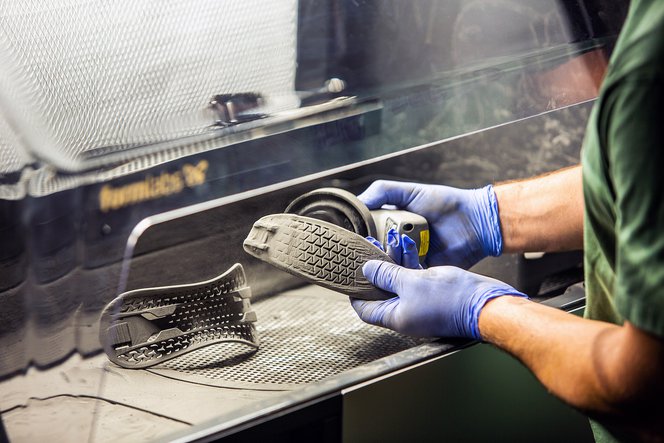
The first step is powder removal. Excess powder that hasn’t been fused by the laser must be eliminated. This is typically done through air blasting, where compressed air removes the loose powder. Vibration can also be used to loosen the powder before cleaning.
Heat treatment is another crucial step for many SLS parts. This process involves subjecting the part to controlled heating and cooling cycles to improve its mechanical properties. Heat treatment can increase strength, toughness, and ductility, enhancing the part’s overall performance.
Finally, surface finishing is often necessary to achieve the desired aesthetic appearance and functionality. This can involve a variety of techniques, including sanding, polishing, and coating. Sanding removes surface imperfections, while polishing creates a smooth, glossy finish. Coatings can protect the part from environmental factors, improve wear resistance, or enhance appearance. Additionally, chemical vapor smoothing (CVS) is a relatively new technique that can produce high-quality surface finishes on SLS parts.
The specific post-processing steps required will depend on the material used, part geometry, and the desired end-use of the component. By carefully selecting and implementing appropriate post-processing techniques, it’s possible to optimize the performance and appearance of SLS 3D printed parts.
How to Select the Right Company for SLS 3D Printing
Choosing the best SLS 3D printing companies in India is crucial for the success of your project. Here are some key factors to consider:
1. Experience and Expertise:
- SLS Specialization: Look for companies that specialize in SLS technology and have a proven track record.
- Industry Experience: Consider companies with experience in your specific industry, as they understand the unique challenges and requirements.
- Technical Expertise: Evaluate the company’s knowledge of SLS processes, material selection, and post-processing techniques.
2. Material Options:
- Material Availability: Ensure the company offers the materials required for your project.
- Material Quality: Verify that the company uses high-quality materials that meet industry standards.
3. Equipment and Capacity:
- Machine Capabilities: Assess the company’s SLS equipment in terms of build volume, precision, and repeatability.
- Production Capacity: Ensure the company can handle your project’s volume and timeline.
4. Quality Control:
- Quality Standards: Check if the company adheres to industry-recognized quality standards like ISO 9001.
- Inspection Capabilities: Inquire about their quality control processes and inspection methods.
5. Post-Processing Capabilities:
- Service Offerings: Evaluate the company’s post-processing services, such as heat treatment, surface finishing, and assembly.
- Expertise: Assess their knowledge and experience in achieving desired part properties through post-processing.
6. Cost and Pricing:
- Competitive Pricing: Compare quotes from different companies to ensure fair pricing.
- Cost Breakdown: Understand the cost components, including materials, labor, and post-processing.
7. Communication and Customer Service:
- Responsiveness: Evaluate how quickly and effectively the company responds to inquiries.
- Project Management: Assess their project management capabilities and ability to meet deadlines.
8. Intellectual Property Protection:
- Confidentiality Agreements: Ensure the company has strict confidentiality policies to protect your intellectual property.
9. References and Reviews:
- Customer Testimonials: Check online reviews and customer testimonials to gauge the company’s reputation.
- Reference Checks: Request references from previous clients to verify their experience.
10. Pilot Project:
- Test Run: Consider starting with a small pilot project to evaluate the company’s performance before committing to a larger project.
By carefully considering these factors, you can increase your chances of selecting the right SLS 3D printing companies in India for your project and achieving successful outcomes.
