

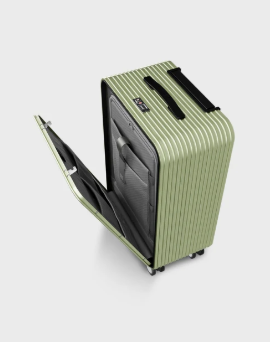
A trolley bag may look sturdy from the outside, but its closing mechanism has a bigger role than most travellers realise. Whether you are rushing through an airport or packing for a week-long holiday, the way your suitcase opens and closes can affect convenience, security and how much you can fit inside.
Traditional trolley bags use zippers to join the two sides. Zipperless luggage takes a different approach, using a structured frame and locking clasps to secure the suitcase. This design removes the need for an exterior zipper and reduces the possibility of problems such as jammed sliders or damaged zipper tracks.
Understanding these differences can help travellers see how trolley bags‘ construction affects luggage security, convenience and everyday use.
How Do Zipper and Zipperless Trolley Bags Work?
A zipper trolley bag uses a continuous fastening system all the way around the suitcase. Most of the models have two zipper pulls that meet at one point and can be locked. Others have an additional zipper to increase the luggage capacity.
A zipperless trolley bag generally uses a rigid frame fitted with two or more locking clasps. Once the suitcase is closed, the clasps hold both halves together. Many models come with integrated combination locks.
The main advantage of zipperless construction is that it eliminates the exterior zipper and its associated components. The rigid frame and locking clasps provide a structured closing mechanism that does not depend on zipper teeth or sliders.
1. How Does Zipperless Construction Improve Luggage Security?
Security is one of the main reasons why travelers think about zipperless luggage.
Old fashioned zippers can be vulnerable to break in. Some conventional zipper tracks can be forced apart without opening the lock attached to the zipper pulls. A damaged track may also prevent the suitcase from closing securely.
Zipperless suitcases eliminate this particular point of vulnerability. Their rigid frames and integrated locking clasps secure the two halves without depending on an exterior zipper track.
For international travel, look for TSA-accepted locks in either design. These allow authorised airport security officers to open and relock luggage during inspections without necessarily damaging the locking mechanism.
2. Packing Space: How Does Zipperless Construction Affect Storage?
Packing capacity depends on more than the closing mechanism. The internal layout, depth of each compartment and placement of the trolley handle all influence how much luggage can fit inside. A well-designed zipperless suitcase can provide practical storage without relying on the flexibility of an exterior zipper.
Zipperless luggage behaves differently.
A zipperless trolley bag uses a structured frame that brings the two halves together at fixed closing points. This helps maintain a consistent closing arrangement and avoids placing pressure on a zipper track. Keeping clothes and other items clear of the frame also allows the clasps to close properly.
The structured closure also makes it easier to check whether belongings are packed within the suitcase’s intended capacity before securing the clasps.
Remember that the interior design of the suitcase also affects its packing capacity – from the location of the handles to the wheel housings and the compartments. Zipperless construction can also be combined with space-efficient features such as wide trolley handles, internal dividers and compression systems. These details determine how effectively the available capacity can be used.
3. Opening and Closing: How Does Zipperless Luggage Save Effort?
Think you’ve just arrived at your hotel after a long flight and you need something out of your suitcase.
A conventional zipper trolley bag requires the zipper pulls to travel around the suitcase before it opens. The process may become inconvenient if the zipper catches on fabric, gets stuck or becomes difficult to move.
If the luggage has no zippers, you usually open it by unlocking the clasps. You can then separate the two halves without having to run a zip around the suitcase.
This removes the need to operate a zipper around the suitcase, making the opening and closing process more direct when the clasps and frame are properly aligned.
Before closing a zipperless suitcase, travellers simply need to ensure that no clothing or loose items obstruct the frame. The clasps can then be secured at their designated locking points.
Some modern zipperless suitcases also include separate quick-access compartments for items such as laptops and travel documents. These allow travellers to retrieve frequently used belongings without opening the main storage area.
4. Durability: What Happens After Repeated Use?
A trolley bag’s durability depends on the construction of its shell, frame and moving components. The closing mechanism is particularly important because it is used every time the suitcase is opened or packed.
In zipper trolley bags, common concerns include damaged teeth, stuck sliders, torn zipper tape and broken pulls. These problems may develop through repeated use, excessive packing pressure or rough handling.
Zipperless luggage removes the exterior zipper track, slider and pulls from the closing mechanism. Instead, the suitcase uses integrated clasps and a structured frame to secure its contents.
As with any luggage design, the frame, hinges and locking components should be inspected after a significant impact. Proper alignment helps ensure that the suitcase continues to close securely.
The strength of the suitcase as a whole is not only determined by the fastening system.
The shell material, corner reinforcements, wheel construction and handle quality all factor into how well luggage will hold up to regular travel.
A well-constructed zipperless suitcase combines a rigid closure with suitable shell materials, reinforced corners and reliable wheels. These features work together to support durability during regular travel.
5. Maintenance: What Makes Zipperless Luggage Easy to Look After?
Conventional zipper luggage may develop problems such as stuck sliders, broken pulls or damaged zipper teeth. While minor issues can sometimes be repaired, a damaged zipper track may require extensive replacement work.
Zipperless luggage eliminates maintenance associated with exterior zipper teeth, sliders and pulls. Routine care mainly involves keeping the locking clasps clean and ensuring that the frame remains properly aligned.
The availability of replacement locks, hinges and other components depends on the manufacturer. Checking spare-part availability and after-sales support before purchasing helps travellers plan for long-term use.
Before purchasing either style, check the warranty conditions and availability of spare parts.
A long warranty is useful only when it covers the components most likely to need attention.
6. Weight and Design: Is There a Noticeable Difference?
Zipperless trolley bags are available in different materials, including polycarbonate and aluminium. Many designs combine a polycarbonate shell with an aluminium frame to provide a structured closing system without requiring a completely metal body.
The overall weight of a zipperless suitcase depends on its shell material, dimensions, frame and internal components. Travellers can compare the empty weight of individual models instead of assuming that a particular closure system determines how heavy the luggage will be.
For instance, Navigo offers zipperless trolley bags that combine polycarbonate shells, aluminium frames and integrated TSA-accepted locks in selected models. This approach shows how rigid closures can be incorporated into contemporary luggage without relying entirely on aluminium construction.
For frequent flyers, the suitcase’s empty weight deserves attention regardless of its design. A heavier bag leaves less allowance for belongings when an airline applies a weight limit.
Zipperless vs Zipper Trolley Bags: Quick Comparison
| Feature | Traditional Zipper Trolley Bag | Zipperless Trolley Bag |
| Closure | Uses a zipper track and sliders | Uses a structured frame with locking clasps |
| Security | Zipper track may be vulnerable to forced separation | Eliminates the exterior zipper entry point |
| Opening and closing | Requires moving zipper pulls around the suitcase | Opens through integrated clasps without operating a zipper |
| Packing space | Depends on the suitcase’s internal design | Can combine structured closure with space-efficient interior layouts |
| Expandability | Available on selected models | Depends on the model’s design |
| Durability | Zipper teeth, sliders and pulls are potential wear points | Eliminates exterior zipper-related wear points |
| Maintenance | May require zipper or slider repair | Involves checking locks, clasps and frame alignment |
| Weight | Depends on shell material, size and components | Available in polycarbonate, aluminium-frame and full-aluminium constructions |
What Should You Look for in a Zipperless Trolley Bag?
A zipperless trolley bag removes the need for a traditional exterior zipper and uses a structured closing system with integrated clasps. This can be useful for travellers who want to avoid problems such as jammed sliders, damaged zipper teeth or difficulty moving a zipper around a packed suitcase.
However, the closing mechanism should not be the only consideration. Check the suitcase’s shell material, empty weight, internal capacity, wheel quality and locking system before making a purchase.
Pay attention to how smoothly the clasps operate and whether the two halves close without unnecessary pressure. The manufacturer’s warranty and availability of replacement components are also worth checking.
A well-designed zipperless suitcase should offer a practical combination of secure closure, convenient access and usable storage space. These details matter more than appearance alone when selecting luggage for regular travel.
