

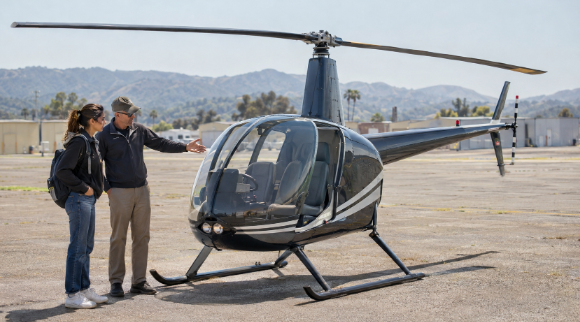
Earning a commercial helicopter pilot license requires flight experience, classroom study, and passing FAA tests. If you are considering flying professionally, understanding these steps helps you plan your time and budget before committing to a school.
The process builds on basic flying skills and asks you to demonstrate greater precision and judgment. You will learn to handle the helicopter consistently while making sound decisions about weather, passengers, fuel, and emergencies.
Start With Eligibility And Medical Requirements
In the United States, the FAA officially calls this qualification a commercial pilot certificate with a helicopter rating. Applicants must be at least 18, meet English language requirements, and hold at least a private pilot certificate.
Before investing heavily, arrange an examination with an FAA aviation medical examiner. You generally need a second-class medical certificate to exercise commercial pilot privileges, so checking your eligibility early can prevent expensive surprises.
Build The Required Flight Experience
For the standard Part 61 route, a helicopter commercial pilot license requires at least 150 total flight hours. Those hours must include specific types of experience; simply reaching the total is not enough.
Key minimums include:
- 100 hours in powered aircraft, including 50 in helicopters.
- 100 hours as pilot in command, including 35 in helicopters.
- 10 hours of helicopter cross-country flight as pilot in command.
- 20 hours of specified commercial training.
Additional requirements cover instrument training, daytime and nighttime cross-country flights, and solo flying or performing pilot-in-command duties with an instructor aboard. Have an instructor review your logbook to identify exactly what remains.
Learn More Than Aircraft Control
Commercial helicopter flight training combines ground lessons with practical flying. Ground study covers subjects such as regulations, weather, navigation, aircraft systems, performance, and flight planning.
In the helicopter, you practice maneuvers, emergency procedures, and accurate control. Your instructor also helps you recognize situations where delaying or canceling a flight is the responsible decision.
Some instrument training is required, but a separate instrument rating is not required for the commercial helicopter certificate. That rating may still matter for particular career goals.
Pass The Knowledge Test And Checkride
For an initial commercial certificate, you must pass the FAA knowledge test and receive the required instructor endorsements. Studying regularly alongside flight lessons helps connect written questions with decisions you make in the cockpit.
The practical test, often called a checkride, includes an oral examination and flight evaluation. The examiner assesses your knowledge, aircraft handling, procedures, and judgment against FAA standards.
Plan Your Schedule And Full Budget
Completion time depends on your starting experience, lesson frequency, weather, aircraft availability, and progress. The minimum flight hours are an eligibility requirement, not a guarantee that every student will be ready at that point.
Ask schools for an itemized estimate covering aircraft rental, instruction, study materials, medical examinations, testing, and examiner fees. Also discuss potential additional training costs and cancellation policies before paying.
Discuss job requirements with your instructor early. Employers may require substantially more experience, additional ratings, or specific aircraft qualifications, and a commercial certificate alone does not authorize every paid operation.
