



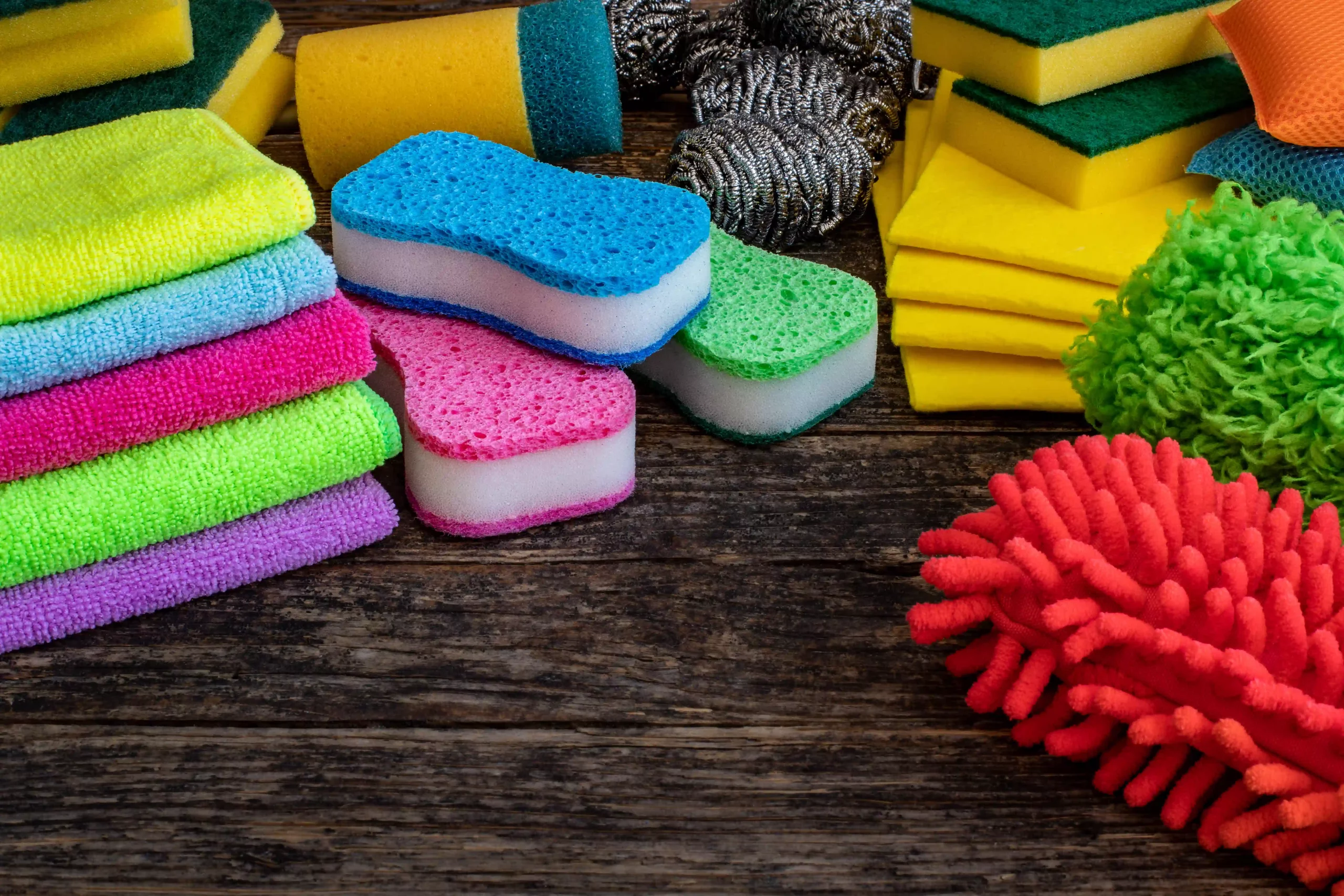
Household cleaning maintains a healthy, hygienic living space. One important aspect often missed is the choice of cleaning sponge for cleaning messes. This may seem like a minor decision, but buying the right scouring pad matters a lot.
Imagine tackling a stubborn spill without the right cleaning tool. Thus, detailing the types of scourers available helps you decide which one you need. Do you prefer to use a sponge or a non scratch scourer?
Scouring pad
A scouring pad is a cleaning tool to handle the following:
- tough stains
- stuck-on food
- grease
- rust
- mineral deposits
Scouring pads have a rough texture that scours surfaces. This cleaning tool is ideal for heavy-duty cleaning tasks.
Scouring pads made of
Scouring pads are made from different materials based on their types. The common options are:
Metal-based pads
Metal-based scouring pads come in two different categories:
- Steel wool. It is made from fine steel fibers twisted into pads. This scouring pad is effective on:
- rust
- burnt residues
This type of scouring pad is good, but it is not applicable for utensils that rust when not dried properly.
- Copper scourers. It is softer than steel wool. This type of scourer is ideal for:
- copper cookware
- delicate metal surfaces
Synthetic fiber pads
Synthetic fiber pads can be made from two types of materials:
- Nylon
- Plastic fibers
Nylon or plastic fiber pads are durable. They are rust-proof, which means you can use them without causing harmful reactions to your kitchen utensils. However, they are less effective when used on extremely stubborn stains.
The great thing about these synthetic fiber pads is that they do not cause any scratches to your stuff. But remember that some scouring pads can cause permanent scratches. You must look for a kind that is manufactured as scratch-free.
Natural fibers
Natural fibers are made from coconut coir. It is an eco-friendly option of scouring pads, suitable for light scrubbing. Most parents choose to use this type of scouring pad when cleaning their children’s stuff.
Non-scratch scourers
Non-scratch scourers have a non-abrasive scrubbing surface and a soft sponge side. They are suitable for cleaning surfaces that require a gentle touch, like:
- glass
- porcelain
- cutlery
Non-corrosive
The non-corrosive scrubber gently removes dirt, leaving the dishes and countertops spotless. The protective scouring materials ensure that the most delicate cleaning pads cannot cause any damage. The scratch-resistant scourers clean your things without damaging them, such as:
- pots
- pans
- glassware
These scourers make for a thorough cleaning experience.
Different materials of scratch-free scourers
Scratch-free scourers are made from materials designed to be gentle on the surfaces, while still effectively cleaning. You often see this scourer used for different tasks, such as:
- washing dishes
- cleaning countertops
- other surfaces
The exact composition of these scrubbers varies per manufacturer and brand. They include the following materials:
Foam
Scratch-free scourers use a soft and porous foam. This foam is non-abrasive, which means it is gentle on surfaces. It provides a cushioning effect while removing:
- dirt
- stains
Microfiber
Microfiber is made of very fine fibers. The material can attract and trap the following:
- dirt
- dust
- debris
They are effective for cleaning without scratching surfaces.
Polyester
Polyester is used in scratch-free scrub sponges. It is durable and made into a soft and non-abrasive texture.
Cellulose
Cellulose is a natural material made from plant-based fibers. It is biodegradable and has cleaning properties for a scratch-free sponge.
Abrasion-free coating
Some scratch-free scourers have a gentle abrasive coating that provides a bit of cleaning power. The coating is much softer and less abrasive than in traditional scrubbing sponges.
FAQs
What are the different materials used in non-scratch scrubbers?
There are different materials used for non-scratch scrubbers, such as:
- foam
- microfiber
- polyester
- cellulose
- abrasion-free coating
Which scourer cannot get rust?
Two types of scourers cannot rust:
- synthetic fiber scourers
- natural fiber scourers
Are non-scratch scourers effective in removing stubborn residue?
Yes. Non-scratch scourers can remove stubborn residues when using those with a rough texture.


