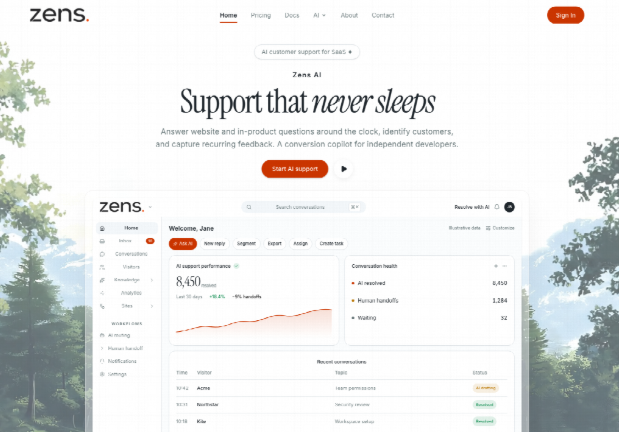
Ghana newsrooms that take a reader correction are building an evidence file, not a chat. The reader names a misspelled minister, a wrong figure, and the URL of the story. That file has to survive longer than a week if the paper later has to show who said what. That is why Zens only helps that desk when the workspace history can still find the thread after the edition has moved on.
Trial history on the public table lasts seven days. Paid Starter lasts ninety. The difference is not a nicer inbox. The difference is whether a correction that arrived last month still exists when counsel asks for the original message.
Reader Corrections Are Files, Not Chat Bubbles
A news site already treats a correction as a record. The editor writes a note. The web team changes the figure. The reader sometimes wants a reply that the change was made. If the original message disappears after seven days, the paper cannot show the request. It can only show the edited story.
That gap matters when the correction is contested. A party press officer will say the paper invented the change. A reader will say they wrote in and were ignored. The desk needs the thread. A workspace that drops it at day eight is a draft room, not an archive.
The useful reject is local. Before a public widget takes reader mail, ask how many days the conversation is stored. If the answer is seven, do not put legal corrections in that widget. Put them in the mailbox the paper already archives and keep a dated copy.
Seven Days Cannot Hold A Newsroom Correction
The public pricing table is blunt. Free data history is 7 days. Starter is 90 days. Growth is 365. Business is 730. Free also limits conversations to 100 a month. Those numbers are the whole problem for a corrections editor.
A story that runs on a Tuesday can draw a complaint the following week. Counsel can ask for the original wording a month later. Seven days is enough to test whether the widget can draft a polite note. It is not enough to keep the evidence.
Zens AI says visitor tracking and live conversations do not stop at a monthly visitor threshold. That sentence does not save a seven-day window. The conversation can happen. The history can still vanish.
Free History Is A Trial Window, Not An Archive
The pricing page tells teams to choose Free when one operator is installing the widget and testing identity-aware support on a single site. That is a fair trial. It is the wrong home for a corrections queue. Ten knowledge pages and a week of history can prove the install. They cannot prove last month’s reader.
Do not treat the Free row as a cheap newsroom. Treat it as a rehearsal only. If the paper needs the thread next month, the workspace needs a history window that still contains next month.
Ninety Days Covers A Contested Figure
Starter’s 90-day window is the first public row that looks like a working desk. A correction that arrives after a weekend still sits there when the next edition argues about the number. Ninety days will not satisfy a year-old libel file. It will satisfy the common fight: the figure changed, and someone wants the original reader note.
Growth and Business stretch that window to a year or two. Use those rows when the paper already keeps corrections that long in its own archive. Do not buy a long window and then fail to export the thread. The widget is not the legal archive unless someone copies the thread out.
How Editors Decide What May Live In The Widget
The check is verbal. Someone asks whether this message could be needed after eight days. If yes, the widget on a Free workspace is the wrong tray. If the message is “where is today’s sports page,” seven days is enough.

Party press notes make the same demand. A statement that arrives after a rally can be cited two weeks later when the figure is challenged on air. If the original reader mail is gone, the paper looks like it invented the change. That is why corrections editors already keep a shared folder of incoming notes. The widget has to feed that folder, not replace it.
Parliament weeks make the window even shorter in practice. A reader writes on Thursday. The paper is already chasing Friday’s sitting. Nobody exports the thread. By the following Thursday the Free history has rolled and the only proof is a memory. That is how a contested SOE figure becomes an argument about who invented the correction.
Sports desks can be looser. A reader asking for a lineup usually does not need a month of storage. Politics and business desks cannot be looser. A misspelled minister and a wrong SOE figure are the files that come back. Put those on a window that still exists when the next edition argues. If the same inbox mixes both jobs, the sports chatter will hide the correction until the seven-day cut has already taken the file.
Zens AI can still be the place a reader first writes. The editor then copies the correction into the paper’s archive the same hour. That copy is the file. The widget history is a convenience. When the convenience expires, the file has to exist somewhere else.
Export The Thread Before The Window Rolls
Rolling history means day eight deletes day one. Do not wait for a monthly reminder that does not exist on Free. If a correction is live, export it the day it arrives. Name the file with the story URL and the reader’s claim. If nobody can find that file later, the widget did not fail. The desk did.
Paid windows still roll. Ninety days is longer, not infinite. The same export habit applies. The difference is how often someone on the desk must remember to copy the file out.
Where Seven Days Still Need A Human Archive
The platform will not tell you whether a message is a spelling note or a legal correction. It will not pause deletion because counsel might call. It will not keep a Free thread past the seven-day window. An editor still has to copy the file the same day it arrives.


Keep Corrections In A Window That Survives
Use Zens AI on a reader help desk when the history window matches how long the paper already keeps those notes. Skip the Free widget for anything that might be needed after a week. Seven days can prove the install. It cannot hold a contested figure. If the paper already files corrections for ninety days in a shared drive, the workspace has to match that habit or get out of the way.
Zens AI can draft a polite reply from allowed context. It cannot remember a deleted thread. If the paper might have to show the original message, archive it outside the trial window the same day it arrives. Readers will forgive a slow human note. They will not forgive a paper that cannot show what they sent.