

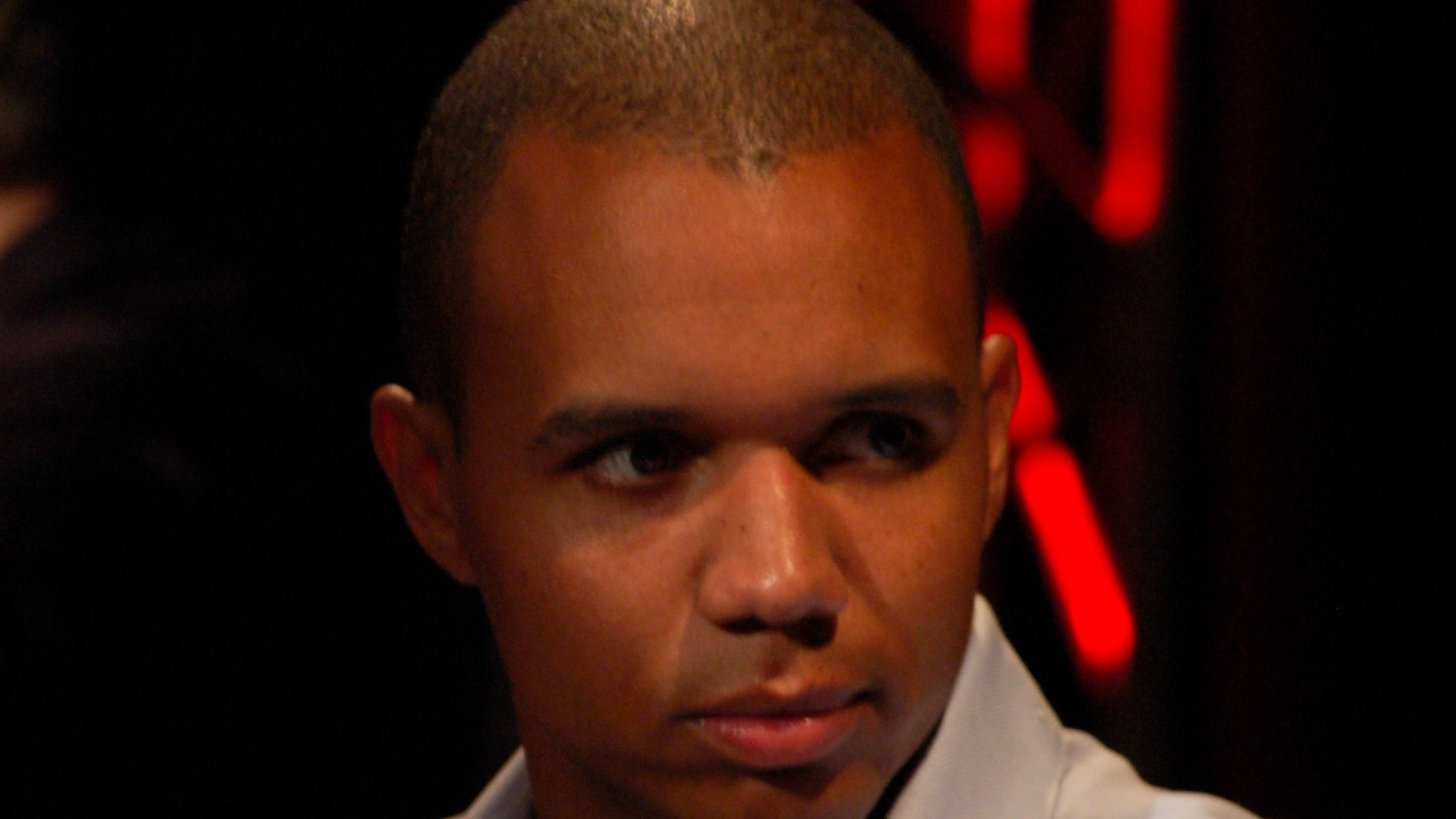
Around 1881, a textile worker from Yorkshire named Joseph Jagger spent about a month inside the Casino de Monte-Carlo doing something that looked, to anyone passing, like nothing at all. He watched the roulette tables and kept count of which numbers came up most often. His story is a good place to start with famous gamblers, because it raises the question worth asking about every name below: was it skill, luck, or cheating? The answer changes from name to name.
Joseph Jagger: the man who read a roulette wheel
Jagger worked in textiles, and his month at the tables is thought to have rested on one idea about machines. A roulette wheel is a machine too. If it is slightly uneven, it will favor some numbers over others, a flaw called wheel bias, and spotting it was the point of all that counting.
By most accounts he won over 2 million francs over several days, about £80,000 at the time, which The Times put at £7.5 million in 2018 money. Each table started the day with a cash reserve of 100,000 francs called the bank. Winning more than that reserve suspended play at the table until more money came out. Measured that way, Jagger’s reputed total was more than 20 of those banks.
The easy reading is that he beat the odds. On a single-zero wheel like Monte Carlo’s, with 37 pockets and a 35 to 1 payout on one number, the house keeps 2.70% of every bet over time. No amount of watching beats a fair wheel, but Jagger’s wheel was not fair. Roulette makers later added movable partitions to their wheels to stop his method. He went home and bought houses in Bradford.
Charles Wells: the man in the song
In 1891 Charles Wells broke the bank at Monte Carlo in a series of wins, first in late July and early August and again in November. A popular song came out of it, The Man Who Broke the Bank at Monte Carlo.
Wells said he had an infallible system, but many observers doubted it, because he already had a record as a fraudster, and they suspected cheating or else exceptional luck.
When he came back in January 1892, he lost about 100,000 francs, roughly one table’s daily bank, so on his next recorded visit the infallible system lost. In March 1893 the Old Bailey, London’s main criminal court, convicted him on 23 counts of fraud and sentenced him to eight years.
Edward Thorp: the professor who counted cards
Edward O. Thorp, born in 1932, was a math professor. With an IBM 704 computer he studied blackjack and worked out ways of counting cards. Card counting rests on one idea: the odds change as cards leave a deck that is not reshuffled, so a player who tracks what has gone knows when the rest favors him.
Gambler Manny Kimmel put up $10,000, and Thorp took it to Reno and Lake Tahoe and won $11,000 in a single weekend, a return of 110% in two days. In Las Vegas he sometimes wore wraparound glasses and false beards so dealers would not know him.
In 1962 he published Beat the Dealer, updated in 1966, and it sold over 700,000 copies and made the New York Times bestseller list. Card counting is a legal skill, not cheating. So casinos responded with countermeasures, and their main one was to shuffle long before the end of the deck, which takes away information a counter needs.
From Thorp’s math to checking a game yourself
Thorp’s edge came from information about the deck: which cards had already gone. Online, the information a player can get is of a different kind, a check that the result was not altered after the bet. In a provably fair game, each result is built from a few inputs. Two are seeds, a server seed from the casino and a client seed from the player. The third is a nonce, a number that changes with every bet.
Before you bet, the casino shows you a hashed version of its server seed. The hash, made with SHA-256, works like a scrambled fingerprint, so the seed cannot be swapped later without the change showing. After the round, anyone can rerun the inputs and see if the result matches. BetFury, a crypto casino, uses this check across its games. It proves a round was not altered. It does not change the house edge.
The MIT Blackjack Team: card counting as a group job
In 1979 MIT ran a class called How to Gamble If You Must, and some students took the title more seriously than the teachers might have hoped. Out of it grew the MIT Blackjack Team, made up of students and former students of MIT, Harvard and other colleges. They used card counting plus team play, with several players working one casino together.
On August 1, 1980 the team’s bank started with $89,000 and ten players, and ten weeks later they had more than doubled it. By 1984 the team had grown to as many as 35 players and $350,000.
The tempting story is a lone genius. That is not what happened. The edge came from card counting done with discipline by a lot of people at once, and that edge kept working from 1979 into the early 2000s. Individual totals are not on record.
Billy Walters: the sports gambler who lost for years first
Billy Walters, born in 1946, bet his paper-route money at age 9 on the Yankees in the 1955 World Series, baseball’s championship. He lost. By age 22 he had lost $50,000, and he was still a losing gambler as late as 1982.
Things turned in 1986, when he and a partner spotted a biased roulette wheel at the Golden Nugget in Atlantic City. They bet on 7, 10, 20, 27 and 36. In 38 hours they won $3.8 million from a $2 million stake. That pace worked out to about $100,000 an hour, from the same kind of flaw Jagger had hunted a century earlier.
Still, his lasting fame came from sports. In the 1980s he joined the Computer Group, which used computer analysis of sports, and over 39 years he had only one losing year. On Super Bowl XLIV, the final of American football’s season, he won $3.5 million.
Archie Karas: the high roller later banned from casinos
Archie Karas was born Anargyros Karabourniotis on the Greek island of Cephalonia and lived from 1950 to 2024. At 15 he ran away from home and worked as a waiter on a ship for $60 a month. In December 1992 he drove to Las Vegas with $50. After borrowing $10,000, he had turned it into more than $40 million by the beginning of 1995. Gamblers call it The Run, the largest documented winning streak in casino history.
The first part of The Run was skill against people. In about six months he amassed more than $17 million from pool, playing 9-ball at up to $40,000 a game, and from heads-up poker. Chip Reese alone lost just over $2 million to him over 25 games. Then the poker action dried up, because few players would match his stakes.
So he turned to craps, a dice game, betting up to $300,000 a time. No craps bet gives the player an edge over the house, and even the pass line, one of the lowest-edge bets, leaves the casino 1.41%.
In 1995 he lost about $30 million in about three weeks. That included $11 million at craps and $17 million at baccarat, a card game where you bet on which of two hands wins, and then the rest went. In 2013 he was arrested for marking cards at a San Diego casino’s blackjack table and got three years’ probation, and in 2015 he was banned from every casino in Nevada.
Don Johnson: the man who bargained for his edge
Don Johnson, born in 1962, came from horse racing, where he worked as a racetrack executive. In six months of 2011 he won about $15.1 million from three Atlantic City casinos, nearly $6 million of it from the Tropicana. His edge came from the terms he negotiated before he sat down.
For high-stakes blackjack he got the dealer to stand on soft 17, a hand where an ace counts as 11. He also got a 20% rebate once his losses passed $500,000, meaning 20 cents back for every dollar lost. On a $1 million losing night that rebate returned $200,000, so the night cost him $800,000. The exact edge those terms gave him is not public, but the result is.
During one 12-hour session at the Tropicana he split a pair of eights twice, which turns one hand into two, and then doubled down on four separate hands. Doubling down means doubling the bet for one more card. With $800,000 on the table, the dealer busted and he won $800,000.
Phil Ivey: the poker champion who lost in court
Phil Ivey, born in 1977, built his poker skills by playing co-workers at a telemarketing firm in New Jersey. He went on to win eleven World Series of Poker bracelets and was elected to the Poker Hall of Fame in 2017.
His most famous win was not at poker. In August 2012 he won £7.3 million, about $12 million, at punto banco, a form of baccarat, at Crockfords in London. His method was edge sorting: reading tiny printing differences on the backs of the cards so that some cards could be recognized face down.
Crockfords refused to pay. On October 25, 2017, the UK Supreme Court ruled unanimously for the casino. An edge that a court will not let you collect is worth nothing at the cashier’s window.
Skill, luck or cheating? The math behind the legends
Because the biggest luck story on this list is Karas, the numbers start there. He went from a $10,000 loan to $40 million, a 4,000-fold increase. How many times would you need to double your money, all or nothing, to get there? About 12, because the exact figure is 11.97 doublings.
On the pass line in craps you win 244 times out of 495, or 49.29% of the time, so the house edge is 1.41%. To win 12 of those bets in a row, you multiply 244/495 by itself 12 times, and the answer comes out at 0.0206%, or about 1 in 4,859.
That 1 in 4,859 figure is what The Run would have needed if all of it had been even-money casino bets. Most of the early climb was not. More than $17 million came first from pool and heads-up poker, where skill counts. The pure-luck part was the craps that took him from there past $40 million. When his luck turned in 1995, he lost about $30 million in three weeks at craps and baccarat.
| Gambler | Year | Game | What gave him the edge | Result |
| Joseph Jagger | 1881 | Roulette | A biased wheel, found by a month of counting | Reputedly over 2 million francs; wheels redesigned |
| Charles Wells | 1891 | Roulette | A claimed system; suspected cheating or luck | Lost about 100,000 francs in 1892; jailed for fraud |
| Edward Thorp | 1962 | Blackjack | Card counting worked out on a computer | Beat the Dealer sold 700,000+ copies; casinos shuffled earlier |
| MIT Blackjack Team | 1980 | Blackjack | Card counting plus team play | Bank more than doubled in ten weeks |
| Billy Walters | 1986 | Roulette, then sports | A biased wheel; computer sports analysis | $3.8 million in 38 hours; one losing year in 39 |
| Archie Karas | 1992-1995 | Pool, poker, craps, baccarat | Pool and poker skill, then luck at craps and baccarat | Over $17 million from pool and poker, $40 million at the peak, then about $30 million lost in three weeks |
| Don Johnson | 2011 | Blackjack | Negotiated rules and a 20% loss rebate | About $15.1 million in six months |
| Phil Ivey | 2012 | Punto banco | Edge sorting | £7.3 million won, then lost in court |
Jagger’s and Thorp’s edges lasted until casinos changed the wheel or the shuffle. For Walters, the sports edge ran for 39 years with a single losing year. Ivey had an edge too, and a court stopped him collecting. The Karas row is the one that ended on luck, and the luck phase is where the money went.
FAQ about famous gamblers
Who is the most famous gambler of all time?
There is no official ranking, but Archie Karas has the strongest claim on the numbers. His run from $10,000 to more than $40 million is the largest documented winning streak in casino history.
Which famous gambler was banned from casinos?
Archie Karas is one well-documented case. After his 2013 arrest for marking cards at a San Diego casino, he was banned from all Nevada casinos in 2015.
Who is the most famous sports gambler?
Billy Walters is a strong answer. Over 39 years of betting he had only one losing year, and he won $3.5 million on Super Bowl XLIV.
Did any famous gambler beat the casino legally?
Yes, at blackjack at least: card counting is a legal skill, not cheating, which is how Thorp and the MIT team won. Casinos answered with countermeasures such as earlier shuffles. Ivey shows where the line can sit, because the UK Supreme Court ruled that the casino did not have to pay him. Jagger got there first, and his month of watching a wheel, which looked like nothing at all, turned out to be the whole edge.
