



Starting a construction project-whether it’s a dream home, a busy commercial space, or a large multi-family building-means turning an idea into a real, usable structure. This takes careful planning, smart execution, and steady teamwork between many trained people.
From the first idea to the final handoff, construction follows a set of connected steps that help bring the plan to life in an organized way. Knowing these steps helps you set realistic expectations, spot problems early, and reach a strong, high-quality result.
This mix of design and building work makes sure details are planned and built correctly, from major structural choices down to interior finishes. For example, if a project involves protecting the detailed look of older buildings, special services like https://novaconstructionservices.com/services/architectural-metals/cornice-restoration-and-replacement/ may be needed. That shows how much skill and accuracy matter in both new construction and restoration.
Why Careful Planning Leads to Successful Projects
A successful build starts long before anyone brings in equipment. It begins with a clear goal and detailed planning. This early stage becomes the base for every decision later. Strong planning and design help predict challenges, use resources wisely, and create practical schedules and budgets. Without this groundwork, projects can run into delays, extra costs, and frustrating surprises.
Good planning also includes clear talks with everyone involved from the start. This helps the client, contractor, and all trades share the same understanding of the goals and what “done” should look like. That shared direction makes it much easier to deliver a final result that feels complete and consistent.
Who Are the Key Players in a Construction Project?
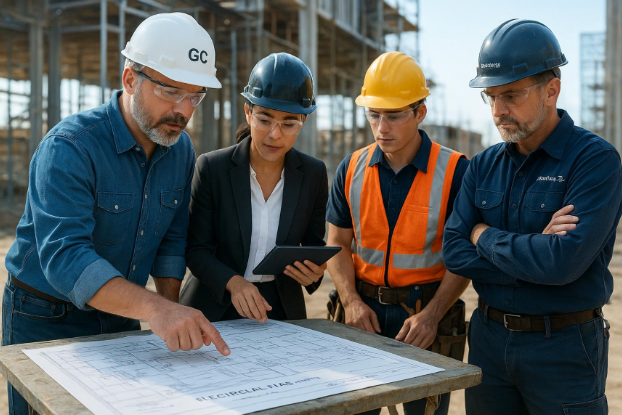
Turning drawings into a finished building is group work. Many professionals play a role, each with their own skills. The general contractor is often the main organizer, managing the schedule, budget, and trade coordination. Architects and engineers create detailed drawings and calculations so the building is safe, functional, and looks the way it should.
Then there are subcontractors-the specialists who handle major systems and trade work, such as:
- Electrical
- Plumbing
- HVAC (heating, ventilation, and air conditioning)
Their work turns plans into real systems that make the building comfortable and usable. With each expert doing their part, the whole project stays accurate and up to code.
Stages That Transform Blueprints Into Completed Structures
A building doesn’t appear all at once. It moves through clear phases. It begins with pre-construction, where the idea is shaped, the site is reviewed, and permits and contracts are handled.
Next comes design and planning, where drawings are developed in detail. Then the job moves onsite with site prep and foundation work.
After that, the main construction stage begins: the structure goes up, and all systems are installed.
Finally, the last phase focuses on finishing work, final inspections, and the handoff. Each phase depends on the one before it, so teamwork and quality checks matter the whole way through.
Phase 1: Pre-Construction Essentials
Pre-construction is the quiet start that has a big impact later. This is where the project gets organized, decisions are made, and the plan becomes realistic. It builds a strong base for the schedule, budget, and logistics.
Setting Project Goals and Initial Requirements
Every project begins with a conversation about what the client wants and needs. This meeting covers the vision, style preferences, daily-use needs, and budget. Clients may bring photos, sketches, or online ideas to help explain what they like.
The goal is to get a clear picture of what the project must achieve. With that clarity, the team can shape the work plan so the finished building matches the client’s goals.
Site Evaluation and Feasibility Studies
Before construction starts, the site must be reviewed to confirm it can support the project. This includes checking zoning rules, access to utilities (water, gas, electricity), and the nearby environment. The land often affects building layout, drainage, and how systems will be installed.
Subcontractors may also review the site early, especially for plumbing, electrical, and HVAC needs. This early check helps find issues before they become expensive delays.


Budgeting and Financial Planning
Construction is a major investment, so a realistic budget is a must. As the design becomes clearer, the team creates a detailed cost estimate that includes:
- Materials
- Labor
- Permits
- Inspections
It’s also smart to set aside a contingency fund (often 5-10%) for surprises or approved changes.
Budget tracking continues through the project with regular updates. This keeps costs transparent and helps prevent sudden financial pressure. If financing is needed, builders may also suggest lenders who understand construction loans.
Handling Permits, Zoning, and Regulatory Approvals
Getting permits and approvals is paperwork-heavy but required. This step can include zoning approval, building permits, and environmental sign-offs. These approvals confirm the project follows local codes and safety rules.
If permits are missed or handled incorrectly, the project can face legal problems and major delays. Experienced teams coordinate early with subcontractors so electrical, plumbing, and HVAC plans meet code from the beginning.
Selecting Architects, Engineers, and Contractors
Once the general direction is set, the next step is choosing the people who will design and build the project. This includes:
- Architects to create the layout and look
- Engineers to confirm the structure and systems work safely
- A general contractor to manage the full build
General contractors also choose subcontractors they trust for specific trades. A strong team improves quality, keeps work moving, and reduces mistakes caused by miscommunication.
Phase 2: Design and Detailed Planning
After goals are set and the site is reviewed, the project moves into design and planning. This is where ideas become real drawings and technical plans that can be built.
Turning Ideas Into Architectural Blueprints
During this stage, architects and designers work with the client and builder to create floor plans, elevations, and structural drawings. These plans define room sizes, materials, and layouts and become the main guide for construction.
A blueprint is more than a sketch. It often includes:
- Floor plans
- Exterior views (elevations)
- Structural details
- Electrical and plumbing layouts
This work blends creative design with exact measurements so the building looks good and functions well.
Collaborating With Stakeholders and Managing Expectations
Good design requires steady teamwork. Architects, engineers, and subcontractors review plans together so systems fit properly-like where outlets, drains, and vents should go. Clear communication helps avoid confusion and supports good decision-making.
Clients review the plans and request updates until the design matches what they want. If a client changes the location of an appliance or fixture, subcontractors adjust their layouts so everything still works well. Making these updates before construction starts prevents rework later.
Integrating Sustainability and Building Codes
Many projects now include energy-saving and eco-friendly features. During design, the team may choose items like:
- Energy-efficient windows
- High-quality insulation
- More sustainable materials
At the same time, the design must meet building codes for safety, fire protection, and accessibility. Including these requirements early helps avoid redesigns, added costs, and schedule delays later.
Identifying and Addressing Potential Design Challenges
Even strong designs can run into problems. This stage is where teams spot risks early, such as site limits, code issues, or buildability concerns. Planning ahead helps reduce surprises later.
Shop drawings can help here. They take high-level design ideas and turn them into build-ready details for specific parts of the project. Fixing issues at the design stage is usually faster and cheaper than fixing them onsite.
Phase 3: Site Preparation and Foundation Work
Once drawings are complete and permits are approved, work starts onsite. This phase prepares the land and builds the foundation that will support the structure for years.
Clearing, Grading, and Excavation Steps
Site work starts by clearing the land-removing trees, rocks, debris, or old structures if needed. Then grading shapes the land so water drains properly and the build area is level. Excavation follows, digging for the foundation, basement, or utility trenches.
This work is not just for appearance. Good site prep helps prevent water issues and structural movement later. Subcontractors may also re-check the site to confirm their planned runs for pipes, wiring, and ducts will still work.
Laying the Foundation: Choices and Construction Methods
The foundation supports everything above it, so it must be built correctly. Common types include:
- Concrete slab
- Crawl space
- Full basement
The best choice depends on soil, climate, and design.
Whether pouring a concrete slab or building a basement, measurements and materials must be accurate. Inspections happen at this stage to confirm the foundation is sound before framing begins.
Utilities, Drainage, and Site Infrastructure
Before the structure rises, the site needs basic connections and underground work. This includes coordinating utility access for water, gas, and electricity. Plumbing teams often install early piping, drains, and sewer lines at the slab or basement level.
Drainage also matters here. Proper grading and drainage systems help keep water away from the foundation, reducing the risk of long-term damage. This early infrastructure work helps the building function properly as soon as it’s occupied.
Ensuring Safety and Environmental Compliance
Safety starts on day one. Site prep includes safety rules for excavation, site access, and equipment use. If hazardous materials are found, they must be handled the right way.
Environmental rules also apply, and inspections may happen throughout. Subcontractors also check their areas of work to confirm standards are met. Safe and compliant work helps avoid shutdowns, fines, and long-term problems.
Phase 4: Construction and Building the Structure
This is the most active part of the project. The building rises, systems go in, and the plan becomes a real structure.
Erecting the Frame: Methods for Different Building Types
After the foundation passes inspection, framing begins. This creates the building’s skeleton-walls, floors, and roof supports. Wood framing is common for homes, while steel is often used for larger commercial buildings.
Accuracy matters. Framing mistakes can cause problems later with drywall, cabinets, doors, and even structural performance. Different building types require different framing methods, and each one depends on trained crews and careful measurements.
Plumbing, Electrical, and Mechanical System Installation
Once framing is up, the inside systems are installed. This includes:
- Electrical wiring for power, lighting, and data
- Plumbing lines for supply, drains, vents, and sewer
- HVAC equipment, ductwork, and venting
These systems turn the framed structure into a usable space. Work must follow code and must operate reliably every day. Planning these routes during design helps reduce conflicts and prevents expensive changes later.
Roofing, Windows, and Exterior Enclosures
Next, the building gets sealed from weather. Roofing is installed (shingles, metal, or other systems), and exterior materials like brick, vinyl, or wood siding go on. Windows and doors are installed to close in the structure, improve security, and add insulation and light.
Strong exterior materials and energy-efficient windows support long-term performance and lower energy use, while also improving the building’s look and durability. Nova Construction Services handles every aspect of exterior work with materials and methods chosen for lasting quality and efficiency.
Interior Finish: Insulation, Drywall, Painting, and Fixtures
Interior work is where the building starts to feel like a finished space. After systems are installed, insulation is placed in walls and ceilings to improve comfort and energy use. Drywall goes up to create smooth surfaces.
Then come finish steps like:
- Painting or wallpaper
- Flooring (hardwood, tile, carpet)
- Cabinets and countertops
- Trim and lighting fixtures
These choices give the building its final style and function.
Scheduling, Quality Control, and Inspections
Construction stays on track with clear scheduling, ongoing quality checks, and required inspections. A detailed schedule helps coordinate crews and materials so work happens in the correct order.
Quality control is continuous. Subcontractors check their work, and local inspectors review key stages for safety and code compliance. If an issue is found, it’s corrected before the next phase continues.
The Role of Subcontractors and Specialized Trades
The general contractor manages the full job, but subcontractors build many of the key parts. Plumbers, electricians, HVAC techs, roofers, framers, and many others complete specialized work that must be correct and code-compliant.
For example:
- Plumbing teams install pipes, drains, fixtures, tubs, and showers.
- Electrical teams wire outlets, switches, and lighting.
Their combined skills help the project come together as planned.
Phase 5: Completion, Handover, and Move-In
The last phase focuses on final checks, finishing touches, and preparing the space for use. This is the point where the project is verified and handed to the owner.
Final Approvals, Inspections, and Occupancy Permits
Near the end, final inspections review major systems-structural, electrical, plumbing, and energy items-to confirm everything works and meets local rules. Passing these inspections is required to receive an occupancy permit, which allows legal use of the building. This step confirms the building is ready and safe.
Punch List Items and Addressing Deficiencies
Before handover, a punch list is created. This is a list of small items that still need attention, such as paint touch-ups, minor repairs, or small adjustments.
During walkthroughs, the client and builder check rooms, surfaces, doors, and systems. Completing the punch list helps the finished result match the plans and expectations.
Client Walkthrough, Training, and Documentation
The final walkthrough helps the client learn the space and understand how systems work. Subcontractors may explain basic operation and maintenance for electrical, plumbing, and HVAC items so the move-in goes smoothly.
Clients also receive documentation such as warranties, manuals, and trade contact information, which helps with care and future service needs.
Post-Construction Support and Warranty Period
Many builders offer support after handover, often through a warranty period. This covers questions, maintenance guidance, and certain issues that may appear after move-in. This support gives owners more confidence in the long-term performance of the building.
What Factors Affect the Success and Timeline of a Construction Project?
Even with detailed planning, construction can change due to outside factors. Knowing what can affect time and success helps you plan more realistically and respond faster when problems come up.
Material Selection and Procurement Delays
Material choices affect strength, appearance, maintenance needs, and long-term value. But supply chains can be unpredictable. Manufacturing delays, shipping issues, or high demand can slow down delivery and impact the schedule and cost.
Choosing materials with realistic lead times and ordering early can reduce these risks.
Effective Communication Within the Project Team
Construction involves many people working in sequence. Clear and consistent communication between clients, designers, contractors, and subcontractors helps prevent mistakes and rework. Regular meetings and clear updates keep decisions documented and help solve problems faster.
Managing Risks and Budget Overruns
Spotting risks early-site issues, schedule conflicts, permit problems-helps avoid costly surprises. Planning tools like site testing, contingency plans, and proper insurance can reduce exposure.
A detailed budget plus careful tracking and a contingency fund also help limit overspending. Strong leadership matters when unexpected issues come up and quick decisions are needed.
Adapting to Unexpected Site and Weather Challenges
Weather can slow outdoor work. Rain, snow, heat, or high winds can cause delays. Site conditions can also surprise teams, especially in renovation work where hidden issues may be uncovered.
Flexible scheduling and quick problem-solving help keep work moving, even when conditions change.
Tips That Help Make the Construction Process Smoother
Construction can be complicated, but it doesn’t have to be stressful. A few practical habits can make the experience more predictable for both clients and builders.
Clear Contracts and Defined Scope of Work
A clear contract and well-defined scope of work help prevent confusion. The contract should explain what will be built, what materials will be used, payment terms, and how disagreements will be handled. Vague contracts often lead to problems. Agreeing on details before work starts helps both sides stay accountable and aligned.
Proactive Scheduling and Regular Progress Meetings
Staying on schedule takes planning and follow-up. A project schedule should outline phases, key dates, and trade timing. Regular meetings help track progress, raise issues early, and make decisions before delays grow.
Consistent updates-reports, calls, and site visits-also help clients stay informed and reduce misunderstandings.
Quality Assurance and Ongoing Documentation
Quality needs attention throughout the build, not just at the end. This includes routine checks by subcontractors and outside inspectors where needed.
Keeping good records also helps. Useful documentation includes:
- Daily logs
- Photos
- Change orders
- Communication notes
These records support quality checks, help solve disputes, and make future maintenance easier.
From Blueprint to Reality: Common Questions and Misconceptions
Construction often raises questions, and some common beliefs don’t match how projects work in real life. Clearing these up helps clients plan with more confidence.
Are Design Changes Possible Once Construction Begins?
Changes are easiest during the design stage. Once construction starts, major changes are usually a bad idea because the work is based on final drawings, material orders, and trade schedules. Big changes can stop work, require redesign, create re-orders, and push trades back-raising costs and causing delays.
Small visual changes may still be possible, but layout or structural changes are best avoided once building is underway.
What Is a Change Order and When Is It Needed?
A change order is a written update to the original contract. It records changes to the scope, cost, or schedule. It may be needed if:
- A client requests a design change
- A hidden site issue is discovered (like unexpected rock)
- A planned material is unavailable and must be replaced
Change orders keep everything clear by documenting what changed and what it means for time and cost.
How Long Does a Typical Construction Project Take?
Timelines vary widely. A small renovation might take weeks. A custom home may take six months to more than a year. Large commercial or multi-family projects can take years.
Time depends on many factors, such as permit speed, material lead times, weather, labor availability, and how many design changes happen. A realistic timeline is usually set during planning based on similar past projects.
Building a new structure is a major effort that mixes engineering accuracy with thoughtful design. From the first planning meeting to the final finishing work, the process relies on teamwork and skilled labor.
The steady rise in demand for personalized homes, shown by ongoing growth in custom housing starts, reflects a simple goal: people want spaces that match how they live and what they value.
Turning an idea into a real building is about more than putting up walls-it’s about creating places that last, support daily life, and hold meaning for the people who use them.


