

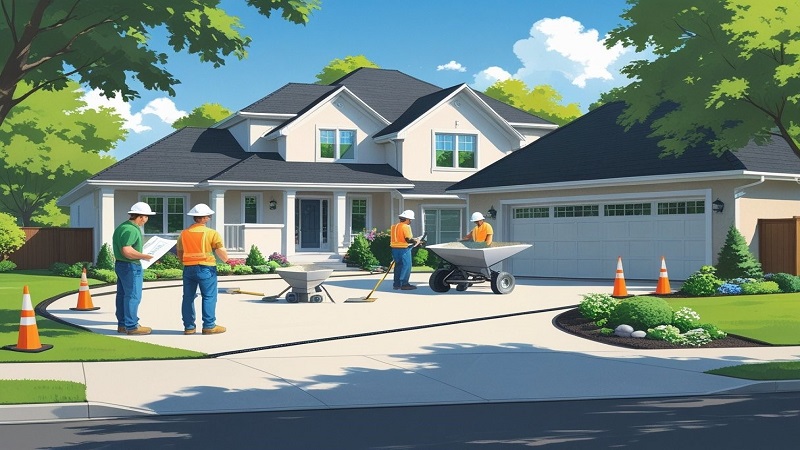
Your home’s driveway serves as the first impression visitors receive, yet many homeowners overlook its potential to dramatically enhance their property’s overall appearance. A well-designed concrete driveway extends far beyond basic functionality, acting as a foundational design element that can increase both curb appeal and property value.
Professional concrete driveway companies transform ordinary entrances into stunning focal points through specialized design techniques, custom finishes, and expert installation processes. Modern concrete driveways offer extensive customization options, from stamped patterns and decorative borders to colored surfaces and textured finishes that complement any architectural style.
The transformation process involves careful planning, precise execution, and attention to detail that creates lasting results. Understanding how concrete professionals approach each project reveals why their expertise makes such a significant difference in achieving the curb appeal homeowners desire.
The Concrete Driveway Transformation Process
Professional concrete driveway companies follow a systematic approach that begins with detailed design consultation and progresses through careful site preparation, expert installation techniques, and thorough quality inspection. Each phase requires specialized knowledge and equipment to deliver durable, attractive results.
Initial Consultation and Driveway Design Choices
The transformation begins with a comprehensive site evaluation where contractors assess existing conditions and discuss homeowner preferences. Professional companies examine drainage patterns, soil conditions, and structural requirements.
Design consultations cover multiple aesthetic options. Stamped concrete offers decorative patterns that mimic stone, brick, or tile. Stained concrete provides color variations from subtle earth tones to bold charcoal gray finishes.
Contractors present material specifications during this phase. Standard concrete strength typically ranges from 3,000 to 4,000 PSI for residential driveways. Reinforcement options include rebar placement or fiber mesh integration.
|
Design Element |
Options Available |
|
Patterns |
Stamped, brushed, exposed aggregate |
|
Colors |
Natural gray, integral colors, acid stains |
|
Finishes |
Smooth, textured, decorative borders |
Budget discussions occur alongside design selections. Companies provide detailed estimates that separate material costs from labor expenses. Timeline expectations are established based on weather conditions and project complexity.
Surface Preparation and Site Planning
Proper preparation determines long-term driveway performance. Contractors begin by removing existing materials and excavating to required depths, typically 4-6 inches for standard residential applications.
Soil compaction forms the foundation base. Professional equipment ensures uniform density across the entire surface area. Poor compaction leads to settling and cracking issues within the first few years.
Grade establishment follows precise specifications. Driveways require minimum slopes of 2% away from structures for proper drainage. Contractors use laser levels and string lines for accurate elevation control.
Base material installation involves crushed stone or gravel placement. This layer typically measures 2-4 inches thick and receives mechanical compaction. Quality base materials include angular stones that interlock effectively.
Forms installation creates the concrete boundaries. Contractors use straight lumber or metal forms secured with stakes. Expansion joints are planned at specific intervals to control cracking patterns.
Utility marking and protection occurs before concrete placement. This includes identifying underground lines and installing protective barriers around landscaping features.
Professional Concrete Pouring and Finishing Techniques
Concrete delivery requires careful timing coordination. Ready-mix trucks deliver material with specific slump ratings appropriate for driveway applications, typically 3-5 inches.
Placement techniques ensure uniform thickness across the surface. Professional crews use screeds and rakes to distribute concrete evenly. They work quickly to maintain consistent hydration timing.
Initial finishing involves float work to bring cream to the surface. Bull floats smooth large areas while removing air bubbles and excess water. This step occurs within 30 minutes of placement.
Specialized finishing creates the desired surface texture. Broom finishing provides slip resistance through perpendicular bristle patterns. Stamped patterns require precise timing when concrete reaches proper firmness.
Curing processes begin immediately after finishing. Contractors apply curing compounds or plastic sheeting to retain moisture. Proper curing extends over 7-28 days depending on weather conditions.
Temperature control affects concrete strength development. Professional companies monitor conditions and adjust techniques for hot or cold weather pours.
Inspection and Final Touches
Quality control inspections occur at multiple project stages. Contractors verify proper thickness, grade compliance, and surface finish quality before final approval.
Joint sealing protects against water infiltration. Professional-grade sealants fill expansion joints and control joints within 30 days of installation. This prevents freeze-thaw damage in colder climates.
Surface sealing enhances appearance and durability. Penetrating sealers provide protection without changing surface appearance. Decorative sealers add gloss while protecting stained or stamped surfaces.
Cleanup involves removing excess materials and protecting surrounding areas. Contractors restore landscaping and ensure proper drainage function around the new concrete driveway.
Warranty documentation accompanies completed projects. Most professional companies provide 1-3 year warranties covering workmanship defects. Material warranties may extend longer depending on product specifications.
Final walkthroughs allow homeowners to address any concerns before project completion. Professional companies explain maintenance requirements and provide care instructions for long-term performance.
How a Concrete Driveway Company Elevates Curb Appeal
Professional concrete driveway companies transform ordinary home entrances through advanced customization techniques like stamped and colored concrete, modern design trends that create lasting visual impressions, and strategic improvements that boost property values significantly compared to traditional asphalt options.
Customization with Stamped and Colored Concrete
Stamped concrete allows companies to replicate premium materials like cobblestone, brick, or natural stone at a fraction of the cost. The stamping process creates detailed textures and patterns that transform plain concrete into sophisticated surfaces.
Popular Stamped Concrete Patterns:
- Cobblestone and brick designs
- Natural stone textures
- Geometric patterns
- Wood plank finishes
Colored concrete adds another dimension of customization. Companies use integral color additives during mixing or apply surface treatments to achieve specific hues.
The color options range from earth tones that complement natural landscaping to bold shades that make architectural statements. Professional contractors can blend multiple colors or create contrasting borders for added visual definition.
These customization options allow homeowners to match their driveway with existing exterior elements. The result creates a cohesive design that enhances the overall curb appeal rather than appearing as an afterthought.
Modern Driveway Trends for Lasting Impressions
Contemporary concrete driveway companies incorporate cutting-edge techniques that set properties apart from standard installations. Exposed aggregate finishes reveal decorative stones within the concrete mix, creating textured surfaces with natural appeal.
Geometric designs featuring clean lines and angular patterns align with modern architectural styles. Companies create these looks using precise forming techniques and strategic joint placement.
Current Design Elements Include:
- Contrasting border treatments
- Integrated lighting systems
- Decorative sawcut patterns
- Mixed material combinations
Heated driveway systems represent premium modern upgrades. These installations eliminate ice and snow concerns while adding substantial value to the property.
Companies also integrate landscaping elements directly into driveway designs. Planted borders, decorative planters, and strategic lighting create seamless transitions between hardscape and landscape features.
Increasing Property Value and Visual Impact
Professional concrete driveways deliver measurable returns on investment compared to basic asphalt driveways. Real estate professionals consistently cite well-designed driveways as key factors in buyer decisions and property valuations.
Concrete’s longevity provides cost advantages over time. While asphalt driveways require regular sealing and replacement every 15-20 years, properly installed concrete lasts 30-40 years with minimal maintenance.
Value Enhancement Factors:
- Durability: Concrete withstands heavy loads and weather extremes
- Maintenance: Requires less frequent repairs than asphalt
- Aesthetics: Custom finishes create premium appearance
- Functionality: Better light reflection improves safety
The visual impact extends beyond the driveway itself. Clean, well-maintained concrete surfaces reflect more light, making entire properties appear brighter and more inviting.
Companies strategically design driveways to complement architectural features and landscaping. This integration creates cohesive exterior designs that potential buyers and visitors notice immediately upon arrival.
