

From smaller organizations to larger enterprises, modernizing IT infrastructure translates into future readiness and agility. With the digital landscape constantly evolving, businesses are under pressure to upgrade from older technologies to newer, more advanced solutions.
Legacy systems and traditional virtualization, although once considered cutting-edge and robust, are now outdated. Whether it’s cost efficiency, agility, or scalability, right now there’s a better, more advanced solution: hyperconverged infrastructure (HCI). In fact, most enterprises and organizations are now shifting from older legacy systems to HCI.
A shift from traditional legacy systems to hyperconverged infrastructures is now more than adopting new solutions—it’s an attempt to become agile and future-ready.
It’s an integrated and software-defined solution connecting hardware, compute, and storage under one solution, making it easy to operate and scale. Here’s why HCI is more cost-effective and easy to scale for organizations in today’s time.
What is Hyperconverged Infrastructure (HCI)?
Hyperconverged Infrastructure (HCI) is a software-defined solution that gets rid of the siloed approach of traditional or legacy virtualization systems.
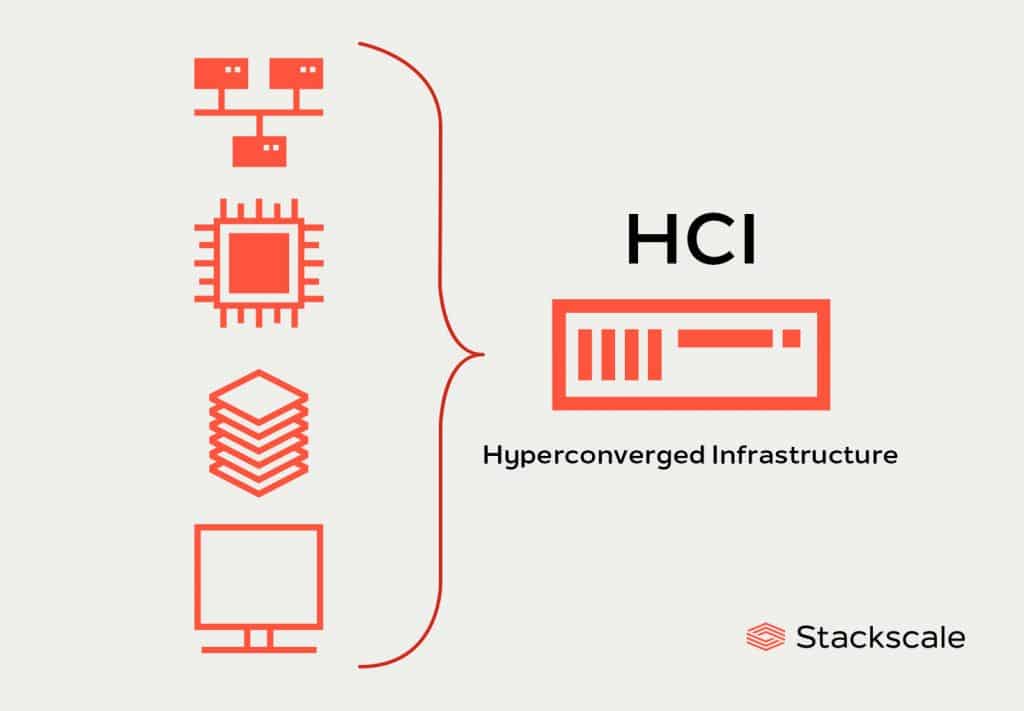
HCI consolidates compute, storage, and network into a single platform, thereby reducing the need for extra and separate hardware and software. This unified model combines all the components of a core data center and manages everything through a single interface.
Unlike traditional virtualization, which depends on a separate hardware component for almost everything, HCI eliminates these inefficiencies by leveraging commodity hardware and intelligent software orchestration.
In simple terms, it allows multiple programs to run on a single server without requiring separate hardware or software.
VMware gained prominence by pioneering server virtualization for the x86 architecture, allowing users to run multiple operating systems on a single server. However, after VMware’s acquisition by Broadcom, a pioneer in the industry, VMware canceled its perpetual licensing model.
It forced users to switch to a high-priced subscription model, leaving many to actively seek VMware alternatives. That’s where Sangfor’s 3rd-generation HCI architecture takes the concept of virtualization to the next level, with built-in security, disaster recovery, and cloud readiness. Right now, it’s one of the leading solutions for businesses, providing an agile, scalable, and cost-effective approach to virtualization.
Scalability Advantages of HCI Over Legacy Virtualization
One of the most significant challenges with legacy virtualization is scaling. Adding resources to legacy systems often requires complex planning, expensive hardware purchases, and downtime. That’s where it leads experts to consider the debate: hyperconverged infrastructure vs legacy virtualization. Eventually, HCI changes the game:
1. Seamless Node Expansion
Gone are the days of buying new hardware components simply to scale up a virtualized environment for business efficiency. With hyperconverged infrastructure, businesses can simply add new nodes and rapidly expand their virtualized environment.
This adds a layer of benefit, avoiding costly SAN expansion or disruptive migration. The good part? Businesses can start small and scale up or down as needed.
2. Software-Defined Flexibility
Here’s a downside to using traditional virtualization: organizations usually have to over-provision just to avoid performance bottlenecks as they scale up their virtualization needs.
But, hyperconverged infrastructure skips the complexity by combining compute, storage, and networking into a single interface. It leads to optimum utilization of the resource and also helps optimize cost in the process.
3. Cloud-Ready Architecture
Modern enterprises need hybrid cloud capabilities. Sangfor HCI is designed with cloud integration in mind, enabling businesses to extend workloads to private or public clouds effortlessly. This flexibility ensures long-term scalability without vendor lock-in.
Cost Advantages of HCI Over Legacy Virtualization
HCI outshines traditional HCI in cost efficiency as well. Leading HCI solution providers like Sangfor ensure that you enjoy the maximum benefits of a Hyperconverged Infrastructure while also enjoying cost efficiency.
1. Lower CAPEX
When using legacy virtualization, your organization will automatically spend on expensive SAN/NAS storage and proprietary hardware as part of the legacy requirement. This incurs a high cost in managing legacy systems. As a result, HCI eliminates these costs with the use of commodity hardware and integrated storage, decreasing upfront investments significantly.
2. Reduced OPEX
A legacy system is siloed by nature. As a result, users have to spend on compute, storage, and network separately. This means add-on expenses that keep piling up. On the other hand, Sangfor HCI simplifies virtualization by integrating compute, storage, and network, all within a single interface. It cuts down the need for separate hardware and software, leading to manpower and operational overhead.
3. Optimized Resource Utilization
Over-provisioning is a common downside in the legacy environment. With Sangfor’s HCI intelligence, businesses pay only for the amount they need. This helps with overall cost optimization while keeping the door to scalability open as the need arises.
Finally, business owners can also use hyperconverged infrastructure ROI calculators to calculate the return on investment (ROI) by comparing it to the total cost of ownership (TCO).
Enterprise-Grade HCI Example: Sangfor
When it comes to hyperconverged infrastructure providers, there are many. After VMware discontinued its perpetual licensing model, the market has begun to see competitors offering the same solutions with more flexible pricing and subscription models. However, achieving truly efficient and cost-effective HCI requires more than simple consolidation. Sangfor delivers advanced capabilities that maximize performance and minimize costs.
- Cost-Effective VMware Alternative: Offers enterprise-grade performance without the vendor lock-in or the premium price tag of competitors, making it a capable and affordable choice for modernization.
- Unified Management Console: Make your administrative tasks simpler and smoother with Sangfor’s single interface integrating compute, storage, and networking.
- Built-in Security & Disaster Recovery: Protects workloads with integrated backup and failover mechanisms.
- AI-Driven Optimization: It enhances workload balancing and resource allocation for peak efficiency.
- Cloud Integration: It seamlessly connects with the Sangfor Cloud for hybrid deployments and advanced and futuristic IT strategies.
These advanced capabilities, including cost-efficiency and security, streamlined management, and cloud readiness, are why thousands of organizations across sectors like finance, healthcare, education, and manufacturing depend on Sangfor for secure and scalable IT infrastructure.
The Future is Hyperconverged!
No technology is timeless, and legacy virtualization is no exception. It served its purpose, but as the world moves toward a more agile, connected, and easily scalable digital ecosystem, a new solution is needed. Hyperconverged infrastructure brings that connectivity, integration, and ease of scalability into the equation. This new form of virtualization is helping businesses reduce costs, simplify operations, and prepare business owners for a better and faster tomorrow.
Are you ready and prepared to take on the new world where your IT systems are converged? Share your thoughts through the comment box below.
