



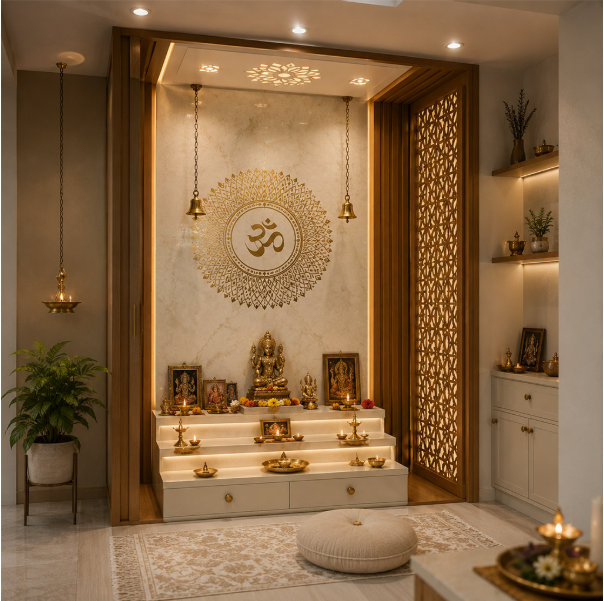
Introduction: Transforming Apartment Layouts into Serene Spiritual Zones
Designing a dedicated prayer space in a modern apartment requires a particular kind of problem-solving. The spiritual need for a calm, intentional zone does not shrink to fit a compact floor plan, but the floor plan itself often offers limited obvious solutions. Residents must work with what is available — a corner of a bedroom, a section of living room wall, occasionally a narrow hallway alcove — while maintaining the spatial logic of the surrounding rooms.
The balance between traditional spatial guidance and compact urban planning is a genuine challenge. Many older design conventions assume the availability of a dedicated room, with specific dimensions and clear separation from sleeping and cooking areas. Contemporary apartments rarely offer that option. The response has been a wave of compact, wall-mounted, and architecturally integrated sacred space solutions that honor the intention of a separate prayer zone without requiring a separate room. When done well, a thoughtfully positioned altar creates a meditative anchor in the home — a point of visual stillness that registers every time you pass it.
Sacred Space Architecture: Compact Altar Innovations
Small apartment square footage pushes designers toward vertical thinking. Where floor area is limited, height compensates — and dedicated altar units that draw the eye upward rather than outward use this principle well. A beautifully constructed standalone home shrine works as the primary architectural anchor of a prayer zone, providing structure and formality even in a corner that measures only a few square feet.
The best home temple for home use combines thoughtful proportions with practical storage. Deep enough to hold a murti or sacred image without crowding, tall enough to register as a defined zone within the room, and finished in materials — often wood, sometimes with carved or latticed detailing — that signal purpose through texture and craftsmanship.
Wall-mounted altar configurations offer a useful alternative in rooms where even a compact freestanding unit would interrupt movement. Mounted at the correct height, a wall altar keeps floor space entirely clear while maintaining visual prominence. Freestanding units on low pedestals or dedicated platforms work well where wall mounting is impractical.
Vastu Alignment: Strategic Orientations for Positive Energy
Vastu Shastra provides specific directional guidance for prayer zones that remains widely followed in Indian households. The northeast corner — the Ishan Kona — is considered the most auspicious placement for a puja area, associated with positive energy flow, clarity, and spiritual receptivity. In a purpose-built home, this corner would be reserved for the prayer space from the initial layout stage.
In practice, apartments rarely allow for this ideal. Structural walls, door placements, and shared boundaries with neighboring units frequently make the northeast corner inaccessible or architecturally awkward. The accepted alternatives — east-facing or north-facing wall placements — preserve the directional logic of Vastu guidance while working within real spatial constraints. What matters in both cases is intentionality: the altar should face a direction that allows the person praying to face either east or north during worship.
Layout Guidelines: Smart Proportions and Structural Boundaries
Elevation matters in sacred space design. Placing altar items directly on the floor is generally discouraged in traditional practice, and from a design perspective it also reduces the visual impact of the space. A raised platform — even a shallow one of thirty to forty centimeters — lifts the sacred objects into a clearer sightline and creates a defined base that reads as architectural rather than incidental.
Wooden jaali screens and carved partition panels have become a popular structural tool for defining prayer zones in open-plan living spaces. A jaali screen positioned at the edge of the puja area creates a visual and spatial boundary without blocking light or closing off the zone entirely. It signals separation without requiring walls.
Maintaining a strict boundary around the space — keeping it free of unrelated items, daily clutter, and general household traffic — protects the atmosphere the design intends to create. A crowded altar undermines the sense of calm and intentionality that defines a well-considered sacred space.
Contemporary Styling: Elevating the Zone with Intentionally Chosen Elements
The decorative language of contemporary puja zones draws on traditional materials — brass lamps, copper vessels, floral urlis — while presenting them in arrangements that feel considered rather than accumulated. A single well-placed brass diya has more visual impact than a shelf crowded with mismatched items, and it is easier to maintain with the daily attention that active use requires.
Lighting deserves careful thought. Natural light during morning prayers is ideal where the layout allows it. For enclosed or north-facing zones where natural light is limited, warm ambient illumination — soft LED strip lighting along shelf edges or backlit panels behind the altar — creates an atmosphere of quiet, focused warmth without the harshness of direct overhead lighting.
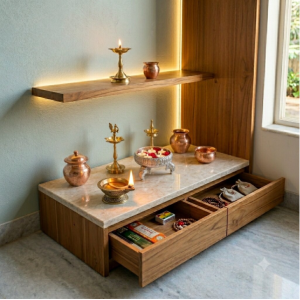

Wooden home decor online has expanded the accessible range of altar-adjacent storage significantly. Hidden drawer units beneath the altar platform keep daily supplies — incense, matchboxes, small offerings — organized and out of sight, maintaining the visual clarity of the space during prayers while keeping everything needed within easy reach.
Conclusion: Cultivating Daily Comfort and Mindfulness in Urban Living
A well-designed sacred space does two things simultaneously: it honors traditional practice and it works within a contemporary home. Neither goal has to compromise the other. Correct spiritual orientation, achieved through directional placement and elevation, can coexist with sleek cabinetry, integrated storage, and contemporary material choices.
The connection between a well-maintained sacred space and daily peace of mind operates on a practical as much as a spiritual level. A calm, ordered altar that is used regularly becomes a reliable point of stillness in an otherwise busy home — a place where the texture of the day pauses for a moment before continuing.
Investing in a high-quality, durable altar unit from the outset pays long-term dividends. A well-made piece holds its appearance across years of daily use, requires less maintenance than cheaper alternatives, and continues to contribute to the atmosphere of the space it anchors.


