

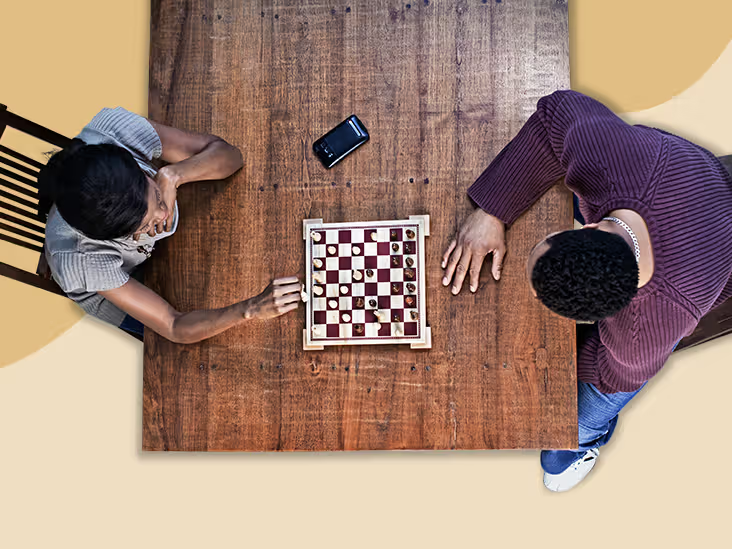
Some slot gacor ask you to react before you have time to think. Others put a problem in front of you and let the silence do its work. Online puzzle games belong to the second group, although the clock, a tricky opponent, or a teammate shouting a bad suggestion can add plenty of pressure. Their appeal is the small satisfaction of seeing a confusing situation become clear.
Online puzzle games come in many forms: word challenges, logic grids, spatial tasks, physics-based contraptions, and cooperative rooms that require players to share information. The best choice isn’t necessarily the hardest one. It’s the game that gives you a fair challenge and makes you want to try another problem.
Why Puzzle Games Appeal to Different Players
A puzzle creates a clear relationship between a problem and a possible solution. You observe the rules, test an idea, notice what went wrong, and adjust. That loop can feel rewarding because progress is visible even when the answer takes time.
Online formats add options that a printed puzzle cannot always provide. Some games refresh their challenges, compare scores, or let you compete against friends. Others allow two or more players to work together, with each person seeing different clues or controlling part of the environment.
That doesn’t mean every puzzle game automatically improves general intelligence or memory. Claims about cognitive benefits should be treated carefully, and enjoyment is a perfectly good reason to play. A well-designed puzzle can be satisfying without promising to transform your brain.
Logic and Pattern-Based Challenges
Logic puzzles ask you to use rules and clues to narrow down possible answers. Word games may test vocabulary and deduction, while number or grid puzzles ask you to identify relationships without guessing blindly.
Pattern-recognition games work differently. They ask you to notice a repeated sequence, a change in a visual arrangement, or a rule that explains several examples. At first, the pattern may seem arbitrary. After a few attempts, you begin to see which details matter and which are distractions.
If you’re new to this category, start with puzzles that explain why an answer is correct. Feedback is useful because it helps you understand the rule rather than merely memorize a solution. When a puzzle becomes frustrating, take a short break and return with fresh attention. Repeating the same incorrect guess rarely makes it smarter.
Spatial and Physics-Based Puzzles
Spatial puzzles challenge your ability to imagine movement, orientation, and relationships between objects. You may need to rotate shapes, guide an object through a narrow passage, or arrange pieces so they fit together.
Physics-based challenges add movement and cause-and-effect. A small change in the placement of an object can alter the entire result. The fun often comes from experimenting: a solution that looks obvious on paper may fail when gravity or momentum enters the picture.
These games can be especially satisfying for players who prefer visual experimentation to word-based clues. Look for adjustable hints or a way to reset a puzzle quickly. If each failed attempt requires a long replay, experimentation becomes tedious rather than useful.
Finding the Right Difficulty Level
A good puzzle should make you think without making every attempt feel pointless. If you solve everything immediately, try a harder mode or a game with fewer hints. If you regularly get stuck without understanding why, choose a title with clearer instructions or a gradual learning curve.
A few practical checks can help you choose:
- **Read the rules first.** Confusing instructions can make a simple puzzle feel unfair.
- **Look for meaningful feedback.** The game should help you distinguish a wrong answer from an incomplete one when possible.
- **Choose a comfortable pace.** Timed challenges suit players who enjoy pressure; untimed modes leave more room for reflection.
- **Check accessibility settings.** Text size, contrast, color options, and input flexibility can make a substantial difference.
- **Try social features selectively.** Hints from a friend can help, but solving every problem for you may remove the fun.
If you enjoy a competitive edge, compare scores with friends or try a daily challenge. If you prefer a quieter session, choose puzzles that let you pause and return later. You can also alternate between familiar formats and new ones so the experience stays fresh.
For another way to find slot gacor that fit your preferred play style, see [Internal link: choosing co-op or competitive games]. If you want to play with friends across devices, check [Internal link: cross-platform gaming explained]. For platform-specific accessibility features, consult [External link: official accessibility guidance from a game platform or developer].
FAQ: Choosing Puzzle Games
Are online puzzle games only for solo players?
No. Many are designed for cooperative solving, head-to-head challenges, shared leaderboards, or asynchronous play. Check the game’s mode list to see how social interaction works.
Should I use hints when I get stuck?
Yes, if the game supports them and you’re no longer enjoying the problem. Try a small hint first, then solve the remaining steps yourself. The goal is to learn the rule, not prove you can suffer indefinitely.
Do puzzle games improve problem-solving in everyday life?
They give you practice solving problems within the game’s rules, but broad real-world benefits vary and shouldn’t be guaranteed. Choose games because you enjoy the challenge, and treat any wider benefit as a possible bonus.
The right puzzle leaves you thinking about the solution after you close the tab, not because you’re annoyed, but because one detail finally clicked. Start with a format you enjoy, increase the difficulty when you’re ready, and let curiosity lead. There is no scoreboard for how quickly you solve a puzzle unless you decide you want one.
