

Introduction
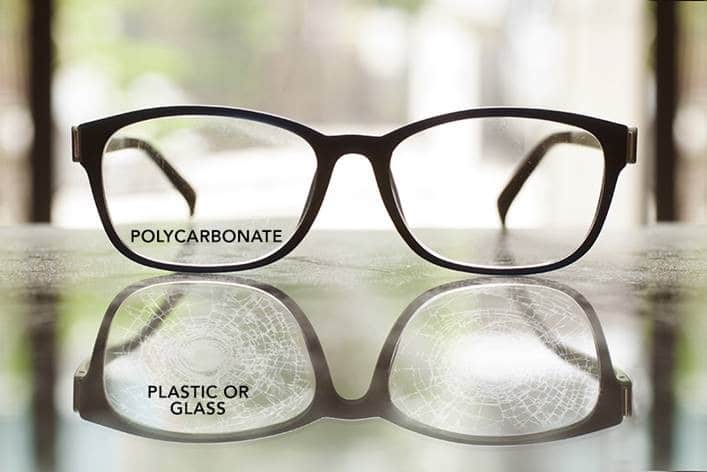
Picking the right lens material is just as important as finding the perfect frame for your glasses. Glass lenses are very clear, but they’re also heavy and can break easily. This makes them a bad choice for people who play sports or are clumsy. Polycarbonate lenses are a better option because they’re safe, comfortable, and affordable.
What are Polycarbonate Lenses?
Polycarbonate lenses are crafted from a thermoplastic material known for its exceptional strength and impact resistance. Originally developed for aerospace applications, this innovative material found its way into the world of eyewear in the 1970s. Polycarbonate lenses are significantly lighter and thinner than traditional glass lenses, making them a comfortable choice for all-day wear.
Benefits of Polycarbonate Lenses
The popularity of polycarbonate lenses can be attributed to several key advantages:
Unmatched Impact Resistance: Perhaps the most significant benefit of polycarbonate lenses is their exceptional impact resistance. They are roughly ten times stronger than standard plastic lenses and can withstand significant blows without shattering. This makes them the ideal choice for children, athletes, and anyone with an active lifestyle who may be at risk of eye injuries.
Lightweight Comfort: Polycarbonate lenses are considerably lighter than their glass counterparts. This translates to a more comfortable wearing experience, particularly for those who wear their glasses for extended periods. The reduced weight eliminates the pressure on the bridge of the nose and ears, which can lead to headaches and fatigue.
Built-in UV Protection: Polycarbonate lenses naturally block out 100% of harmful UVA and UVB rays. This inherent protection eliminates the need for additional UV coatings, simplifying lens care and maintenance.
Versatility and Customization: Polycarbonate lenses are incredibly versatile and can be tinted, photochromic (transitioning to sunglasses in sunlight), and treated with anti-reflective or scratch-resistant coatings. This allows for customization to suit individual needs and preferences.
Affordability: Compared to high-index plastic lenses or glass lenses, polycarbonate lenses are generally more affordable. This makes them an attractive option for budget-conscious individuals who still prioritize safety and comfort.
Things to Consider with Polycarbonate Lenses
While polycarbonate lenses offer numerous benefits, it’s important to be aware of some potential drawbacks:
Optical Clarity: In rare cases, some individuals with very strong prescriptions may notice a slight distortion in peripheral vision compared to high-index plastic lenses.
Scratch Resistance: While polycarbonate is a robust material, it is not completely scratch-proof. Investing in a scratch-resistant coating can significantly enhance the lifespan of the lenses.
Thicker for High Prescriptions: For individuals with high prescriptions, polycarbonate lenses may appear thicker than high-index plastic lenses due to their lower refractive index.
Who Can Benefit Most from Polycarbonate Lenses?
Polycarbonate lenses are a perfect choice for a wide range of individuals, including:
Children: Active children are more prone to accidents, and polycarbonate lenses provide superior protection for their delicate eyes.
Athletes: Athletes engaged in high-impact sports require eyewear that can withstand potential falls or collisions. Polycarbonate lenses offer the necessary level of impact resistance.
People with Active Lifestyles: Anyone with an active lifestyle who frequently participates in outdoor activities or physically demanding work can benefit from the safety and comfort of polycarbonate lenses.
Polycarbonate Lenses vs. Other Lens Materials
While polycarbonate lenses offer a compelling package of benefits, it’s helpful to compare them to other popular lens materials to determine the best fit for your needs. Here’s a breakdown of how polycarbonate lenses stack up against the competition:
Glass Lenses
Advantages: Glass lenses offer superior optical clarity, particularly for individuals with high prescriptions. They are also highly scratch-resistant.
Disadvantages: Glass lenses are significantly heavier than polycarbonate lenses, making them less comfortable for extended wear. Additionally, their fragility poses a higher risk of breakage and potential eye injury.
High-Index Plastic Lenses
Advantages: High-index plastic lenses are thinner and lighter than polycarbonate lenses for high prescriptions, resulting in a more aesthetically pleasing appearance. They also offer excellent optical clarity.
Disadvantages: High-index plastic lenses are generally more expensive than polycarbonate lenses. They may not be as impact-resistant as polycarbonate and typically require additional UV protection coatings.
Trivex Lenses
Advantages: Trivex lenses are a relatively new lens material that offers superior optical clarity to polycarbonate lenses, particularly for high prescriptions. They are also lightweight and impact-resistant.
Disadvantages: Trivex lenses are the most expensive option among the materials discussed here. Their availability may be limited compared to polycarbonate lenses.
Making an Informed Decision
When choosing between polycarbonate lenses and other lens materials, it’s crucial to consider your individual needs and lifestyle. Discuss your options with your eye doctor, who can help you determine the best material for your prescription and specific requirements.
Conclusion
Polycarbonate lenses represent a significant advancement in eyewear technology. Their exceptional impact resistance, lightweight comfort, and built-in UV protection make them a compelling choice for a wide range of individuals. By understanding the advantages and limitations of polycarbonate lenses, you can make an informed decision that prioritizes both safety and a comfortable wearing experience.
