

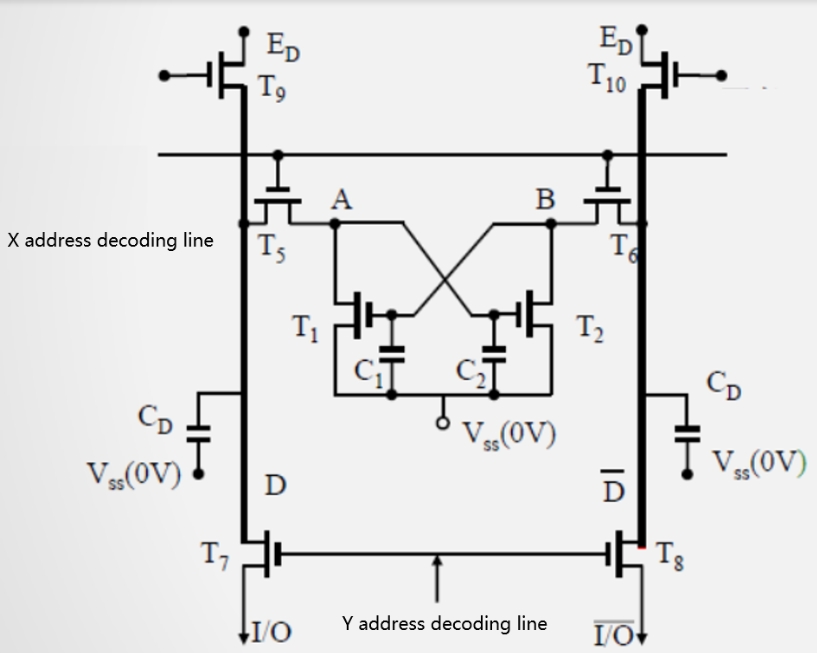
Memory plays a critical role in determining the performance and efficiency of modern computing systems. Whether you’re using a smartphone, gaming console, or desktop PC, the type of memory integrated into the system directly affects how quickly data can be processed and accessed. Two primary types of memory are SRAM (Static RAM) and DRAM (Dynamic RAM), each serving different functions depending on system needs. Choosing the right type of memory for your device can significantly impact speed, cost, and overall performance. In this article, we’ll explore the key difference between sram and dram and help you decide which is best suited for your needs.
Key Differences Between SRAM and DRAM
At the core, SRAM and DRAM differ in how they store and manage data. SRAM stores data in a series of flip-flops, making it faster but also more expensive to manufacture. This type of memory is primarily used in cache systems where speed is crucial. On the other hand, DRAM stores data in capacitors, which require periodic refreshing. While this makes DRAM slower, it allows for higher storage capacities at a much lower cost, making it the primary choice for system memory in PCs and other general-purpose devices. SRAM’s lack of need for refreshing gives it an edge in high-speed applications, while DRAM’s cost-efficiency makes it the go-to for devices requiring large amounts of memory at a more affordable price.
Performance vs. Cost: Which Memory Type Suits Your Needs?
When to Choose SRAM: High-Speed and Low-Latency Applications
SRAM is the ideal choice for high-speed, low-latency applications where performance is the top priority. It is commonly used in CPU caches, networking equipment, and gaming consoles, where rapid access to frequently used data is critical. Since SRAM does not require refreshing like DRAM, it delivers faster data access with minimal delay, making it perfect for environments where processing speed is essential. However, this comes at a cost, as SRAM is more expensive to produce and is typically only used in smaller quantities.
When to Choose DRAM: Cost-Effective and Scalable Solutions
DRAM is the memory of choice for general-purpose devices such as personal computers, laptops, servers, and mobile devices. Its architecture, though slower, allows for much higher storage capacities, and its cost-effectiveness makes it ideal for applications where large amounts of memory are necessary. DRAM’s scalability is one of its strongest advantages, allowing it to be integrated into a wide range of devices without drastically increasing production costs. If your needs prioritize storage capacity over ultra-fast data access, DRAM is likely the best option for your system.
Power Consumption and Efficiency: Which Memory Saves More Energy?
In terms of power consumption, SRAM generally uses less energy during active operations because it does not need to refresh its data continuously. This makes it more efficient for tasks that require constant data access, such as in high-performance processors or battery-powered devices like routers and switches. For applications where power efficiency is crucial, such as in embedded systems, SRAM’s ability to conserve energy while maintaining high-speed performance is a significant advantage. DRAM, on the other hand, consumes more energy because it requires continuous refreshing to maintain the stored data. However, DRAM can be more efficient in standby or idle modes, where it draws minimal power when not actively accessed. This makes DRAM suitable for applications where memory isn’t accessed constantly but large amounts of data need to be stored at an affordable price, such as in personal computers or mobile devices that prioritize capacity over constant high-speed performance.
Application Scenarios: How to Decide Based on Your Use Case
Is SRAM the Best for High-End Devices?
If you are building or purchasing a high-end device that requires fast data access and minimal latency, SRAM may be the best option. Devices like gaming PCs, high-performance workstations, and networking equipment that depend on speed and low response times benefit significantly from SRAM’s architecture. While the cost of SRAM is higher, the performance it delivers in speed-critical tasks justifies the expense in such specialized environments.
Is DRAM Better for General-Purpose Devices?
For most general-purpose computing needs, DRAM offers a more practical solution. If you’re using a laptop, desktop computer, or smartphone, DRAM’s ability to store large amounts of data at a lower cost makes it the optimal choice. Since most consumer devices prioritize capacity over speed, DRAM is commonly used as the main system memory in personal electronics, offering a good balance between performance, capacity, and affordability. For applications where cost-effectiveness and scalability are key, DRAM remains the preferred memory type.
Conclusion
In conclusion, both SRAM and DRAM serve specific purposes in modern computing. SRAM is faster and more efficient for high-speed applications, but its higher cost and limited scalability make it less practical for general use. DRAM, on the other hand, is slower but significantly more affordable and scalable, making it ideal for system memory in a wide range of devices. When choosing between SRAM and DRAM, consider the specific performance requirements and budget constraints of your device. For speed-critical applications, SRAM is the way to go, while DRAM is perfect for cost-effective, large-scale memory solutions.
—
