



Introduction
In the fast-paced world of manufacturing, there is no possibility of errors or mistakes in the products. To make a strong impact, your product should be high quality and well-designed. So, here, Prototype’s Injection Molding Service comes into existence. These prototypes will bring your concepts from the digital world into real life before mass production.
These prototypes mimic the real products but are less expensive and have an option for alterations. Many companies use injection molding to create accurate prototypes. This helps ensure durability and precision before moving to full-scale production.
Curious how 3D Printing Arizona can transform your ideas into reality? Discover cutting-edge designs and innovation at By3Design! Explore now!
If you are in search of such services, then Kusla prototypes should be your ultimate option. It is because they specialize in delivering rapid prototypes that help businesses to grow.
Moreover, with plastic injection molding, you can explore a variety of materials and design options. It will enhance the aesthetics of your products and make them functional.
Let’s explore further injection prototyping, like types, material use, and much more.
What is Prototype Injection Molding Services?
Would you mind having a few sample products with the exact features and concepts of your actual products? Moreover, with less production cost and time? Yes! I know you don’t.
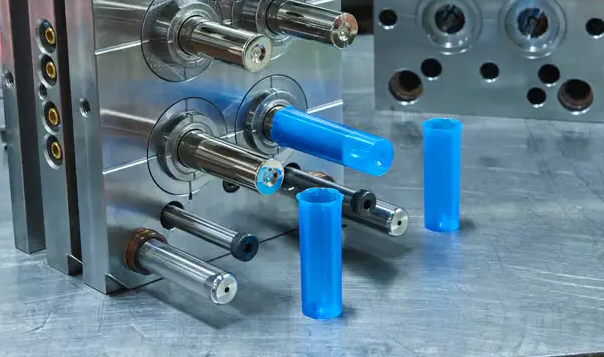
So, this is exactly an injection molding prototype. Basically, companies or manufacturers use this method of production. It helps to create a large number of prototypes that contain the final product’s shape, color, and functions.
But do you know that prototype injection molding is a cost-effective alternative to traditional injecting prototypes? It is because it uses a cost-effective material and procedure to make a product sample efficiently and easily for you. With these prototypes, you will have a preview of how your product will look after final touch-ups.
Benefits of Injection Molding Prototype
Some amazing benefits of using injection molding prototype services are mentioned below:
Cost-Effective for Small Batches
One of the main benefits of prototype injection molding is its cost-effectiveness. Moreover, this feature is more prominent when we are producing products in a small quantity. Unlike the traditional injection molds, which require heavy steel molds for production, these prototypes are different.
The injection molding method uses molds that are made of softer materials, such as aluminum or 3D print molds. As these molds are less expensive, they reduce the overall cost of production.
Speed and Efficiency
As compared to other molding options, prototype injection molding offers a faster turnaround time and efficiency. However, CNC machines and 3D printing are known for creating simple parts quickly. However, the injection mold also adds accuracy and efficiency to the final products.
The reason for enhanced speed is due to the faster production time of injection molds, which usually take only a few days. After molds are created, you can quickly prepare product samples. Then, you have to send them to customers, receive responses, and start mass production.
This type of molding is commonly used in industries that require fast production speed. Some common areas include automotive, electronics, and medical devices.
Testing for Assembly and Fit
Another important benefit of an injection molding prototype is that it gives manufacturers various opportunities. One such opportunity is they can test how the final products will look and how to fit and assemble them.
During this testing phase, they can analyze if their products have any shortcomings. So, if they find any issue with their design, they still have the chance to correct it.
Low Risk Before Mass Production
With the prototypes, you can early detect the errors and issues in your products. In this way, you can make adjustments and alterations to the products before jumping to mass production.
This cautionary step will significantly reduce the chances of errors and waste of money and effort, right? Moreover, you also have the option to finalize your designs, materials, manufacturing process, and much more.
Ideal for Complex Geometries
As we know, traditional injection molding uses steel molds for parts development, right? Therefore, it does not give an option to create complex designs.
But, my friend! With the molding, you can easily create complex designs. It is because as these molds are made of soft material, they can contain thin walls, undercut designs, and other complex features.
Process of Injection Molding prototypes
The quick steps of how the injection molding prototypes are created are mentioned below. Let’s have a look at it:
Design and CAD Modeling
The prototype injection molding process begins by designing a 3D print using the CAD (Computer-Aided Design) software. At this step, designers and manufacturers decide the product’s material, features, and other important specifications.
Mold Creation
After finalizing the product design, now is the time for mold creation. Usually, in injection molding, molds are created with soft and less expensive materials, such as aluminum. Moreover, if you want to create complex designs, then 3D technology is also used.
Material Selection
In the next step, material is selected for the prototypes. Some common materials used include ABS (Acrylonitrile Butadiene Styrene), polycarbonate, nylon, and polypropylene.
Injection Process
After selecting the material and molds, the next step is the injection process. It begins with the heating of plastic pellets until they turn into liquid. Then, they are injected into the molds under high pressure to fit in the molds.
Then, you shoulder the material cool and solidify so that it takes the shape accurately.
Ejection and Inspection
After the material is cold, the mold is opened, and the prototype is taken out of the mold. After that, the manufacturers inspect the piece to avoid any defects, such as warping, air bubbles, or incomplete filling.
Testing the Model
Now, the last step comes, which is testing the prototype sample. It is sent for functional testing, where the team will perform various tests. These tests include strength, fit, and functions.
Types of Materials Used in Prototype Injection Molding
In prototype injection molding, companies and manufacturers have a wide variety of material options. The selection of material depends on the function of products, needs, requirements, and many other factors.
Here is an overview of some commonly used materials in injection prototyping.
- Acrylonitrile Butadiene Styrene (ABS)
- Polycarbonate (PC)
- Polypropylene (PP)
- Nylon (Polyamide, PA)
- Thermoplastic Elastomers (TPE)
- Polystyrene (PS)
- Polyethylene (PE)
- High-Density Polyethylene (HDPE)
- Polyurethane (PU)
Use of Prototype Injection Molding
Some of the common applications of injection molding prototypes in the real world are mentioned below.
- Stakeholder Presentation
In the world of real-estates and stakeholders, high-quality prototypes are being used for presentations and other purposes.
- Medical Equipment
The injection molding technique is also being used in the world of medicine for various purposes. Like, it is used to prepare surgical instruments, prosthetics, and much more equipment.
- Electronics and Automotive devices
Various automotive and electronic companies are also using this injection molding technique to create a prototype of their products before going for mass production.
Common Challenges in Prototype Injection Molding
Services
However, the prototype injection molding services have made the manufacturing process so easy and error-free. But still sometimes, it can create various types of challenges during the production time.
Let’s have a look at some of these challenges so that you can avoid them and enhance your productivity.
- Some complex designs can cause various challenges during production. It may include more production costs and time.
- As we know, the prototype molds are made of softer material; they may tear early as compared to steel molds.
- If you use the plastic material, it can shrink and wrap during the cooling process. So, this can affect the final shape of the product.
- You can also face issues due to uneven cooling or distribution of material during the filling. This results in early breakage or uneven shape.
Conclusion
Using the prototype injection molding can be a game-changer for your manufacturing business. It is because it offers cost-effective, efficient, and accurate models that can improve your product’s details.
With the prototypes, you can validate the quality, fitting, assembling and even defects in the sample. So, with this, you will be saved from big losses, such as mass production with defects.
In addition, it has a lot more benefits, as it saves you time, speeds up your work, and much more. So, you should opt for the injection molding process before going for a full-production.
FAQ
How long does it take to create prototypes using injection molding?
The time required to create prototype products varies according to the material used and the complexity of the design. However, the process usually takes a few days to a few weeks to complete.
Can I use prototype injection molding to produce a lesser number of products?
Yes! It is one of the advantages of injection molding. You can create a lesser number of products, ranging from 100 to 1000s. This method is useful for testing purposes before manufacturing the actual products.
Is injection molding a cost-effective method of manufacturing?
Of course! As compared to the traditional molding method, the injection molding is cost-effective. However, the cost of production also varies according to material, design, and number of products.
Can companies use this molding method for testing purposes?
Yes. Prototypes can be best for functional testing before producing the products in bulk. Companies can test functions, designs, kits, and much more.
Can I alter the product design after creating a prototype using injection molding?
Of course! The main purpose of prototypes is to analyze the products before full-scale production. In this way, you can make any changes in the products and minimize the waste of money and time.


