



When you lose a tooth, the empty space does more harm than you may expect. Nearby teeth start to shift. Your bite changes. Your jawbone weakens. Every day tasks like chewing and speaking become harder. Over time, this quiet damage can spread and place every nearby tooth at risk. A strong replacement tooth stops that chain reaction. Dental implants do more than fill a gap. They support the teeth on each side. They keep your bite steady. They help your jawbone stay firm. They protect your smile from slow, steady breakdown. With the right plan from a trusted dental implants specialist in Falls Church, VA, you can guard the teeth you still have and avoid larger problems later. This blog explains how implants shield neighboring teeth, what happens when the space stays empty, and the key steps you can take to keep your mouth stable.
What Happens To Nearby Teeth After Tooth Loss
Tooth loss starts a chain of events that you may not see right away. You feel one missing tooth. Your body reacts in three harsh ways.
- Teeth drift into the empty space and twist out of line
- The bite no longer fits, so certain teeth take extra force
- The jawbone in that spot starts to shrink
First, the teeth next to the gap lean toward it. Then the tooth above or below the gap starts to grow longer into the open space. This movement changes how your teeth meet. As a result, pressure shifts to a few teeth instead of spreading across all teeth. Those overloaded teeth chip, crack, or loosen.
The bone under the missing tooth also starts to shrink. The National Institute of Dental and Craniofacial Research explains that bone needs regular use from chewing to stay strong. When a tooth is gone, that part of the bone gets less use and slowly thins.
How Implants Protect Adjacent Teeth
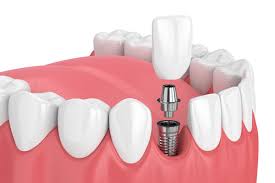
Implants stop that damage by acting like a new tooth root. The implant sits in the bone. A small connector holds a crown on top. That simple setup guards nearby teeth in three key ways.
- It fills the space so teeth no longer drift
- It spreads chewing force and eases stress on weak teeth
- It keeps the bone working and slows bone loss
Because the implant crown stands on its own, it does not need support from the teeth on each side. Those teeth stay untouched. No drilling. No extra wear. This keeps more of your natural tooth structure in place.
Also, the implant sends chewing force into the bone. That pressure reminds the bone to stay in use. Over time, this helps keep the shape of your jaw and the line of your smile. The teeth on each side stay in their spots. Your bite stays steadier.
Implants Versus Bridges And Removable Partials
Many people choose a bridge or a removable partial denture after tooth loss. Each option has a role. Yet they protect nearby teeth in very different ways.
| Feature | Dental Implant | Fixed Bridge | Removable Partial Denture
|
|---|---|---|---|
| Support for nearby teeth | Protects by standing alone | Uses nearby teeth for support | Hooks or clasps attach to nearby teeth |
| Effect on tooth enamel | No change to neighbors | Often needs grinding of two neighboring teeth | Can rub and wear neighbor teeth over time |
| Bone under the missing tooth | Helps preserve bone | Does not protect bone at the gap | Does not protect bone at the gap |
| Stability when chewing | Feels fixed and steady | Feels fixed and steady | May move or pinch |
| Effect on speech | Usually no change | Usually no change | May affect certain sounds |
| Long term impact on neighbors | Often protects and shares the load | Can strain or decay the support teeth | Can loosen or stress support teeth |
With a bridge, the dentist often must remove healthy enamel from the teeth next to the gap. Those teeth hold the bridge. If they decay or crack, the whole bridge can fail. A removable partial uses small clasps that grab onto neighboring teeth. Over time those clasps can loosen or damage those teeth.
In contrast, an implant stands like a single strong post. The neighbor teeth stay whole. The load spreads more evenly when you chew. This often means fewer new problems near the treated spot.
Why Bone Support Matters For Neighbor Teeth
Bone is the unseen base for every tooth. When the bone shrinks, the teeth lose support and can loosen or shift. Tooth loss in one spot can slowly weaken the bone under many teeth.
Implants help break that pattern. The post in the bone acts like a tooth root. During healing, the bone grows around the implant and locks it in place. That connection gives the bone a reason to keep its strength.
The American Dental Association explains that good bone support is important for long-term tooth stability.
When the bone stays stable, the teeth on each side stay more secure. The gums hold tighter. The bite stays more even. This protects your ability to chew and speak with less strain.
Everyday Benefits For You And Your Family
Protecting nearby teeth is not only about X-rays or charts. It affects daily life in clear ways.
- You chew on both sides instead of favoring one side
- You need fewer emergency visits for cracked or loose teeth
- You keep a more natural smile shape as you age
Children watch how adults handle health problems. When you choose strong, tooth-saving care, you send a steady message about self-respect and planning. That quiet lesson can shape how a child views health choices for years.
Steps You Can Take Now
You can start with three simple steps.
- Schedule a full exam with x rays of the missing tooth site
- Ask how the gap is affecting nearby teeth and bone today
- Discuss whether an implant can help protect those teeth
Be open about your fears, budget, and health history. Ask about timing, healing, and how to care for the implant. Ask how the plan will shield the teeth you still have. A clear plan should explain what happens if you act now and what happens if you wait.
Your mouth works as one system. One missing tooth can cause quite a lot of damage. One strong implant can stop it. When you protect the teeth that stand next to a gap, you protect your comfort, your bite, and your sense of ease when you smile.


