Your child’s mouth changes fast. You blink and everything is different. Those early changes shape how your child eats, speaks, and smiles for years. Many parents miss the first warning signs. You do not need to. When you know what to watch for, you can step in early and protect your child from pain, fear, and costly treatment. This guide walks you through five early dental milestones that matter most. You will see what is normal, what is not, and when to call for help. Grand Rapids dentists use these same milestones to track healthy growth. You can use them at home with simple checks and calm questions. Early action protects more than teeth. It guards your child’s sleep, growth, and confidence. You do not need special tools. You only need clear steps, a steady eye, and a few careful minutes each day.
Milestone 1: First Tooth Breaks Through
The first tooth often appears around 6 months of age. Some children start closer to 4 months. Others start closer to 12 months. The timing is less important than the pattern.
Watch for:
- A small white edge on the lower front gums
- Changes in sleep or feeding
Your child may pull on their ears or rub their cheeks. That can feel scary. It often comes from pressure in the gums. You can offer a clean, cool washcloth to chew. You can offer a solid teether. You can avoid teething gels unless your child’s dentist or doctor tells you to use them.
The American Academy of Pediatrics shares clear teething tips and safety steps. Use that guide if you feel unsure.
Milestone 2: Front Teeth Line Up
After the first tooth, others follow in a steady line. By age 2 to 3, most children have a full set of 20 baby teeth. Early on, you want to see front teeth that grow in straight enough to touch or almost touch.
Check for:
- Large gaps that stay the same for months
- Teeth that twist or overlap
- Upper teeth that sit far in front of lower teeth
Some space is normal. It gives room for larger adult teeth. Strong concern comes when teeth cross over each other or touch the gums in an odd way. You can take a clear photo once a month. You can compare it to the last one. You can show those photos during the first dental visit.
Milestone 3: First Dental Visit By Age One
The first dental visit should happen when the first tooth appears or by age one. Many parents wait. That delay can lead to deep cavities and scared children.
During this visit, the dentist will:
- Check gums, tongue, and cheeks
- Look for early spots of decay
- Review brushing and fluoride
- Ask about feeding and bedtime habits
You can sit with your child on your lap. You can hold a hand. You can bring a comfort toy. The goal is simple. You help your child see the dentist as normal and safe.
The American Dental Association explains why this first visit matters at MouthHealthy.org. You can read that page and come with clear questions.
Milestone 4: Healthy Daily Brushing Habit
By the time the first tooth appears, brushing should start. You only need a tiny smear of fluoride toothpaste. About the size of a grain of rice. At age 3, you can use a pea-sized amount.
You can follow three simple steps:
- Brush twice each day
- Use a soft, child-sized brush
- Help your child brush until at least age 7 or 8
You can let your child try first. You can then “finish up” to clean the spots that get missed. You can keep brushing sessions short and calm. Music or a short story can help.
Brushing Milestones By Age
| Age | Who Holds The Brush | Amount Of Toothpaste | Parent Role
|
|---|---|---|---|
| First tooth to age 2 | Parent | Smear, grain of rice size | Do all brushing and keep the child steady |
| Ages 3 to 5 | Child then parent | Pea size | Guide hand, then brush again to reach all sides |
| Ages 6 to 8 | Child with close help | Pea size | Watch, correct, and check for clean teeth |
Milestone 5: Loss Of Baby Teeth And Adult Teeth Coming In
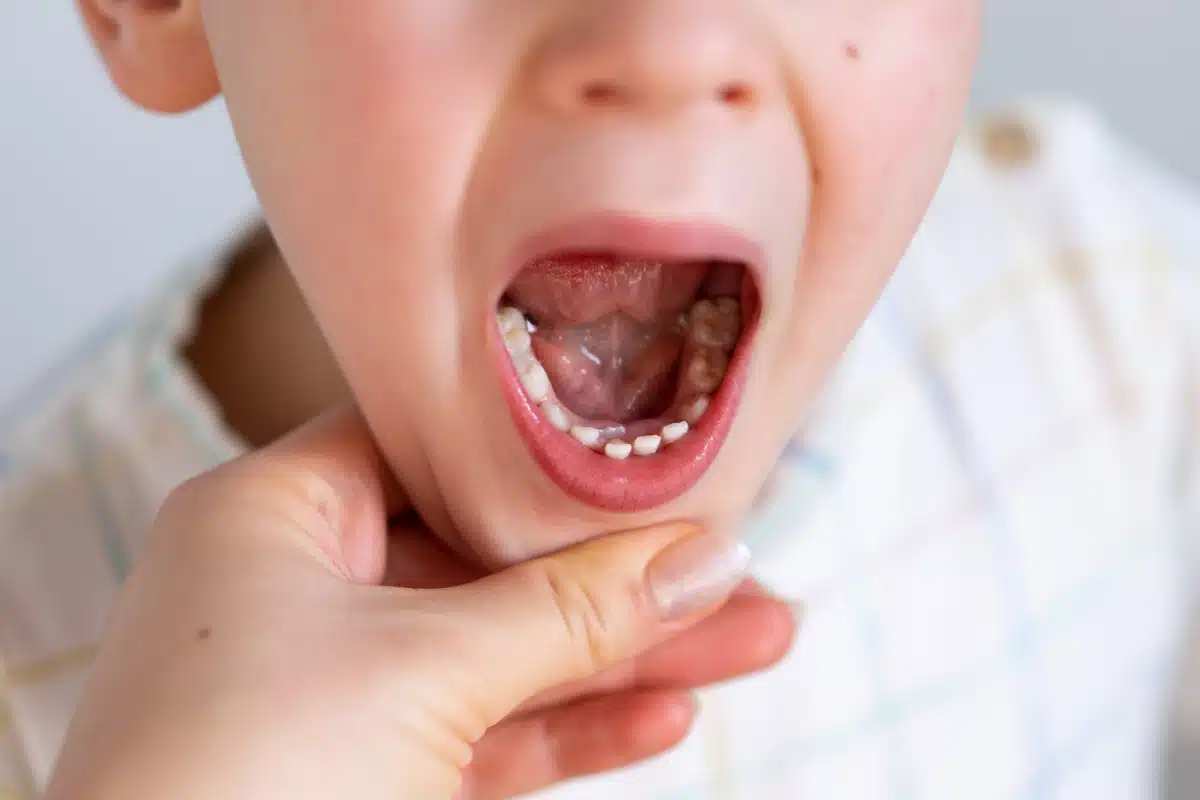
Most children start to lose baby teeth around age 6. The lower front teeth usually fall out first. New adult teeth appear behind or under them.
Look for three key signs:
- Baby teeth that stay loose for more than three months
- Adult teeth that grow behind baby teeth like “shark teeth”
- Red or swollen gums around new teeth
You can encourage gentle wiggling of loose teeth. You should not pull hard. You can call a dentist if a loose tooth causes severe pain or bleeding that will not stop.
Adult teeth often look larger and yellower than baby teeth. That can feel upsetting at first. It is normal. The color often blends in as more adult teeth appear.
Quick Check: Milestones At A Glance
Key Dental Milestones And When To Act
| Milestone | Common Age Range | What You Should See | When To Call A Dentist
|
|---|---|---|---|
| First tooth | 4 to 12 months | Lower front tooth breaking through | No teeth by 12 to 15 months or strong swelling with fever |
| Front teeth line up | 1 to 3 years | Teeth close together with small gaps | Teeth twisted, crossed, or biting into gums |
| First dental visit | First tooth to age 1 | Short visit, gentle exam, brushing tips | Any white or brown spots on teeth or mouth pain |
| Daily brushing habit | First tooth and on | Twice daily brushing with fluoride paste | Child will not let you near the mouth or bleeding that lasts |
| Loss of baby teeth | 6 to 12 years | Loose teeth, new adult teeth in front | Adult teeth far behind baby teeth or loose teeth that will not fall out |
When Your Gut Says Something Is Wrong
You spend the most time with your child. You know when something feels off. Pain with chewing, bad breath that stays, or bleeding gums all signal a need for care.
You can call a dentist even if you feel unsure. You can ask simple questions. You can request a quick look. Early care costs less, hurts less, and protects your child’s trust.
Teeth tell a clear story about health. When you watch these five milestones, you guard much more than a smile. You guard how your child eats, sleeps, and speaks each day.