

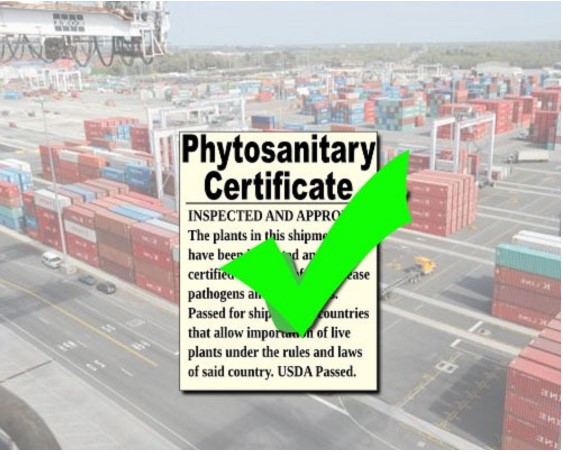
The Phytosanitary Certificate (PSC) works as a significant document for those involved in the export and re-export of plants, plant-based goods, and standardised articles.
It is an authoritative document that states plants and plant goods are free from pests and infectious diseases, fulfiling import requirements. This document is significant in affirming that shipments furnish the specified import needs of final destinations.
Issued under the patronage of the Ministry of Agriculture and Farmer Welfare, Government of India, and directed by the International Plant Protection Convention (IPPC), the PSC makes sure the international movement of agricultural products takes place in conformity with strict rules.
What Phytosanitary Certificate is Good For?
It declares that a plant, products made of plants, or other coordinated commodity conforms with the phytosanitary rules of the importing nation. This certificate may also be employed to furnish certification for re-export to different nations.
- A phytosanitary certificate (PSC) is needed for exporting limited items such as plants, tubers, and bulks.
- Fruits, vegetables, seeds for propagation, grain, cut flowers and branches, and growing medium are among the goods imported.
- A PSC is also needed for definite processed plant items that have the prospect of introducing limited pests, for instance, wood or cotton.
- PSC is essential for the export of contaminated goods like empty shipping vessels, cars, or different organisms.
What is the Purpose of a Phytosanitary Certificate for Export?
The following is a complete detail of the PSC for export:
- This certificate states that a plant, plant-based product, or other coordinated commodity adheres to the phytosanitary rules of the importing country.
- Exporters may also utilise it to support certification for re-export to other countries.
- It is issued to show that shipments of plants, plant products or different regulated commodities fulfil specific phytosanitary import norms and are aligned with the certifying affidavit of the suitable model certificate.
- When there are conflicts between the suggestions of the importing and exporting nations depending on obtaining a PSC, NPPOs must work out a mutual contract. Amendments to this certificate requirement must follow openness and non-discrimination.
Types of a Phytosanitary Certificate
This certificate is classified into two categories, as discussed below:
1. For Export Purposes
The NPPO of the origin country issues a phytosanitary certificate for export purposes. It declares that the consignment fulfills the country’s phytosanitary needs.
2. For re-export Purposes
The NPPO of the re-exporting country would issue a phytosanitary certificate if the goods were not treated or cultivated to modify their nature in that nation and only if a primary certificate for export is issued.
What are the Necessary Documents to be Submitted?
Going with the application, the below-mentioned documents are required:
- Permit of importing country.
- Wildlife clearance certificate.
- Packing list, invoice, and airway or shipping bill.
- Trade contract, letter of credit, export license, purchase order.
- Export inspection charges, fumigation certificate and fees. (3)
Who is the Recommended Authority for Issuing the Certificate?
The recommended authority for issuing the PSC for export is the Plant Quarantine Information System (PQIS), Deptt. of Agriculture, Farmer Welfare, and Co-operation, Government of India.
Validity Limitation Details
To make sure the phytosanitary and physical integrity of shipments, the efficacy of the certificate prior to export is restricted to a maximum time of seven days for perishable shipments and thirty days for non-perishable shipments. It must be assured that the products will be delivered quickly after certification.
What is the Time Limit to Apply?
The applicant is required to apply at least 2 to 3 days before the actual shipment date of the consignment. In the condition of the export of seed, these applications must be filed 8 to 10 days before the existing shipment date
Regarding the shipping of perishable items like vegetables, cut flowers, and fresh fruits, the above conditions are not applicable.
A Process for Submitting an Online Application
The merchant who wishes to get a PSC should visit the homepage of the Plant Quarantine Information System.
The applicant first needs to go to the PQIS home page and then click the “Sign up” tab in the sign-in window.
The following details will be available on the screen:
- The name of the exporter.
- Location of the office address.
- Select a client type, such as Importer or Exporter.
- DGFT will provide you with an Import Export code.
- Enter your phone number and email id.
- Choose the plant Quarantine Station where the merchant wants to list after entering the necessary details. After you have completed the registration form, press the submit button.
- The request will be delivered to the concerned Plant Quarantine Station. After verifying the details, the Plant Quarantine Station will initiate your account. After activation, the applicant will get an email with the subject “Your account has been initiated.”
- After signing into the system, choose “Apply Online” for a Phytosanitary Certificate. By clicking the proper link, the exporter can put forward the following applications for PSC online:
- Certificates of phytosanitary security.
- Certificates for re-export.
- Finish the application. By pressing the “Save” button, the applicant can keep the application for later submissions or submit it by pressing the “Submit” button. You will be provided with an application number; keep it secure for prospective use.
- If the shipment is supposed to be free of quarantine pests after the above-discussed procedure, Phytosanitary Certificates will be issued to the exporter. (1)
Conclusion
A phytosanitary certificate is an essential document for exporting plants and plant-based products. You must verify that these products fulfil the export needs as an exporter. These things must be free of infectious diseases and pests. If you are looking for more export opportunities as an international business, browse through Amazon Global Selling’s export program and reach a wide range of customers without any hassles.
