

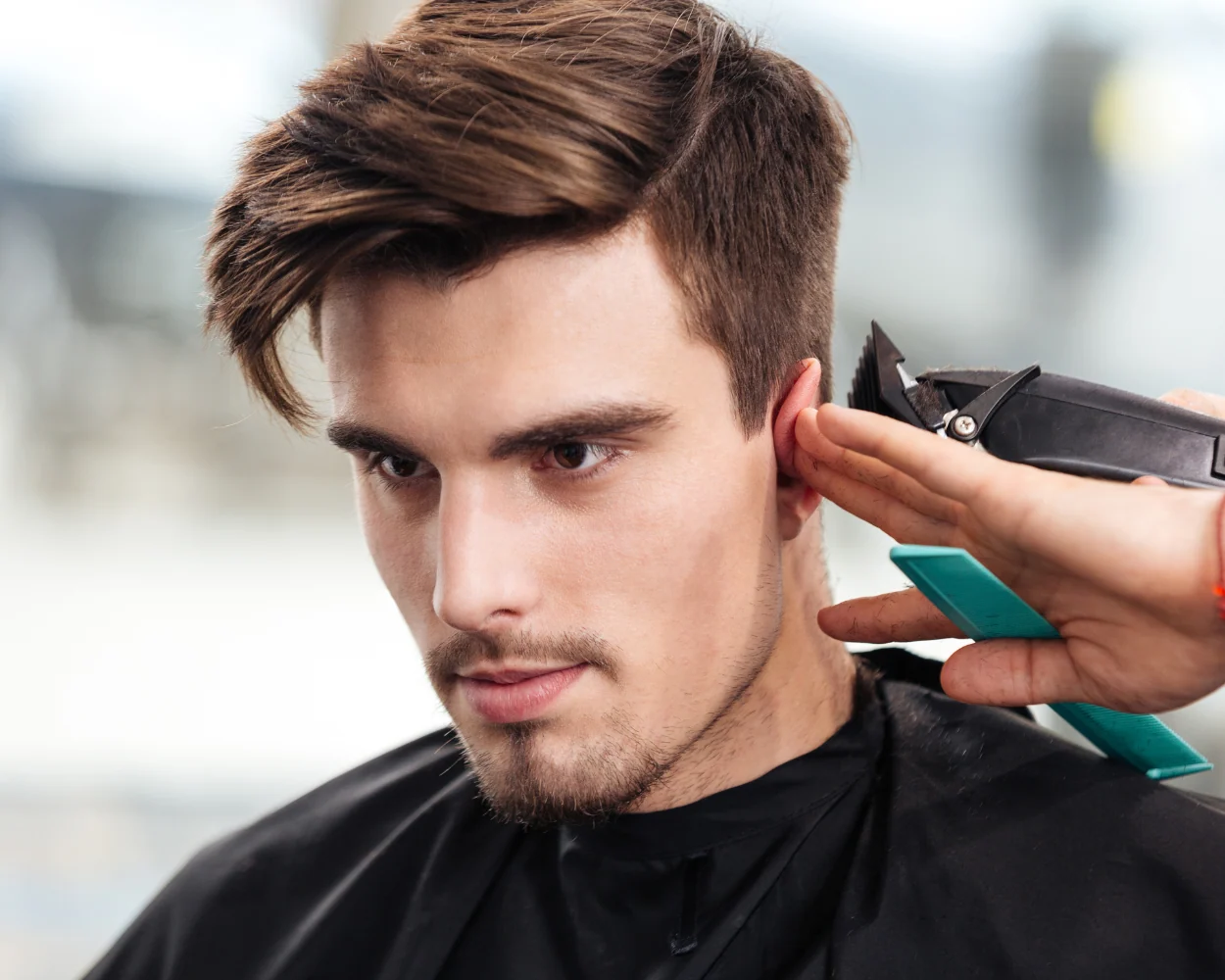
Bring your reference photo to your Lane Cove barber and point to the detail you want to keep, such as the length around the face or the shape at the back. Explain how you usually style your own hair and how much time you have on a weekday morning. That gives the hairdresser more to work with than the picture alone.
Identify what you actually like
Before you show the image, ask yourself which part caught your eye. Is it the length around the face, the fullness at the ends, the fringe or the overall shape? Sometimes the appealing feature is the colour, lighting or styling rather than the haircut. Pointing to a specific detail gives your hairdresser something clearer to work with than “I want this.”
It also helps to say what you do not want. You might like the movement in a layered cut but dislike the shorter pieces near the cheeks. You might want a bob’s clean outline without losing enough length to expose your neck. Those distinctions can change the plan considerably.
Bring your ordinary week into the conversation
The best cut for a photograph is not necessarily the best cut for a Tuesday morning. Describe how you usually wear your hair: air-dried, blow-dried, tied back or tucked behind your ears. Mention any practical requirement, such as keeping it off your face at work or having enough length for a ponytail during sport.
Be candid about the time you want to spend styling. A shape that looks effortless in an image may have been created with a round brush, heated tools and products. If you prefer to wash and go, say so before the cut begins. In Australia, heat, humidity, coastal air or a sudden downpour can also affect how a carefully styled finish behaves on an ordinary day.
Consider the hair beneath the style
A reference image shows someone else’s hair, often from its most flattering angle. Your density, texture, growth patterns and previous colour or chemical treatments may produce a different result. Fine hair may not hold the same weight at the ends as thick hair; curls can change the apparent length as they dry. Neither difference makes the image useless. It simply means the haircut may need adapting.
Tell your hairdresser about areas that spring up, separate or resist lying flat. If you have a fringe that splits, a crown that lifts or curls that shrink unevenly, those details are part of the brief. It is also worth mentioning whether the photograph shows your hair freshly washed and styled or several days into your usual routine.
Use more than one view
A single front-facing photo leaves questions about the sides, back and length. If you can, bring a second angle of the same cut. If that is unavailable, use another image to show the detail you mean, while making clear that you are not asking for every feature in both pictures. A photograph of your own hair on a day you liked it can be just as helpful.
- Show the shape: Point out where you want the weight to sit and how you want the ends to fall.
- Show the boundary: Indicate the shortest length you would be comfortable with.
- Show the styling: Explain whether you want the cut to work without recreating the pictured finish.
Agree on lengths before the first cut
Words such as “just a trim” and “shoulder length” can mean different things to different people. Show where you want the finished hair to land, especially around the face. Remember that wet hair and dry hair may sit differently, and that layers can change how long the overall cut appears. If a fringe is involved, discuss where you want it to fall when it is dry.
This is also the moment to mention any length you are growing out. You may be happy to reshape the front but reluctant to lose progress at the back. A clear boundary makes it easier for the hairdresser to suggest an approach that respects your priorities, even if it cannot reproduce the image exactly.
Make the consultation a two-way exchange
A useful consultation is not a test of whether your hairdresser can copy a picture. It is a chance to translate an idea into a workable plan. Ask which parts of the reference are likely to suit your hair as it is, which would take daily styling and what alternatives might give a similar effect. If the answer differs from what you expected, ask to see where the proposed shape or length would sit.
You can also check that you have understood the plan: “So we are keeping the overall length, adding movement through the ends and leaving the front long enough to tuck back?” That small recap helps both of you catch a mismatch before it becomes a haircut.
Think beyond the salon mirror
A finished cut is often styled for the appointment, so ask how to recreate the parts you like at home. A brief demonstration of where to direct the dryer or how to let a section air-dry may be more useful than a long list of products. If you know you will not repeat a styling step, say so; the cut should account for that reality.
Finally, ask how the shape is likely to grow out and when it may need reshaping. The answer will depend on the cut and your hair, but it helps you judge whether the upkeep fits your routine. A good reference photo opens the discussion. A good brief makes room for the hair, habits and expectations that the camera cannot capture.
