

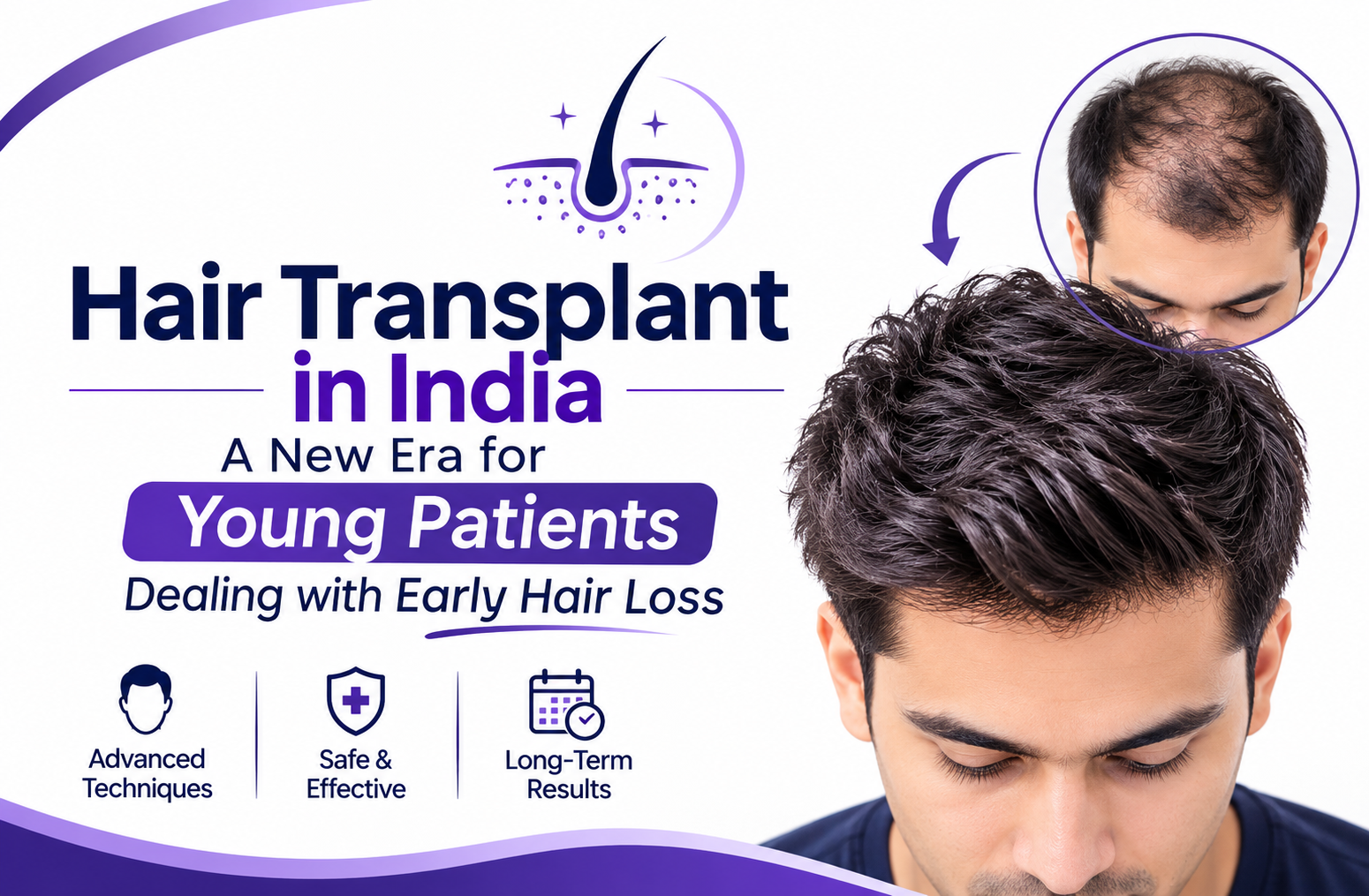
Hair loss at a young age can be difficult to deal with. For many Indian men, it begins with a receding hairline, thinning near the temples or reduced density around the crown. These changes may become noticeable in photographs, social settings or everyday grooming. While a hair transplant may seem like a quick solution, younger patients need to consider how their hair loss could progress over the years before making a decision.
“In Hyderabad, consultations for early hair loss increasingly involve understanding the cause, pattern and progression of thinning rather than focusing only on immediate coverage. When exploring a hair transplant in Hyderabad, patients may consult Dr. Harikiran Chekuri to understand their hair loss pattern, suitable treatment options and whether surgical restoration is appropriate at their current age. Planning for the long term is an important part of this discussion.”
Why Younger Patients Need a Different Hair Transplant Approach?
Hair loss in younger individuals may still be progressing. A hairline that appears suitable for restoration today may not look balanced if surrounding hair continues to thin over the next few years.
This is why age alone should not determine eligibility for a hair transplant. The surgeon needs to evaluate the pattern of hair loss, family history, donor hair availability and the likelihood of further thinning.
Younger patients may need to consider:
- Whether hair loss is stable or continuing to progress.
- The extent of thinning in the frontal, mid-scalp and crown areas.
- Available donor hair and its long-term potential.
- How the proposed hairline may look as they age.
Understanding the Cause Before Planning Hair Restoration
Not every case of hair thinning is caused by male pattern baldness. Nutritional deficiencies, certain medical conditions, scalp disorders and other factors may contribute to hair loss.
A proper clinical evaluation helps identify the underlying cause before deciding on treatment. Depending on the findings, the doctor may recommend medical management, further investigations or observation instead of immediate surgery.
This step is particularly relevant for younger patients, as early diagnosis may help manage hair loss without unnecessarily using donor follicles.
Why Hairline Design Requires Long-Term Thinking?
The hairline is one of the most noticeable aspects of a hair transplant. Creating it too low or designing it solely around a patient’s current appearance may create concerns in the future.
A suitable hairline should take facial proportions, age, existing hair density and possible future hair loss into account. It should also allow for a natural transition between transplanted and existing hair.
A conservative hairline design can help preserve donor resources and maintain an age-appropriate appearance as the patient grows older. When considering factors such as hair transplant cost in India, patients should also prioritize long-term results, natural aesthetics, and careful surgical planning rather than focusing on cost alone.
Donor Hair Management and Future Hair Loss
Hair transplant surgery uses follicles from areas that are generally more resistant to pattern hair loss. However, donor hair is limited. It cannot be replenished once harvested and transplanted.
For younger patients, this makes donor management especially important. Using a large number of grafts to address early thinning may leave fewer options if hair loss progresses later.
The planning process should consider:
- Donor area density and quality.
- The number of grafts that may be reasonably available.
- Potential future thinning in untreated areas.
- Whether additional restoration might be needed later.
Hair Transplant or Medical Treatment: What Should Be Considered?
Surgery is not the only option for managing early hair loss. Depending on the diagnosis, medical treatments may help slow progression or manage the condition. Some patients may benefit from a combination of medical treatment, monitoring and carefully timed surgical intervention.
The choice depends on the patient’s hair loss pattern, medical history, suitability for treatment and expectations. A consultation should also cover potential side effects, limitations and the need for continued follow-up.
Making an Informed Decision About Hair Transplant Surgery
Hair restoration at a young age requires patience and realistic expectations. The immediate goal may be to improve hairline definition or address visible thinning, but the plan should also account for how the hair may change over time.
At Redefine, Hyderabad, discussions around hair restoration can help patients understand the evaluation process, available treatment options and the considerations involved before surgery. A well-informed decision should prioritize appropriate diagnosis, qualified surgical care, donor hair preservation and long-term planning rather than rushing into a procedure.
