



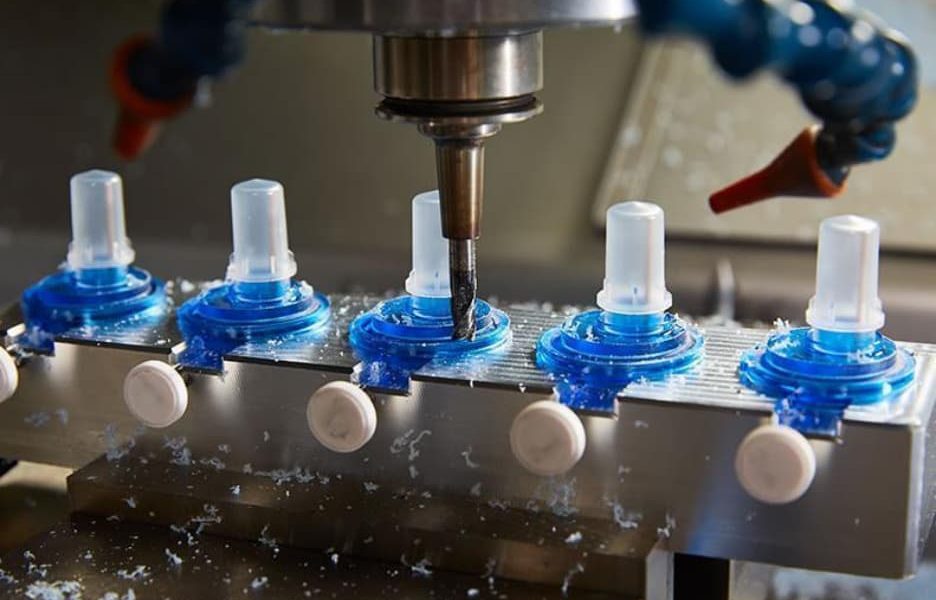
In today’s fast-paced manufacturing landscape, companies strive to bring products to market faster while maintaining quality and reducing costs.
Rapid tooling has emerged as a game-changing innovation, allowing parts to be quickly manufactured for testing and validation before full-scale production. However, like any process, rapid tooling comes with its own set of challenges.
In this article, we will explore the key challenges in rapid tooling and discuss effective solutions to overcome them.
Understanding Rapid Tooling
Rapid tooling, also known as prototype tooling, soft tooling, or prototype mold, is a process that began in the 1990s. Engineers using plastic injection molding sought to create molds in days or hours instead of the months required for traditional machining.
Rapid tooling is ideal for producing prototypes and small batches, enabling design teams to test and validate parts before committing to expensive production tooling.
Challenges in Rapid Tooling
1. Mold Strength
Challenge: One of the primary challenges in rapid tooling is ensuring that the molds are strong enough to withstand the injection molding process. The molding machines exert significant pressure when clamping heated materials into the mold, which can cause weaker molds to fail.
Solution: To address this, it is crucial to use high-quality materials and advanced manufacturing techniques that enhance the mold’s strength and durability. Engineers must also carefully design the mold to distribute pressure evenly and avoid stress points.
2. Surface Smoothness
Challenge: Rapid tooling often involves additive manufacturing processes that build the mold layer by layer. This can result in a rough surface finish, which is not ideal for cleanly injecting plastic. A smooth mold surface is essential for proper ejection of the finished parts.
Solution: Post-processing techniques such as polishing, sanding, or coating can be employed to achieve the desired surface smoothness. Additionally, optimizing the layer thickness and using higher resolution 3D printing technologies can minimize surface roughness during the initial mold creation.
3. Material Compatibility
Challenge: Another significant challenge is ensuring that the materials used for rapid tooling are compatible with the final production materials. The prototype must accurately represent the properties of the final product to validate design and performance effectively.
Solution: Using materials that closely mimic the final production materials during the rapid tooling process is crucial. This allows for accurate testing and validation, ensuring that the prototype’s performance is representative of the final product.
4. Design Complexity
Challenge: Rapid tooling techniques can struggle with complex designs, intricate geometries, or thin-walled parts. These designs might require additional considerations and modifications to ensure successful production.
Solution: Advanced software tools and simulation technologies can help in optimizing complex designs for rapid tooling. These tools enable engineers to foresee potential issues and make necessary adjustments before the actual manufacturing process.
5. Initial Investment
Challenge: While rapid tooling offers long-term cost savings, the initial investment in specialized equipment and software can be substantial. This upfront cost can be a barrier for some manufacturers.
Solution: Manufacturers should perform a thorough cost-benefit analysis to determine the feasibility of rapid tooling. Additionally, partnering with specialized rapid tooling service providers can help mitigate initial investment costs.
Conclusion
Rapid tooling has revolutionized the manufacturing industry by significantly reducing production time and offering greater flexibility and customization. While it presents its own set of challenges, the advantages it brings in terms of time efficiency, cost savings, and quality control far outweigh them.
By leveraging advanced technologies, collaborating with experts, and continuously improving the process, manufacturers can effectively overcome the challenges in rapid tooling and drive innovation in their product development.


