



Imagine floodwaters rising high enough to reach your car’s wheels overnight. By morning, the water has receded, but your car has a visible brown line on the door. In this case, you have to choose between trying to start the engine or calling a tow truck. Now, another question is whether this damage can be included in your insurance claim.
Many people believe a comprehensive car insurance policy can cover every type of damage, but that is not always true. Coverage depends on the specific terms in your policy. Below, we explain what is clearly covered, what isn’t, and the one common mistake that often leads to claim rejections.
Where the Answer Actually Lives in Your Policy
Every motor policy has two parts, and only one of them pays for your vehicle.
Liability cover handles the people you injure and the property you damage. Rats, riots and floodwater have nothing to do with this.
Damage to your car is part of the damage section, which either comes with a comprehensive policy or with a standalone own damage policy bought separately.
When damage happens, don’t just focus on the event itself. First, check your insurance documents. If you only have a liability policy, it won’t pay for any repairs to your own car.
Both a comprehensive policy and a standalone own damage policy cover the exact same list of incidents.
Riots and Storms: What Does Car Insurance Cover by Name?
The ‘own damage’ section lists every damage it covers. The list includes fire and explosion, burglary and theft, riots and strikes, and all natural disasters like storms, floods, or earthquakes.
If your car is damaged due to anything listed in your policy, your insurance claim is usually processed faster than claims for damages that aren’t explicitly mentioned.
You still need to do the paperwork for damage caused by riots, vandalism, or theft; insurance companies require an FIR. If you skip filing it, your claim might get rejected.
Why Rats Sit in a Grey Zone
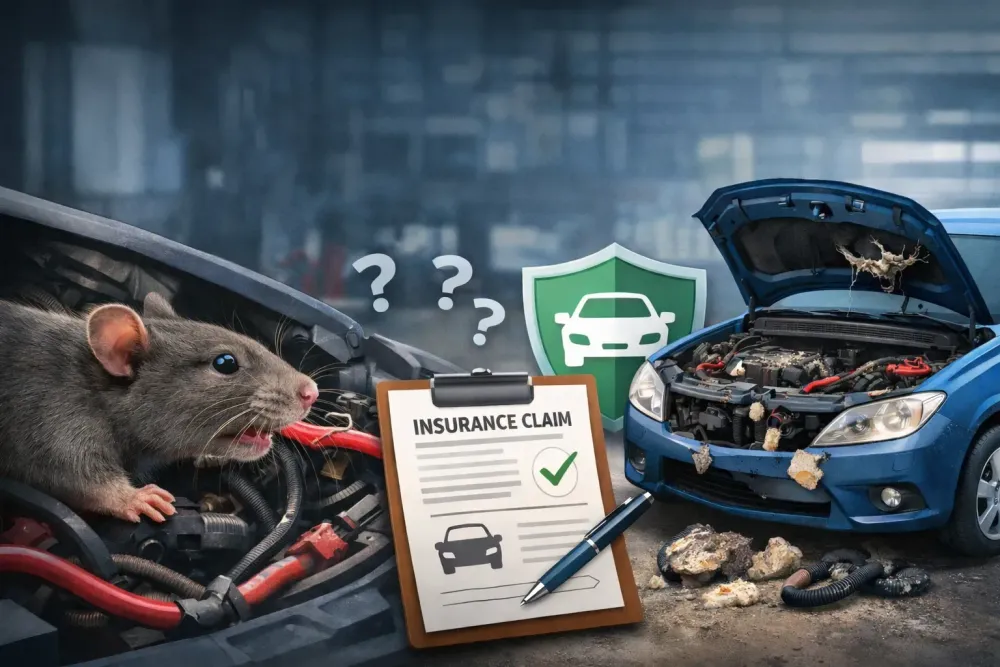
When an insurance policy clearly lists a specific danger, the claim process is faster. However, if the damage is from rats that isn’t typically mentioned in policies, it is not always guaranteed.
Rodent damage is common and costly. In a single night, especially near food stalls, rats can chew through wiring harnesses, nick brake lines, and damage insulation.
The Insurance Regulatory and Development Authority of India (IRDAI) has proposed that rodent damage be considered as “accidental damage,” which is covered. This is merely a suggestion. It is not a rule in your policy and thus not guaranteed to be covered.
The most important part of any insurance claim is evidence, that’s why it is advised to take photos of the damage at the scene itself and have a report from the workshop confirming the exact cause. It is also important to report the damage immediately instead of waiting.
The Word That Sinks More Flood Claims Than Any Other
The term ‘consequential loss’ causes more insurance claims to be rejected during the monsoon season than any storm. While your policy covers flood damage, it does not cover damage you cause by trying to start your car after it has been flooded.
You can think of it this way, if the water gets inside your car’s engine, it cannot be pushed out immediately, so when you try to start the car, you basically force the engine to work against the water, which can thus cause more damage to it. The repairs for a broken car are more expensive than any other type of damage. Since you were trying to start the car and overloading the engine, the insurance company can refuse to cover the cost of these repairs by calling it damage caused by the owner.
Engine protection is an add-on that covers this type of damage, but you must have it active on your car Insurance renewal policy before the flood happens. You cannot add it after the damage is done.
What No Policy Will Stretch to Cover
Insurance doesn’t help with normal wear and tear, even when these parts break suddenly, as they do not fall under accidental damage.
Your claim will be rejected if you drive without a valid license, drive under the influence of alcohol, or use a personal car for paid taxi services. These actions break your policy rules, no matter what caused the damage.
Unless you have “zero depreciation” coverage, insurance pays less for new parts because they account for your old parts’ age. This means you probably won’t get 100% of the repair cost back, even if your claim is approved.
In short, insurance is best at handling obvious disasters. If you can take a clear picture of the damage the next day, it is usually easy to get covered. If the damage isn’t obvious, it becomes a much harder discussion with your insurer.


