



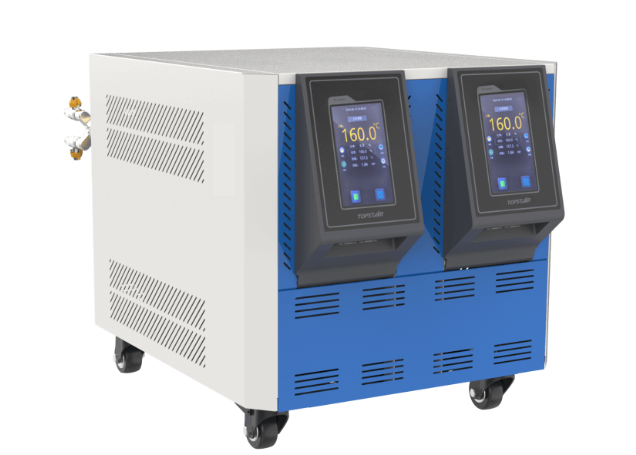
Understanding the Importance of Mould Temperature in Injection Molding
Injection molding is a widely used manufacturing process for producing plastic parts in various industries, ranging from automotive to electronics. Factors such as melt temperature, injection pressure, and cooling rate greatly influence the quality of the final product. Mold temperature determines the molded parts’ physical properties, surface finish, and dimensional accuracy.
The mould temperature controller regulates the mold’s temperature during the injection molding. Precise mold temperature control is essential for achieving consistent part quality and minimizing defects. Manufacturers can enhance product quality and achieve higher production efficiency by maintaining the mold at the optimal temperature.
Effects of Mould Temperature on Part Quality
The mold’s temperature directly affects the cooling rate of the molten plastic inside the mold cavity. Proper cooling is essential for solidification and shrinkage control, ultimately influencing the part’s dimensional accuracy and mechanical properties.
If the mold temperature is too high, the plastic may cool too slowly, leading to longer cycle times and potential warping or distortion of the part. Conversely, if the mold temperature is too low, the plastic may cool too quickly, resulting in incomplete filling of the mold cavity, sink marks, or internal stresses in part.
Maintaining precise control over mold temperature ensures uniform cooling throughout the part, minimizing residual stresses and reducing the risk of defects such as warping, sink marks, and short shots. This results in improved part quality, consistency, and dimensional accuracy.
Strategies for Achieving Precision Mould Temperature Control
Achieving precision mold temperature control requires the implementation of advanced heating and cooling systems and sophisticated control algorithms.
One standard method is to use water or oil-based heating/cooling systems integrated into the mold. These systems circulate a temperature-controlled fluid through channels within the mold to regulate its temperature. By adjusting the flow rate and temperature of the cooling fluid, manufacturers can precisely control the mold temperature to within a fraction of a degree.
Another approach is to use advanced temperature control systems equipped with sensors and feedback mechanisms to monitor and adjust the mold temperature in real time. These systems can automatically compensate for variations in ambient conditions, material properties, and processing parameters, ensuring consistent part quality throughout the production run.
Benefits of Precision Mould Temperature Control
Precision mold temperature control offers numerous benefits for injection molding operations, including:
- Improved Part Quality: Precision mold temperature control minimizes defects such as warping, sink marks, and short shots and ensures that each molded part meets the required quality standards.
- Enhanced Surface Finish: Maintaining the optimal mold temperature helps to achieve a smooth and uniform surface finish, reducing the need for secondary finishing operations.
- Increased Production Efficiency: Precision mold temperature control can increase production efficiency and manufacturing costs by reducing cycle times and minimizing scrap rates.
- Consistent Performance: Precise control over mold temperature ensures consistent part quality and dimensional accuracy, leading to greater customer satisfaction and brand reputation.
- Process Optimization: By fine-tuning the mold temperature for specific materials and geometries, manufacturers can optimize the injection molding process for maximum performance and productivity.
Finally, we summarize that
precision mold temperature control is critical in enhancing product quality and achieving operational excellence in injection molding. By understanding the importance of mold temperature and implementing advanced control strategies, manufacturers can optimize their processes, reduce costs, and deliver high-quality molded parts that meet the demands of today’s competitive market. At the same time, a high-precision Mold temperature machine can also achieve precise control of mold temperature.


