In a world where technology is advancing at an unprecedented rate, the automotive industry is no exception. Today’s vehicles are more than just modes of transportation — they are powerful statements of our individuality and status, often representing significant financial investments. But with that investment comes the responsibility to protect and maintain your vehicle’s aesthetic appeal and value. In this blog post, we will explore a rising star in the world of automotive protection – ppf, an invisible shield that is revolutionizing how we preserve the beauty of our automobiles.
The Importance of Protective Measures for Your Vehicle
Whether you drive a sleek sports car, a rugged 4×4, or a family sedan, the exterior of your vehicle is constantly at risk from the elements. Rocks, gravel, insects, and even the sun’s harmful UV rays can all cause significant damage over time. A single scratch or paint chip can not only mar your car’s appearance but also become a breeding ground for rust. It’s therefore essential to take proactive steps in inhibiting damage as early as possible.
Common Damage Risks for Automotive Paint
Road Debris: High-speed travel exposes the vehicle to kicked-up rocks and dirt.
Insects and Bird Droppings: Organic matter can be corrosive and unsightly.
Improper Washing and Wiping Techniques: Can cause micro-scratches over time.
UV Radiation: Fades paint over time, particularly in areas with intense sunlight.
Environmental Factors: Pollution, tree sap, and more pose specific threats.
Consequences of Neglected Protection
Neglecting your vehicle’s exterior can lead to several unwelcome outcomes:
Aesthetic Degradation: Loss of gloss, visible scratches, and marks.
Decreased Resale Value: Aesthetics play a significant role in resale valuation.
More Frequent Repairs: Damages necessitating costly paintwork.
Rust and Corrosion: Accelerated by exposure of bare metal to the elements.
Diminished Driving Enjoyment: A less polished vehicle can take away from the driving experience.
Introducing Paint Protection Film
PPF, also known as clear bra, is a thermoplastic urethane film that adheres to the painted surfaces of a vehicle. It is transparent and can be adjusted to fit the contours of the car seamlessly, offering an almost invisible layer of protection. The result is a vehicle that maintains its new-car look and value, free from the worry of everyday damage.
How Paint Protection Film Works
The film is designed to absorb and disperse the energy of small impacts, preventing scratches, chips, and even some dings. It can self-heal superficial scratches with the application of heat, such as warm water or direct sunlight. Beyond physical protection, PPF also shields against harmful UV rays that can degrade the paint’s finish over time. For overall vehicle maintenance, using the best antifreeze coolant can protect your engine from extreme temperatures, ensuring optimal performance and longevity.
Key Benefits of PPF Installation
Maintains Aesthetic Appeal: A car under PPF remains pristine and free of blemishes.
Longevity and Durability: The film is engineered to last, improving the car’s lifespan.
Cost-Effectiveness: PPF is far less expensive than repairing multiple paint chips or scratches.
High Transparency: It’s virtually invisible, keeping your car’s original look intact.
Easy Maintenance: It simplifies car washing and maintenance routines.
Value Retention: Your vehicle’s resale value will be significantly higher with well-preserved paint.
Types of Coverage and Customization
When considering PPF, you have several options to tailor the coverage to your needs and preferences. From full-body wraps to customized partial applications, the extent of protection is entirely up to you. More and more PPF providers are offering computer-aided design and cutting services, ensuring a perfect fit for each vehicle type.
Full PPF:
Ultimate Protection: Total coverage for a vehicle’s exterior, including bumpers, hoods, fenders, and more.
Uniform Look: Provides a uniform layer of protection for an all-around polished look.
Partial PPF:
Targeted Protection: Focuses on the most vulnerable areas, such as the front grille, side-view mirrors, and door cups.
Mix and Match: Allows you to select high-traffic areas for customized protection that doesn’t cover the entire vehicle.
Custom Designs:
Personalization: Can be tailored to your aesthetic and protective needs.
Dealer Options: Some dealerships offer custom PPF enhancements as an additional vehicle package.
The PPF Installation Process
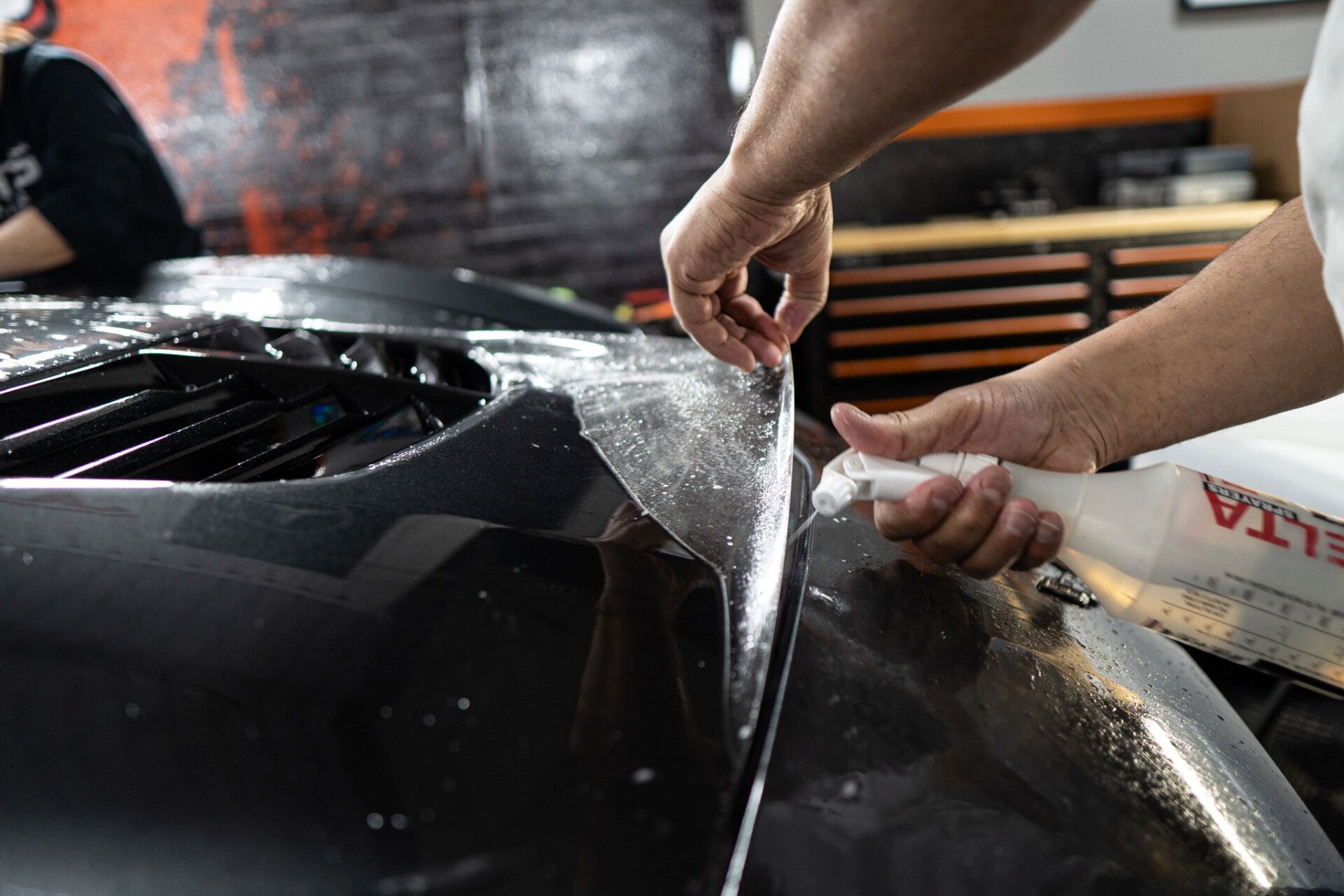
The installation of Paint Protection Film is a meticulous process that demands skill and experience for optimal results. It involves several steps to ensure the best fit and protection for your vehicle. Here’s what to expect during the typical PPF installation:
Surface Preparation:
Thorough Cleaning: To remove all dirt, wax, and other contaminants that could interfere with adhesion.
Decontamination: Includes the claying process to eliminate microscopic pollutants.
PPF Cutting and Fitting:
Computer-Aided Design: Ensures the precise shape for a vehicle-model-specific fit.
Hand-Adjustments: For perfect alignment, PPF installers may need to trim and apply heat for molding.
Film Application:
Cautious Adhesion: Prevents bubbles and ensures a smooth finish.
Squeegee Work: Helps remove air pockets and attunes the film to the surface.
Finishing:
Quality Inspection: To confirm full application and address any imperfections.
Polishing: Final step to guarantee an impeccable, seamless result.
Maintaining Your PPF
While PPF is durable and designed for the long haul, proper maintenance can extend its life and effectiveness. Regular cleaning and avoiding harsh chemicals and excessive abrasion are crucial practices. Additionally, some PPF products require periodic polishing to maintain clarity and the self-healing capabilities.
Best Practices for PPF Care
Regular Washing: Particularly after long trips or encounters with extreme conditions.
Careful Drying: Use a blower or a soft microfiber cloth to prevent scratches.
Avoid Abrasives: Harsh materials can wear down the film and its protective capabilities.
Periodic Maintenance: A check-up with a professional installer for minor damage and re-polishing if necessary.
The Investment and its Returns
One of the primary concerns when considering PPF is the cost. While it represents an upfront investment, the long-term benefits far outweigh initial expenditure, especially when compared to the costs of potential repairs and future depreciation.
Calculating the Value Proposition
Cost Analysis: Weighing the expense of PPF against estimated repair costs can be eye-opening.
Resale Value: Retaining a higher percentage of your vehicle’s resale value saves money in the long run.
Peace of Mind: Enjoying your vehicle without worry is an intangible yet valuable return on investment.
Selecting a PPF Provider
The quality of the film and the skill of the installer will significantly influence the outcome of your PPF experience. It’s crucial to conduct thorough research and consider the following factors when choosing a PPF provider:
Provider Reputation and Experience:
Customer Reviews: First-hand accounts are a reliable source of information.
Length of Operation: A strong, long-standing business likely offers reliable services.
PPF Material Quality:
Manufacturer Warranties: Look for providers who use films that come with comprehensive warranties.
Brands and Grades: Not all PPF is created equal; higher-grade films are more expensive for a reason.
Installation Expertise:
Certifications: Seek out installers who have received official training and certification.
Portfolio: A provider’s previous work can give you a sense of what to expect for your vehicle.
Conclusion and Roadmap to Protection
Protecting your vehicle with PPF is not just about maintaining a flawless appearance; it’s a strategic move to safeguard your investment. With PPF, you’re not only preserving the paint but also reducing future maintenance costs and enhancing your driving experience. The peace of mind that comes from knowing your car is covered is invaluable.
Consider this blog post as your roadmap to PPF protection. We’ve navigated through the importance of automotive preservation, the functionality and benefits of PPF, its cost-effectiveness, and steps to ensuring top-quality installation and maintenance. Make an informed choice and take the first step toward enjoying a well-guarded, shining vehicle that you’ll be proud to drive for years to come. With PPF, your car doesn’t just survive the elements — it conquers them, with style.