



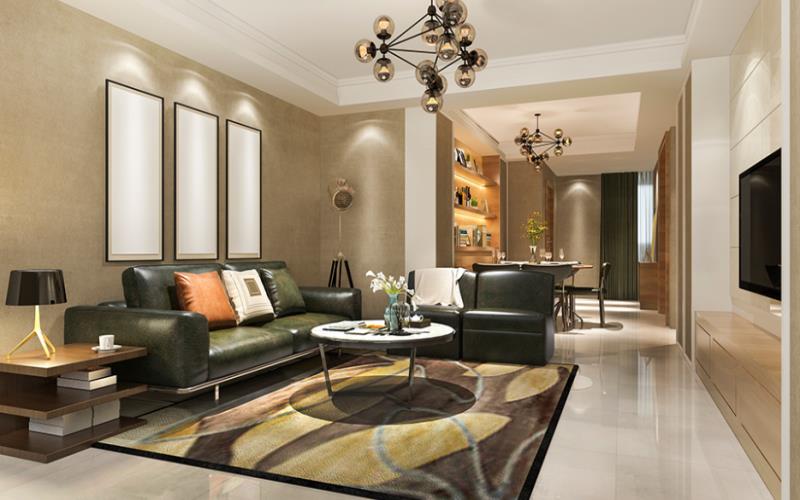
Generally, we find shared living and dining areas in compact abodes, such as smaller homes and apartments. With planning the use of space, the shared area offers many chances to be imaginative.
Nevertheless, great freedom frequently brings significant challenges.
Whether you have a small living & dining room combo or a larger space, open-plan areas require careful planning and attention to design. This guarantees that you maintain the functionality of the space without it becoming overly empty or crowded.
Let’s explore some suggestions for decorating a combined living and dining room in your house!
Make Partition With Sofa Placement
Dividing the living and dining areas with your sofa set is a great way to create distinct zones without using walls or partitions. Placing the sofa’s back facing the dining area creates a well-defined boundary, both visually and functionally, for the homeowner. This defines the living and dining area while creating an open and cohesive environment for relaxation and conversation.
Another option is utilising a console table behind the sofa for extra storage and to create a clearer division. Ensure sufficient room for people to move around, so each space appears welcoming and uncluttered.
Natural light is key to achieving a minimalist aesthetic. If your combined living and dining area lacks sufficient natural light, considering installing skylights Melbourne locals can enhance the brightness and ambiance of their space, creating a more open and airy feel.
Use Rugs to Define and Delineate Spaces
Rugs are an excellent method to visually separate a shared living and dining space by establishing clear areas without the need for physical barriers. Moreover, the rug holds the furniture in place, creating a unified and deliberate seating layout. It provides a foundation that connects the sofa, coffee table, and other extra seating into one cohesive arrangement.
Play with Similar Colour
Often, you may want to mix different colour schemes to create a clear separation between the living and dining areas. Nevertheless, if done without caution, it can result in the space appearing messy and disorganised.
According to most designers, a unified colour scheme effectively links the living and dining areas, facilitating a seamless transition between them.
Take Advantage From Lighting
A great way to enhance the décor of a living and dining room is by making the most out of lighting. Many homeowners included ceiling light fixtures in their design, although they did so in different ways. Strategically placed chandelier serves as a visual focal point linking the living and dining areas. This central point guides the eyes upward, creating a sense of unity and harmony. Pendant lights can be used over the dining table and spotlights in the living room to provide specific lighting for each space. Utilising different types of lighting not only creates dimension in the space but also subtly separates each individual section.
Create a Perfectly Balanced and Optimised Space
It is essential to establish a harmonious atmosphere when designing a shared living and dining area. Maintaining balance between the two regions within a single and open space prevents one from overpowering the other while creating a sense of unity and agreement within the space. Moreover, it creates a harmony between practicality and beauty, improving the space’s usability and enjoyment.
Final Takeaways
Decorating a shared living and dining room involves creativity and practicality to make a unified and visually pleasing area. Utilise our suggestions to design a cohesive and functional living dining room combination. Whether you’re hosting guests, dining with family, or unwinding after a busy day, your house will showcase your unique style and practicality.


