

Few defects frustrate a casting team like voids, bubbles and surface pitting that only show up after a part has cured. In high-vacuum polyurethane casting, the cause is almost always trapped gas that was never removed from the material before it reached the mold. Understanding where that gas comes from, and how to remove it, is the difference between a stable process and a scrap bin that keeps filling.
Where Trapped Gas Comes From
Gas enters a polyurethane system in several ways. Dissolved air sits in the polyol component from the moment a drum is opened. Moisture absorbed from humid air reacts with isocyanate and releases carbon dioxide. Mixing itself can whip fresh air into the stream, and loose fittings on the suction side of a pump can pull in tiny bubbles that are hard to see. Each source needs a different fix, so the first job is to figure out which one is driving your defects.
Build Degassing Into the Process
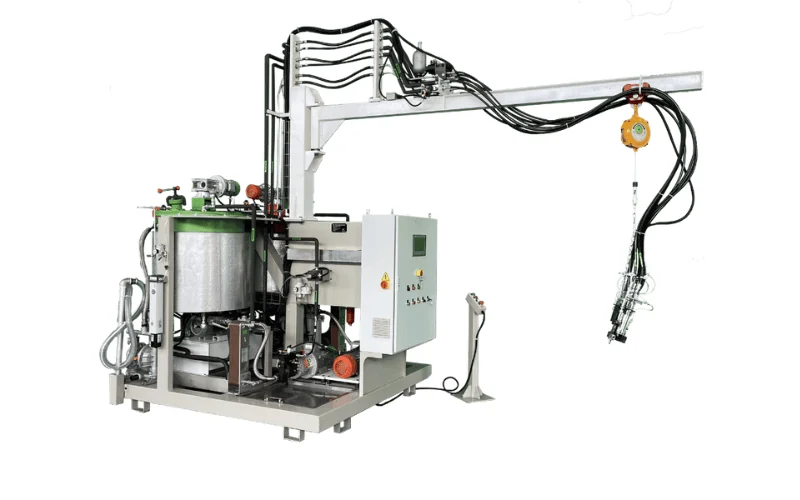
Vacuum degassing works best when the material has enough surface area and enough time under vacuum for bubbles to rise and break. Thin films, agitated tanks and properly sized chambers all help. A well-designed polyurethane mix metering machine should let you control vacuum level, hold time and agitation speed independently, so you can tune each variable instead of guessing. Remember that vacuum also pulls light components out of some formulations, so a level that works for one resin may be too aggressive for another.
Control Moisture Before It Becomes a Defect
Polyols are hygroscopic. If a tank or day vessel is open to room air, it will pick up water over time. Dry nitrogen blanketing, desiccant breathers and sealed transfer lines keep that moisture out. Check raw material moisture on a schedule and record it with the batch, because a gradual rise often explains a sudden run of defects.
Check the Mold and the Pour
Even perfectly degassed material can trap air during the pour. Pour into the lowest point of the mold, keep the stream continuous, and avoid splashing. Vent high points so air has somewhere to go. Pre-warming the mold also lowers viscosity at the contact surface and helps bubbles escape before gelation.
- Log vacuum level, hold time and temperature on every batch.
- Replace worn seals and gaskets on a fixed maintenance interval.
- Inspect suction-side fittings for leaks whenever bubbles appear.
- Cut a sample from each failed part to see where voids cluster.
Choose Equipment That Supports Repeatability
Consistent results depend on equipment that can hold set points batch after batch. Working with specialists in industrial process equipment makes it easier to match chamber size, vacuum capacity and controls to the exact materials you pour. When a process is designed around your resin and part geometry, degassing stops being a guessing game and becomes a repeatable step you can document, audit and improve over time.
