



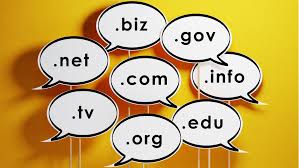
The internet is not one stagnant mass, but a constantly evolving space influenced by technology, search behaviour and branding trends. What we enter into the search engine today will affect the way it generates the results tomorrow.
Yet, the trends are no longer generated only by human interaction with search engines. With the rise of AI, we are witnessing a new concept of machines affecting machines.
What to expect in 2026? Several clear patterns are shaping the domain ecosystem.
Continued Dominance of Legacy TLDs?
Nothing new on the internet front: Spaceship domain checker proves that .com, .net and .org still take the lead. Organisations and companies love them because they are widely recognised and symbolise trust.
Although it may seem like that will never change, something is happening on the horizon. The growth in .com registrations is slowing as availability declines.
Startups, indie brands and niche industries are ditching the idea of mainstream TLDs and slowly making .co, .io and similar domains the next big thing. TLDs will always remain the most obvious choices, but their popularity is also what makes room for new players in the industry.
Rise of Industry-Specific and Technology-Driven Extensions
Speaking of alternative domains, they are breaking the boundaries and even making the public rethink what they bring into the mix. Sometimes cheaper, and oftentimes with more creative freedom, gLTDs are taking over the internet.
The .ai domain, originally the country code for Anguilla, became synonymous with artificial intelligence companies. Its adoption has expanded to include anything related with AI innovation.
Similarly, .io, once linked to the British Indian Ocean Territory, is firmly established as a tech-community favourite. .io is short, modern and relevant to input/output concepts in programming.
The .app and .dev extensions, supported by Google Registry, are also experiencing a boom. They are becoming preferred choices for developers who want secure HTTPS-only environments by default.
Expansion of Country-Code Domains (ccTLDs)
The Canadian media theorist Marshall McLuhan was the first to introduce the concept of the global village, in which everyone is connected. And while brands still think globally, they are also trying to make the village smaller again by focusing on local options.
Local presence and search optimisation drive demand for ccTLDs. Countries with strong digital economies, such as Germany (.de) and the United Kingdom (.uk), maintain stable growth.
Meanwhile, plenty of smaller economies use their domains to grow. Extensions like .me (Montenegro), .tv (Tuvalu), and .fm (Federated States of Micronesia) have been successfully rebranded as global digital identities.
Keyword Movements and SEO Trends
Back in the day, the domain was one of the key elements to contribute to rankings. Now, it is the content quality and brand authority.
In other words, instead of trying to “fool” the SEO crawler, brands must create content that provides real answers. Again, it can be quite a challenging task in markets flooded by AI and generic content.
Most of us lived to see content praised as the SEO king, only to see it fall and come back again. It seems as if the content never left and will remain the most influential factor.
However, semantic relevance remains important. In 2026, keyword strategies will increasingly combine topic alignment with brand uniqueness. To stay ahead, marketers should also know how to use tools like remove outdated content google to keep search results accurate and up to date.
Branding Through Short and Memorable Names
Speaking of topic alignment, search engines don’t want to see whole phrases in domains. They prefer those that are short and memorable, but still hit the spot.
Domains that are easily on the eye and ear (as well as fingers, when typing) provide clarity that builds the user-domain connection. Yet, in the light of it all, does branding still matter?
It absolutely does! In fact, many brands and organisations use alternative domains to shape their overall brand and attract new users.
The Role of Artificial Intelligence
Many think that AI will take over and that the internet is already dead. There is no denying that artificial intelligence may influence the way search engines work, but not as much as we think.
SEO crawlers are also learning mechanisms that estimate whether a certain content has been useful to the user or not. It happens too often that AI content gives a generic response that requires further digging.
AI-driven data can be useful, but it is a far cry from being enough to manage the whole domain and all its contents. The automation it brings reduces speculative waste and aligns portfolios with real-time demand, but that is it.
Conclusion
There is not a single trend that will define the future of domains in 2026 and onward. Diversification, intelligence and adaptability remain a must.
Legacy TLDs provide stability, but new and repurposed extensions bring creativity and relevance. Keywords will remain part of the naming equation, but context and intent will outweigh raw exact matches.


