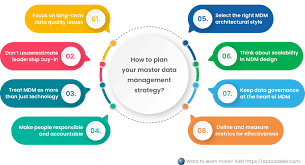
Master Data Management (MDM) is an essential strategy for businesses aiming to harness the full potential of their data. By consolidating and managing critical business information, MDM provides a unified and reliable view of data across the organization. This article explores why businesses might use MDM, highlighting its key benefits, applications, and the transformative impact it can have on various aspects of operations and decision-making.
Ensuring Data Consistency and Accuracy
One of the primary reasons businesses implement MDM is to ensure data consistency and accuracy across all systems and processes. In today’s data-driven environment, having reliable and accurate data is crucial for making informed decisions and maintaining operational efficiency.
Eliminating Data Silos: In many organizations, data is often stored in disparate systems and formats, leading to inconsistencies and duplication. MDM addresses this issue by integrating data from various sources into a single, centralized repository. This consolidation eliminates data silos and ensures that all business units have access to consistent and accurate information.
Improving Data Quality: MDM involves rigorous data quality management processes, including data cleansing, validation, and enrichment. By standardizing data and removing duplicates, errors, and inconsistencies, MDM ensures that the information used across the organization is of the highest quality. This reliability is essential for effective decision-making and strategic planning.
Enhancing Decision-Making and Analytics
Accurate and consistent data is the foundation of robust analytics and business intelligence. MDM plays a critical role in enhancing decision-making capabilities by providing a single source of truth for key business entities such as customers, products, suppliers, and employees.
Reliable Analytics: With MDM, businesses can trust the accuracy of their analytics and reports. By ensuring that all data is consistent and up-to-date, MDM enables more reliable and meaningful insights. This reliability is crucial for identifying trends, forecasting future performance, and making data-driven decisions.
Comprehensive Customer Insights: MDM helps businesses develop a 360-degree view of their customers by integrating data from various touchpoints, including sales, marketing, and customer service. This holistic view allows for a better understanding of customer behavior, preferences, and needs, leading to more targeted and effective marketing campaigns and improved customer experiences.
Informed Strategic Planning: By providing a unified view of critical business information, MDM supports strategic planning and long-term decision-making. Executives and managers can rely on accurate data to evaluate business performance, identify growth opportunities, and develop strategies that align with organizational goals.
Streamlining Operations and Improving Efficiency
Implementing MDM can significantly streamline business operations and improve overall efficiency. By providing a single, accurate source of data, MDM eliminates the need for redundant processes and manual data reconciliation.
Operational Efficiency: Inconsistent data often leads to inefficiencies, as employees spend time reconciling discrepancies and verifying information. MDM streamlines operations by providing accurate and consistent data, reducing the time and effort required for data management tasks. This increased efficiency allows employees to focus on more value-added activities.
Optimized Supply Chain Management: MDM enhances supply chain management by providing a unified view of supplier information, inventory levels, and order histories. This visibility enables better coordination and collaboration with suppliers, improving procurement processes, reducing lead times, and minimizing stockouts and overstock situations.
Improved Product Management: For businesses with extensive product portfolios, managing product information can be challenging. MDM simplifies product management by centralizing product data and ensuring consistency across all channels. This centralization improves product lifecycle management, reduces time-to-market, and enhances the accuracy of product information available to customers and partners.
Ensuring Compliance and Mitigating Risk
In many industries, regulatory compliance and risk management are critical concerns. MDM helps businesses meet regulatory requirements and mitigate risks associated with data management.
Regulatory Compliance: Many regulations require businesses to maintain accurate and auditable records of their data. MDM ensures that data is managed according to predefined standards and governance policies, facilitating compliance with regulations such as GDPR, HIPAA, and SOX. By maintaining accurate and up-to-date records, businesses can avoid penalties and ensure regulatory compliance.
Data Security and Privacy: MDM includes robust data governance and security measures to protect sensitive information. By implementing access controls, encryption, and audit trails, MDM helps safeguard data from unauthorized access and breaches. This security is crucial for maintaining customer trust and protecting the organization from legal and reputational risks.
Risk Mitigation: Accurate and consistent data is essential for identifying and mitigating risks. MDM provides a reliable foundation for risk management by ensuring that risk assessments and mitigation strategies are based on accurate information. This accuracy helps businesses proactively address potential issues and minimize their impact.
Supporting Digital Transformation
In the digital age, businesses must continuously innovate and adapt to changing market conditions. MDM supports digital transformation initiatives by providing a solid foundation of accurate and consistent data.
Enabling Digital Innovation: Accurate data is essential for developing and deploying digital solutions such as AI, machine learning, and advanced analytics. MDM ensures that these technologies are fed with high-quality data, enabling more effective and innovative applications.
Enhancing Customer Engagement: Digital transformation often involves improving customer engagement through personalized experiences and seamless interactions. MDM supports these efforts by providing a comprehensive view of customer data, enabling more personalized and relevant customer interactions.
Scalability and Agility: As businesses grow and evolve, their data management needs become more complex. MDM provides a scalable and flexible framework that can adapt to changing business requirements. This scalability ensures that businesses can continue to leverage accurate data as they expand and innovate.
MDM in Practice
Consider a global manufacturing company that implemented MDM to address data inconsistencies and improve operational efficiency. The company faced challenges with duplicate customer records, inconsistent product information, and inefficient supply chain processes.
Data Integration and Quality: The company integrated data from multiple systems into a centralized MDM repository. Data quality management processes were implemented to cleanse and standardize the data, ensuring accuracy and consistency.
Enhanced Decision-Making: With accurate and consistent data, the company improved its analytics and reporting capabilities. Executives and managers gained reliable insights into business performance, enabling more informed decision-making and strategic planning.
Operational Efficiency: By streamlining operations and reducing data-related inefficiencies, the company achieved significant cost savings and productivity improvements. The MDM solution enhanced supply chain management, product information management, and customer relationship management.
Conclusion
Master Data Management is a strategic imperative for businesses seeking to leverage their data assets effectively. By ensuring data consistency, accuracy, and reliability, MDM enhances decision-making, streamlines operations, and supports regulatory compliance. Implementing a robust MDM strategy enables businesses to achieve a unified view of their critical data, driving better business outcomes and supporting digital transformation initiatives. As the importance of data continues to grow, MDM will remain a foundational element of successful data management and business strategy.