



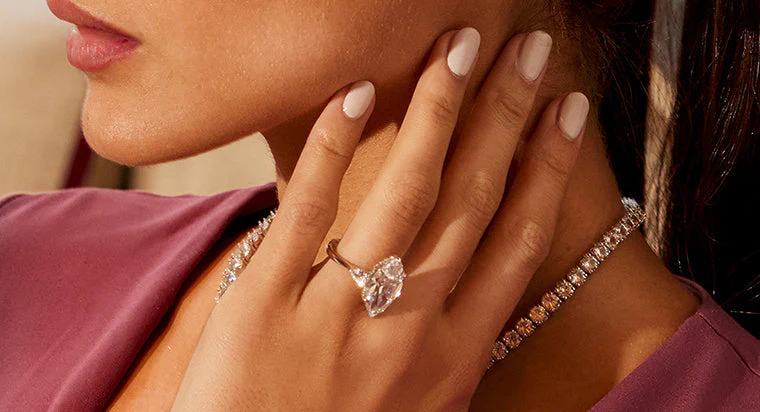
Engagement rings have always reflected more than just personal taste. They carry traces of the time in which they are chosen, shaped by changing preferences, evolving design ideas, and subtle shifts in what feels meaningful. Within this landscape, the marquise cut has remained quietly consistent. When people begin exploring marquise cut diamond engagement rings, they often encounter a shape that feels both familiar and slightly unexpected at the same time.
There is something about the marquise cut that resists being reduced to a trend. It does not dominate in the way some shapes do, yet it never disappears entirely. Instead, it maintains a steady presence, chosen by those who are drawn to its particular balance of form and character.
A Shape That Moves Beyond Convention
The marquise cut stands apart primarily because of its silhouette. It does not conform to the symmetry of a round diamond or the geometric clarity of a square cut. Instead, it introduces movement through its elongated form and pointed ends.
This gives the shape a certain direction. The eye is drawn along its length, following the curve from one tip to the other. This sense of movement creates a visual rhythm that feels different from more static shapes.
In the context of an engagement ring, this can make the diamond feel more dynamic. It interacts with the hand in a way that feels fluid rather than fixed.
The Relationship Between Proportion and Presence
One of the defining qualities of a marquise cut diamond is how its proportions influence its presence. The length to width ratio plays a significant role in how the stone appears.
A more elongated diamond can create a sense of elegance and refinement, while a slightly wider shape may feel softer and more balanced. These variations are subtle, but they have a noticeable effect on the overall impression.
In engagement rings, this allows for a degree of personalisation without changing the fundamental shape. The same cut can feel quite different depending on how it is proportioned.
A Balance Between Tradition and Individuality
The marquise cut carries historical associations, but it does not feel bound by them. It has appeared in antique jewellery and continues to be used in contemporary designs, adapting to different styles without losing its identity.
This makes it an interesting choice for an engagement ring. It offers a connection to tradition while still allowing for individuality.
For some, this balance is important. It allows the ring to feel timeless without feeling predictable.
How Settings Shape the Overall Design
The setting of a marquise cut diamond plays a crucial role in how the ring is perceived. Because the shape is already distinctive, the surrounding elements tend to either emphasise or soften its character.
Simple settings highlight the diamond’s outline, allowing the shape to remain the focal point. More intricate designs can introduce additional details, but they need to be carefully balanced to avoid overwhelming the central stone.
Orientation also becomes a consideration. While vertical settings are more traditional, horizontal arrangements offer a different perspective, creating a ring that feels slightly more contemporary.
Light and the Movement of Reflection
The way light interacts with a marquise cut diamond differs from more symmetrical shapes. Rather than reflecting evenly in all directions, the light tends to travel along the length of the stone.
This creates a pattern of brilliance that feels directional. It draws attention to the shape itself, reinforcing its elongated form.
The effect is subtle, but it contributes to the overall character of the ring.
A Shape That Feels Intentional
Choosing a marquise cut diamond engagement ring often feels like a deliberate decision. It is not the most common choice, which means it is rarely selected without thought.
This can make the ring feel more personal. It reflects a preference that has been considered rather than assumed.
At the same time, the shape remains accessible. It does not feel unfamiliar or difficult to understand. It simply offers a slightly different perspective.
Enduring Without Needing to Dominate
The marquise cut does not rely on popularity to remain relevant. Its appeal is quieter, rooted in its proportions and the way it interacts with light and form.
This allows it to exist outside of shifting trends. It may move in and out of focus, but it never feels outdated.
For those who choose it, the decision often feels instinctive. It is less about following what is currently popular and more about recognising something that feels right.


