



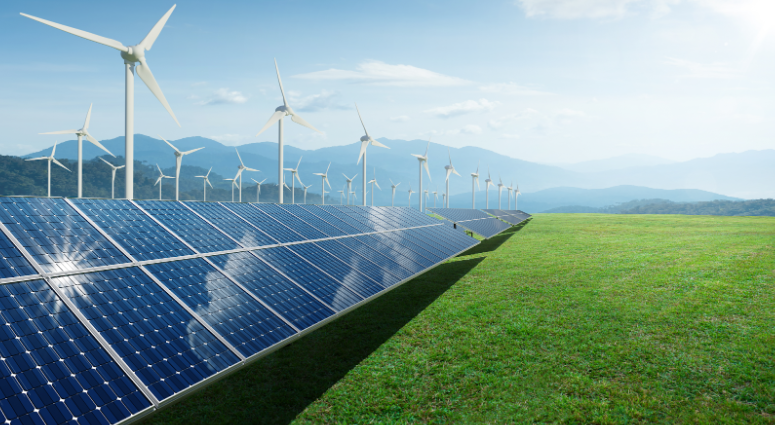
There is an increase in reliance on new energy due to its reducing greenhouse gas emissions, unlike traditional energy sources like petroleum and coal. The reliance also led to the need for sophisticated manufacturing processes like 5-axis CNC machining.
Before using 5-axis CNC machining in new energy, understand the process and the industry itself. As a result, this article will introduce new energy and 5-axis CNC machining, applications, benefits, and challenges.
What is New Energy?
New energy or renewable/alternative energy is a spectrum of energy sources and strategies that are alternatives to traditional fossil fuels like coal and petroleum. They include solar, wind, and hydrogen energy sources.
New energy sources can reduce greenhouse gas emissions. As a result, they are sourced by many industries and businesses as a single energy source or combined with traditional fossil energy sources.
Common Types of New Energy
There are several types of new energy. This section will introduce how they work and their application.
-
Solar Energy
Generate solar energy from sunlight using photovoltaic (PV) panels or solar thermal systems. In photovoltaic solar energy generation, the photovoltaic panel absorbs sunlight, which energizes electrons and generates electric current. An inverter then converts the direct current to alternating current used in homes and businesses.
In solar thermal systems, mirrors or lenses concentrate sunlight onto a receiver containing heat-absorbing fluid like oil or water. Heat converts the fluid to steam that drives a turbine to produce electricity.
Applications
Solar energy systems generate renewable energy for residential homes, farms, and businesses on a small scale.
-
Wind Energy
Generate wind energy by harnessing the kinetic energy of wind using wind turbines. The wind turbine rotates horizontally or vertically on a rotor, inducing an electromagnetic field that generates electricity. Wind turbines mounted vertically are more common since they can capture wind from any direction.
Applications
Wind energy generation is common in areas with strong winds, for example, the coastal areas. They produce electricity for large-scale businesses in residential, agricultural, or remote off-grid applications.
-
Hydrogen Energy
Hydrogen energy involves producing hydrogen gas using electrolysis of water or through steam reforming of natural gas. Electrolysis of water uses solar or wind power to generate electric current, which splits water into hydrogen and oxygen. Steam reforming involves hydrocarbons like natural gas that react with steam at high temperatures to produce hydrogen gas and carbon dioxide.
After generating hydrogen gas, you can store it in the following ways:
- Compressed Hydrogen Gas involves compressing the gas at high pressures and storing it in tanks
- Liquid Hydrogen involves liquifying the hydrogen gas at very low temperatures (-253°C) and storing it in insulated tanks
- Solid-state storage involves hydrogen absorption by metal hydrides and their release on heating.
Hydrogen gas can be used in energy generation using electrochemical reactions in hydrogen fuel cells. The hydrogen gas goes to the anode, where oxidation to protons (H+) and electrons occurs. The proton moves to the cathode and reacts with oxygen to form water. On the other hand, the electrons travel through an external circuit, generating an electric current.
Applications
Hydrogen energy is applicable in transportation, with many fuel cell vehicles powered by hydrogen fuel cells.
Why 5-Axis CNC Machining for the New Energy Industry
5-axis CNC machining is a type of CNC machining operation that uses a 5-axis CNC machine. They are common in the new energy sector due to the following reasons:
-
Complex Part Geometry
New energy parts like wind turbine blades and solar panel frames sometimes have complex geometries. Hence, 5-axis CNC machines became popular because they can move along three axes and rotate along two, making them the best machine for fabricating these parts.
-
Improved Efficiency
5-axis CNC machining leads to a faster turnaround time. As a result, it is efficient compared to other CNC machining operations.
-
Optimized Material Usage
Multi-axis machining reduces the amount of material used. As a result, material wastage and its overall environmental impacts are reduced.
-
Enhanced Surface Finish
5-axis machined parts have better-machined surfaces due to the higher control over cutting paths and tool orientation that reduces blemishes. Hence, there are superior surface finishes compared to conventional machining methods.
-
Innovative Design Freedom
5-axis CNC machining’s flexibility allows designers to explore innovative and unconventional designs in the new energy industry. As a result, breakthroughs are common in the industry.
Challenges of New Energy Development
The new energy sector has several challenges. Below are what businesses looking to be part of the industry need to pay attention to and find solutions to:
-
Technology
A challenge in new energy development is the need for technology and significant research and development to create solutions, overcome technical challenges, or optimize performance. For example, developing a cost-effective and efficient energy storage solution for renewable energy sources like solar and wind is an ongoing challenge.
Furthermore, integrating new energy into a new system can be challenging due to compatibility and interoperability issues.
-
Cost
Another challenge in new energy development is the upfront costs of these technologies. For example, manufacturing and installing solar panels can cost huge money. This reduces their use in regions with heavy reliance on traditional energy sources that are incredibly cheap.
-
Policy Dependence
Governments, policies, regulations, and incentives influence the development and use of new energy technologies. This can create uncertainty in the industry that reduces investor confidence and investment and deters long-term planning.
-
New Energy Automotive
Challenges with new energy especially in the automotive niche is infrastructure development. Widespread use of new energy vehicles like electric cars and hydrogen fuel cell vehicles leads to the need for infrastructures like battery storage and charging stations. This can have a huge cost. Furthermore, consumer skepticism about using new vehicles and infrastructure can affect their long-term use
Conclusion
The increase in reliance on new energy due to its reduction of greenhouse gas emissions leads to the need for sophisticated manufacturing processes like 5-axis CNC machining. However, using 5-axis CNC machining in new energy involves understanding the process and the industry itself. This article introduced new energy and the benefits of using 5-axis CNC machining.


